
Mastering Call Flow Customer Service: The Strategic Blueprint for Answering Phone Calls & Capturing Every Lead
A comprehensive, expert guide to designing, implementing, and optimizing intelligent call flows that elevate customer experience, boost operational efficiency, and transform your answering phone strategy from a cost center into a growth engine.
What is Call Flow Customer Service?
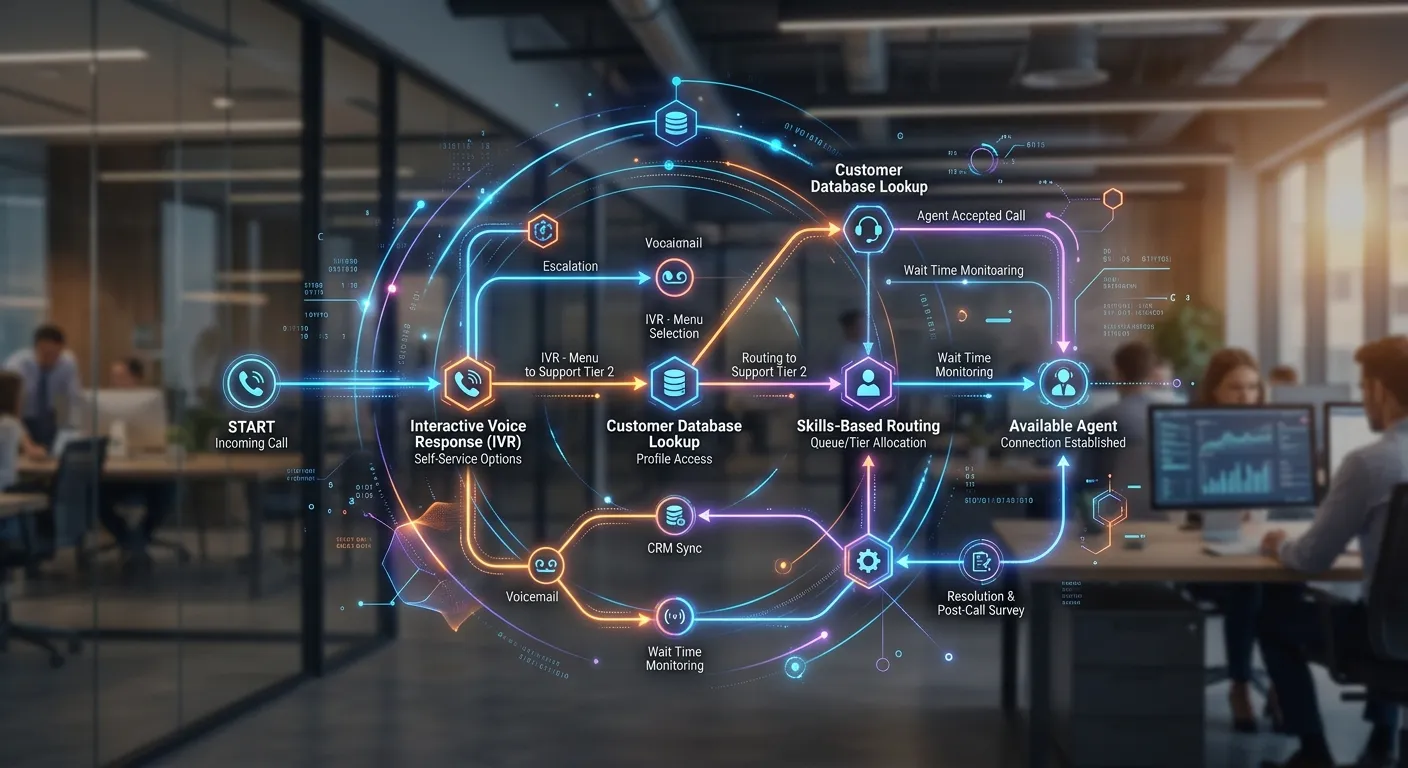
At its core, Call Flow Customer Service is the strategic architecture that governs every inbound call to your business. It’s the predefined pathway—a series of prompts, menus, routing rules, and actions—that ensures each caller is efficiently guided to the right resolution, whether that’s a human agent, a specific department, an automated information service, or a scheduled callback. It is the critical framework behind the simple act of answering phone calls, transforming it from a reactive task into a proactive, intelligent system for customer engagement and business intelligence.
An effective call flow does more than just connect A to B. It manages customer expectations, reduces wait times, filters and qualifies leads, provides 24/7 support, and collects valuable data—all while presenting a consistently professional image. In the era of AI and advanced telephony, modern call flows leverage technologies like natural language processing and machine learning to create dynamic, conversational experiences that feel less like navigating a maze and more like a helpful dialogue. For a foundational understanding of the technology powering this shift, explore our guide on What is an AI Answering Service? (And Why Your Business Needs One).
A Multi-Category Overview of Call Flow Systems
Strategic Design Principles
Designing an effective call flow begins with deep customer empathy and clear business goals. It involves mapping out every possible caller intent—from sales inquiries and support requests to appointment bookings and emergency calls—and creating a logical, frictionless path for each. Key principles include minimizing menu layers, using clear and concise language, and always providing an"escape hatch" to speak to a human. The goal is to respect the caller's time while achieving your operational objectives. A poorly designed flow leads to frustration, abandoned calls, and lost revenue, a cost detailed in The True Cost Of Missing Business Calls.
- Caller Intent Mapping: Identify and categorize the top 5-7 reasons people call your business.
- Prompt Engineering: Craft greetings and menu options that are friendly, professional, and action-oriented.
- Routing Logic: Define rules based on time of day, caller input, and agent availability.
- Fallback Protocols: Plan for high call volumes, after-hours, and system failures.
Key Features & Benefits of an Optimized Call Flow
24/7 Call Answering & Lead Capture
Never miss an opportunity, day or night. An intelligent call flow acts as your perpetual front desk, capturing vital information and qualifying leads even when your office is closed, directly addressing the challenge outlined in The Easiest Way to Handle After-Hours Business Calls.
Smart Call Routing & Prioritization
Direct calls to the right person or department based on need, urgency, or customer value. Route emergency plumbing calls directly to an on-call technician, or VIP clients to a dedicated account manager, ensuring critical issues are resolved faster.
Automated Appointment Scheduling
Allow callers to book, reschedule, or cancel appointments directly through the phone system with AI that interacts with your live calendar. This eliminates phone tag and administrative back-and-forth, a feature particularly transformative for healthcare, as seen in AI-Powered Appointment Reminder And Follow-Up Calls For Healthcare Businesses.
Real-Time Analytics & Insights
Gain visibility into call volumes, peak times, common inquiries, and caller satisfaction. This data is invaluable for staffing decisions, marketing campaign analysis, and continuous improvement of your call flow customer service.
Seamless Human Handoff
When a situation requires a human touch, the AI smoothly transfers the call—along with all the context it has gathered (caller name, reason for calling, information provided)—to a live agent. This creates a warm, informed transfer that elevates the customer experience.
Cost-Effective Scalability
Grow your call handling capacity without the linear cost of hiring more receptionists. An AI-driven system handles infinite concurrent calls, making it an ideal call-center-alternative for growing businesses and solopreneurs, a topic covered in Automated Call Handling For One Person Business.
Pro-Tip: The Psychology of the Greeting
Your initial greeting sets the entire tone for the call. Avoid robotic, lengthy messages. Instead, use a warm, professional, and concise greeting that states your business name, offers a quick menu, and assures the caller of assistance. For example,"Thank you for calling [Your Business]. For sales, press 1. For support, press 2. Or, simply tell me how I can help you today." This small detail significantly reduces caller frustration and abandonment rates. For more on crafting the perfect first impression, see Personalized Welcome Greetings Setup.
Building Your Intelligent Call Flow: A Step-by-Step Blueprint
Designing an effective call flow customer service system is a strategic project. Follow this actionable blueprint to ensure success.
Step 1: Audit & Analysis
Begin by understanding your current state. How are calls currently handled? What are the pain points? Use call analytics, interview your reception staff, and gather customer feedback. Identify:
- Peak Call Times: When are you most likely to miss calls or have long hold times?
- Common Inquiries: Categorize calls (e.g., 40% appointment bookings, 30% technical support, 20% billing).
- Call Outcomes: How many calls are resolved on first contact vs. requiring follow-up?
- After-Hours Gap: Quantify the opportunity cost of missed calls outside business hours, a critical metric explored in The Hidden Price Of"Leave A Message".
Step 2: Define Goals & KPIs
What do you want your new call flow to achieve? Set Specific, Measurable, Achievable, Relevant, and Time-bound (SMART) goals. Examples include:
- Reduce average call handle time by 20% within 3 months.
- Capture 100% of after-hours leads and route them to CRM within 5 minutes.
- Achieve a customer satisfaction score (CSAT) of 4.5/5 for phone interactions.
- Decrease missed call rate to under 2%.
See how AI can manage multiple calls simultaneously, a capability impossible for a single human receptionist.
Step 3: Design the Flow & Scripts
Map out the customer journey visually. Use flowchart tools to diagram every decision point. Write conversational scripts for AI greetings, menu options, and frequently asked questions. Remember to design for both voice and keypad (DTMF) input. Crucially, plan your escalation paths to live agents. A well-designed flow is intuitive and minimizes caller effort. For a technical deep dive into building these workflows, our resource on How To Build A Powerful AI Call Answering Workflow is essential reading.
Step 4: Technology Selection & Integration
Choose a platform that aligns with your goals and technical capability. Key considerations:
- AI Capability: Does it use true Natural Language Understanding (NLU) or just basic keyword matching?
- Integration Ecosystem: Does it connect to your CRM, calendar, and helpdesk out-of-the-box?
- Customization: Can you easily modify call flows, voices, and business logic?
- Reliability & Uptime: What are the service level agreements (SLAs)?
- Cost Structure: Is it a per-minute, per-call, or monthly subscription model? Understand the landscape with Answering Service Pricing Explained.
Step 5: Implementation, Testing & Launch
Roll out your call flow in phases. Start with a pilot group (e.g., after-hours calls only) to gather feedback and iron out issues. Conduct rigorous testing: call your own system from different phones, test every menu option, and simulate edge cases. Train your staff on how the new system works, especially the handoff process. A smooth launch is detailed in The Future is Here: Setting Up Your CallTaking.ai Digital Receptionist.
Step 6: Monitor, Analyze & Optimize
Your call flow is never"finished." Continuously monitor your KPIs using the platform's analytics. Listen to call recordings to identify areas where callers get confused or the AI misunderstands. Use A/B testing to try different greetings or menu orders. Regular optimization ensures your call flow customer service evolves with your business and customer needs. For advanced optimization strategies, refer to Optimize Your AI Receptionist For Peak Performance & Satisfaction.
Industry-Specific Call Flow Applications
While the principles are universal, the application of call flow strategy varies significantly by industry. Here’s how intelligent answering phone systems are revolutionizing key sectors.
Healthcare: Managing Patient Communication at Scale
Medical practices face immense call volume for appointments, results, and general inquiries. An AI-driven call flow can:
- Triage calls based on urgency, directing emergencies appropriately while scheduling routine appointments.
- Provide HIPAA/GDPR-compliant information on hours, location, and preparation for procedures.
- Automate appointment reminders and follow-ups, drastically reducing no-show rates. This is a game-changer, as evidenced in Why Busy Healthcare Practices Are Switching To Call Taking AI.
- Integrate directly with Practice Management software to update patient records in real-time.
This transforms Healthcare Call Volume Management from a staffing headache into a streamlined, patient-friendly advantage.
Legal: Capturing Qualified Leads 24/7
For law firms, every call is a potential case. Missing a call can mean losing a high-value client. A specialized legal call flow:
- Conducts initial intake interviews, gathering case details, contact info, and conflict check information.
- Qualifies leads based on case type, jurisdiction, and urgency, routing high-priority calls (e.g., arrests) immediately.
- Schedules confidential consultations directly into a solicitor's calendar.
- Ensures a consistently professional image, a must for firms as discussed in The #1 Answering Service for Law Firms & Solicitors (UK).
Property & Trades: Converting Inquiries into Jobs
Plumbers, electricians, landlords, and letting agents operate in a highly reactive, mobile environment. Their call flow must:
- Instantly differentiate between emergency and routine calls, dispatching accordingly.
- Capture job details, location, and availability to create immediate work orders.
- Handle tenant maintenance requests for landlords, logging them and providing status updates, a core function of Property Management Call Answering.
- Follow up on quotes and schedule estimates, keeping the sales pipeline full.
Frequently Asked Questions (FAQs)
This is a fundamental distinction. A traditional call center relies on human agents to answer every call, leading to high costs, limited hours, and variability in service quality. A modern AI call flow service uses artificial intelligence as the first point of contact, handling a vast majority of routine inquiries automatically and cost-effectively, 24/7. It then seamlessly hands off complex calls to human agents when needed. For a detailed breakdown, see our dedicated article: The Difference Between a Call Centre and a Virtual Answering Service.
Quite the opposite. A well-designed AI call flow provides a more consistent and professional experience than an overburdened or unavailable human receptionist. Modern AI uses natural, conversational language and can be customized with your brand's tone. It ensures every caller is greeted promptly and professionally, which is far more personal than a busy signal, endless ringing, or a generic voicemail box. The key is in the design and scripting, focusing on helpfulness and clarity.
With modern cloud-based platforms like CallTaking.ai, implementation can be remarkably fast. For a standard configuration, you can have a basic professional call flow active within a few hours. The timeline extends based on the complexity of your integrations, custom scripting, and testing requirements. Most businesses can go live with a fully functional system within a few days to a week. You can start by learning How To Set Up AI Phone Answering to understand the process.
Absolutely. This is one of the most powerful features of advanced call flow customer service AI. By integrating with Google Calendar, Microsoft Outlook, or other practice management software, the AI can read your real-time availability, offer suitable slots to the caller, and book the appointment directly—all during the conversation. It can also send automated confirmations and reminders. This eliminates double-booking and administrative back-and-forth. For a specific exploration of this capability, read Is There An Automated Phone System That Can Actually Book Appointments Directly Into My Calendar?.
For the vast majority of small and medium-sized businesses, yes, significantly. When you factor in salary, benefits, training, sick leave, and the inherent limit of one person handling one call at a time, a live receptionist is a substantial fixed cost. An AI-driven call flow provides 24/7 coverage, handles unlimited concurrent calls, and operates at a predictable monthly subscription cost that is often a fraction of a full-time salary. For a thorough 2026 cost analysis, watch or read AI Answering Service Vs. Live Virtual Receptionist: Which Is More Cost-effective?.
Transform Your Call Flow Customer Service Today
Stop losing leads and frustrating customers with an outdated phone system. Implement an intelligent, AI-powered call flow that answers every call, captures every opportunity, and provides a legendary customer experience—scalably and cost-effectively.
Ready to see it in action? Watch our AI handle real business calls in our demo video.