
What Is Call Services? Your Ultimate Guide to Modern Phone Answering Solutions
Discover how AI-powered call services are transforming business communication, capturing every lead, and driving operational efficiency—without the cost of a full-time receptionist. Learn the strategies to hire staff today for optimal call management.
Optimize Your Call Handling Today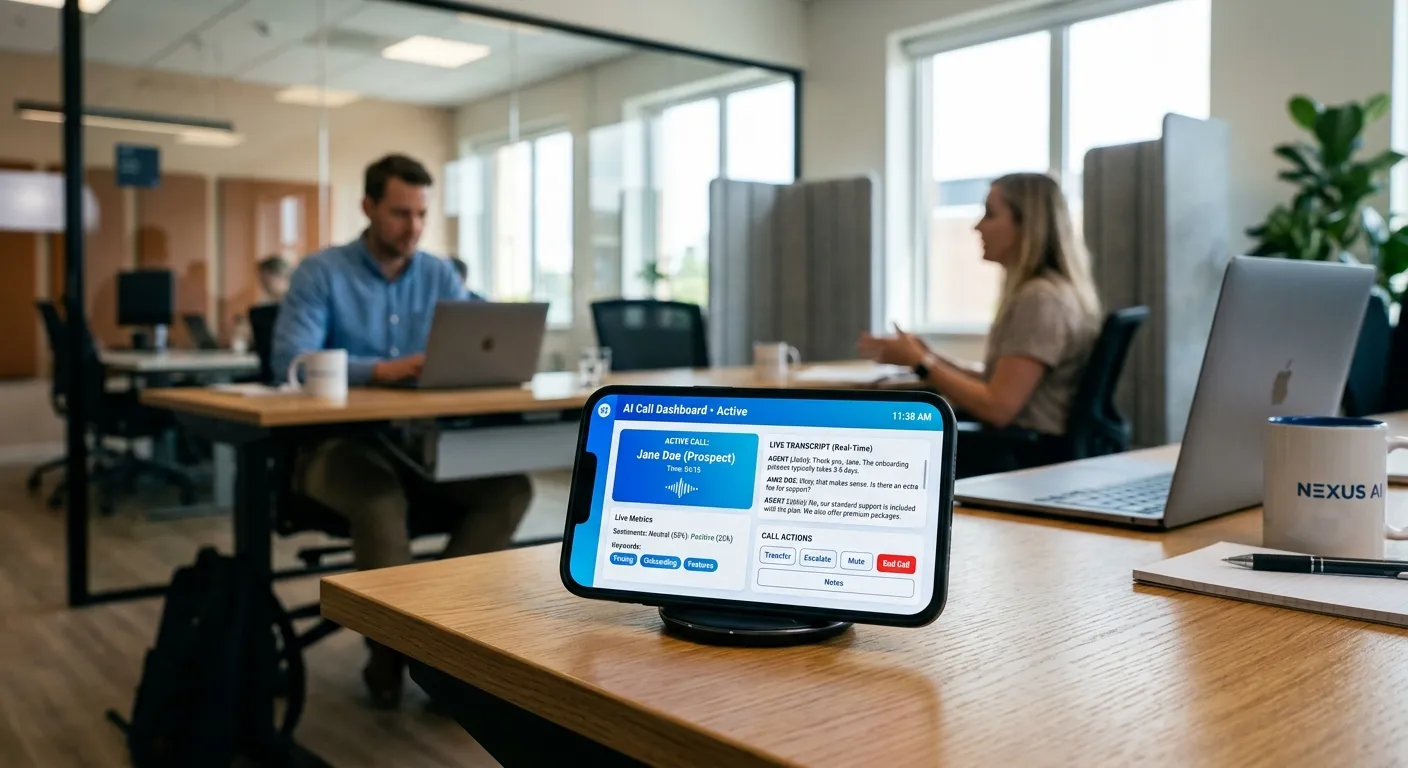
Interactive Overview: Core Types of Modern Call Services
Understanding the landscape of What Is Call Services begins with recognizing the different solutions available. Use the tabs below to explore each category in detail.
AI-Powered Answering: The Autonomous Front Desk
An AI answering service uses advanced natural language processing to understand caller intent, answer questions, schedule appointments, and capture information—24/7. Unlike basic IVR systems, it engages in natural, two-way conversation. This is the cornerstone of modern What Is Call Services solutions, offering a scalable and cost-effective alternative. For a deep dive, see our guide on What is an AI Answering Service?.
These systems are ideal for businesses experiencing high call volume or those needing after-hours coverage. They learn and improve over time, providing a consistently professional first point of contact.
Virtual Receptionists: The Human-Touch Hybrid
A virtual receptionist service often involves a remote human agent who handles your calls, but modern solutions blend AI screening with live agent transfer for complex issues. This model provides flexibility and a personal touch. Understanding the difference between a call centre and a virtual answering service is crucial for making the right choice.
This service is perfect for industries where empathy and complex decision-making are required, though it typically operates within set business hours and comes at a higher cost than pure AI solutions.
Call Centers: The Traditional High-Volume Hub
Traditional call centers are facilities staffed by agents dedicated to handling large volumes of inbound or outbound calls for various clients. They represent the conventional model of What Is Call Services. While robust, they often involve long-term contracts, significant infrastructure, and higher operational costs.
Today, many businesses are seeking a call center alternative that offers more agility and cost control, such as AI-powered solutions that provide similar functionality without the overhead.
Key Benefits & Features of Modern Call Services
Implementing a sophisticated call service delivers tangible ROI across multiple business functions. Explore the core benefits in the grid below.
24/7 Lead Capture
Never miss a potential customer. A call service answers every call, day or night, capturing critical lead information and scheduling appointments directly into your CRM. This solves the common problem of capturing leads from missed calls after hours.
Enhanced Professionalism
Every call is answered promptly with a consistent, branded greeting. This builds immediate trust and projects an image of reliability and efficiency, crucial for competitive markets. Services like personalized welcome greetings elevate this first impression.
Significant Cost Savings
Eliminate the salary, benefits, and training costs of a full-time receptionist. Modern call services operate on a predictable subscription model. For a detailed breakdown, explore answering service pricing in the UK.
Operational Efficiency
Free your team from phone tag and administrative tasks. Calls are screened, categorized, and routed with key information collected upfront. This is especially transformative for call volume management in busy sectors.
Scalability & Flexibility
Easily handle call spikes during promotions or peak seasons without hiring temporary staff. A cloud-based call service scales up or down instantly. This aligns with the modern need for AI-powered call overflow handling.
Actionable Insights
Gain visibility into call patterns, peak times, caller intent, and common questions through detailed analytics and real-time call transcription. This data informs marketing strategies, staffing decisions, and service improvements.
Pro Tip: Understanding"Call Forwarding Service Was Enabled"
A common point of confusion is the difference between basic call forwarding and a full call service. "Call Forwarding Service Was Enabled" simply means your phone line is programmed to redirect incoming calls to another number (e.g., your mobile). This is a passive, technical feature. A true call service actively answers, interacts with, and manages the call on your behalf. It provides value-added processing, not just redirection. For businesses, the goal is not just to forward calls, but to have them professionally handled.
Deep Dive: How AI Call Services Work in Practice
Moving beyond the theory of What Is Call Services, let's examine the practical workflow of an advanced AI system and its impact across industries.
The Intelligent Call Flow
A modern AI call answering service follows a sophisticated, yet seamless process designed to maximize efficiency and caller satisfaction:
- Instant Answer: The call is picked up within two rings by a professional, customized greeting.
- Intent Recognition: Using NLP, the AI listens to the caller's request—be it booking an appointment, asking for a quote, or seeking support.
- Dynamic Conversation: The AI asks relevant follow-up questions to gather all necessary details (name, contact info, service required, preferred time).
- Integration & Action: The system connects to your calendar (e.g., Google Calendar, Microsoft 365) to book appointments in real-time, or logs the lead directly into your CRM.
- Immediate Notification: You receive an instant SMS, email, or Slack notification with the caller's details and the action taken.
- Intelligent Routing: For complex issues requiring a human, the call can be transferred to a specific team member along with the collected information.
Industry-Specific Applications
The versatility of call services makes them indispensable across sectors. Here are powerful applications:
Healthcare & Dental Practices
Managing patient communication is critical. An AI call service can handle appointment scheduling, reminders, and basic Q&A, freeing up clinical staff. This directly addresses why healthcare practices are switching to call taking AI. Specifically, for dental clinics, a dedicated dental call answering service can fill appointment books faster by capturing every call, even during peak hours.
Furthermore, AI-powered appointment reminders reduce no-shows and improve patient outcomes, creating a seamless cycle of care.
Legal Firms & Solicitors
First impressions and lead intake are paramount. A missed call can mean a lost case. A specialized call service provides 24/7 intake, qualifies leads by case type, and can even schedule initial consultations. This transforms automated intake for law firms from a concept into a revenue-generating reality. For UK firms, choosing the right partner is key, as explored in our review of the best answering service for law firms.
Property Management & Trades
For landlords, letting agents, plumbers, and electricians, emergency calls are a fact of life. A call service can differentiate between routine inquiries and urgent issues, dispatch information immediately, and ensure no job is missed. This is crucial for property management call answering and helps UK tradespeople stop missing jobs. It acts as a virtual dispatcher, optimizing your field team's schedule.
Making the Right Choice: AI vs. Human Answering
A critical decision in understanding What Is Call Services is choosing between AI and human-based models. The right choice depends on your business needs, budget, and complexity of interactions.
| Factor | AI-Powered Call Service | Live Virtual Receptionist |
|---|---|---|
| Availability | 24/7/365, no breaks | Typically business hours or extended shifts |
| Cost | Predictable monthly subscription, often significantly lower | Higher, often per-minute or per-call, plus setup fees |
| Scalability | Instantaneous, handles unlimited concurrent calls | Limited by staff availability, can be overwhelmed |
| Consistency | Perfectly consistent tone and process every time | Varies with agent mood, training, and fatigue |
| Complex Empathy | Good for standard interactions; transfers complex emotional calls | Excels at handling sensitive, nuanced conversations |
For most small to medium businesses seeking efficiency and cost-effectiveness, an AI-first approach is winning. A detailed comparison for businesses choosing between AI and live receptionists can help solidify your decision.
Frequently Asked Questions (FAQ)
Get quick answers to the most common questions about modern call services.
A traditional call center is a human-operated service, often with large infrastructure and long contracts, focusing on high-volume handling. An AI Answering Service is software-driven, leveraging artificial intelligence to autonomously answer, understand, and action calls. It's more agile, cost-effective, and available 24/7. For a detailed breakdown, read The Difference Between a Call Centre and a Virtual Answering Service.
Absolutely. Modern AI call services like CallTaking.ai integrate seamlessly with popular calendar platforms including Google Calendar, Microsoft Outlook/365, and Apple Calendar. When a caller requests an appointment, the AI finds mutual availability, books the slot, and sends confirmations to both parties—all without human intervention. This answers the common question: Is there an automated phone system that can book appointments directly into my calendar?
Reputable providers prioritize security. Data is encrypted in transit and at rest, and compliance with regulations like GDPR is standard. It's essential to choose a provider that is transparent about its security practices. For peace of mind, investigate their data handling policies and look for SOC 2 Type II certification or similar.
Very quickly. With cloud-based AI solutions, you can often be up and running in under an hour. The process typically involves signing up, customizing your call workflow and greetings, and connecting your phone number via simple call forwarding. There's no hardware to install. For a step-by-step guide, see Setting Up Your CallTaking.ai Digital Receptionist.
Stop Missing Calls, Start Growing Your Business
You now understand What Is Call Services and the transformative power of AI call answering. The next step is to implement a solution that captures every opportunity, delights every caller, and frees your team to focus on what they do best.
Ready to experience the difference? Explore our flexible plans and see how affordable professional call handling can be.
Have questions? Compare options in our detailed guide: AI vs. Live Receptionist Cost Analysis.
Beyond Answering: Advanced Integrations & Workflow Automation
The true power of a modern call service lies in its ability to become the central nervous system for your customer communications. It doesn't just answer; it orchestrates. By integrating with your core business tools, it eliminates manual data entry, reduces errors, and creates a frictionless flow of information from the first point of contact to final fulfillment.
The Connected Ecosystem
Consider this automated workflow for a home services business:
- Call Answered: AI answers, identifies the caller needs a boiler repair quote.
- CRM Creation: A new lead is instantly created in HubSpot or Salesforce with the caller's details and issue description.
- Task Assignment: A job is automatically created in your field service management software (e.g., Jobber, ServiceTitan).
- Team Alert: An assigned technician receives a push notification via Slack or Microsoft Teams with the job details and a link to the call recording.
- Follow-up Triggered: The CRM automatically schedules an email follow-up for 24 hours later if the job isn't confirmed.
This level of integration turns a simple phone call into a fully-tracked, accountable business process, maximizing the chance of conversion and delivering superior customer service.
Key Integration Partners
- Calendars: Google Calendar, Outlook 365, Apple iCal for real-time scheduling.
- CRMs: Salesforce, HubSpot, Zoho CRM, Pipedrive for lead capture and lifecycle management.
- Communication Tools: Slack, Microsoft Teams, Email for instant internal alerts.
- Payment & Invoicing: Stripe, QuickBooks, Xero for capturing payments or creating invoices from call-driven requests.
Choosing a call service with a robust API and pre-built connectors is essential for future-proofing your operations and avoiding technological dead-ends.
Quantifying Success: Metrics & KPIs to Track
Adopting a call service is an investment, and like any investment, its performance must be measured. Moving beyond anecdotal evidence to hard data is key. Here are the critical Key Performance Indicators (KPIs) you should monitor to assess the impact of your call service and continuously optimize its performance.
| KPI | What It Measures | Why It Matters | Target Benchmark |
|---|---|---|---|
| Call Answer Rate | Percentage of calls answered vs. sent to voicemail. | Direct indicator of potential missed revenue and customer frustration. Aim for 100%. | > 98% |
| Average Speed to Answer | Time in seconds for a call to be picked up. | Impacts caller satisfaction and perceived professionalism. Long wait times increase abandonment. | < 20 seconds |
| Lead Conversion Rate from Calls | Percentage of answered calls that become qualified leads or bookings. | The ultimate ROI metric. Measures the service's effectiveness at capturing and qualifying business. | Industry-specific, but track for increase. |
| Call Intent Accuracy | How correctly the AI categorizes the purpose of the call (e.g., sales, support, booking). | Ensures calls are routed correctly and the right data is collected, improving downstream efficiency. | > 95% |
| Cost Per Captured Lead | Monthly service cost divided by number of leads generated via phone. | Compares the cost-effectiveness of phone-generated leads against other channels like PPC or email. | Lower than other channels. |
A high-quality AI call service will provide a comprehensive analytics dashboard tracking these metrics in real-time. This data is invaluable for business planning. For instance, identifying peak call times can inform staffing schedules, while understanding common caller questions can reveal gaps in your website's FAQ section or training materials for your team.
Implementation Roadmap: A Step-by-Step Guide to Getting Started
Understanding What Is Call Services is the first step; successful implementation is the next. A structured approach ensures a smooth transition and maximizes user adoption within your team. Follow this practical roadmap.
Audit & Goal Setting (Week 1)
Begin by analyzing your current call handling. How many calls are you missing? What are the most common caller requests? Set clear, measurable goals: e.g.,"Reduce missed calls to zero,""Increase phone-led appointments by 30%," or"Free up 10 hours per week of admin time." This audit will inform your customization needs and provide a baseline to measure success against.
Provider Selection & Customization (Week 2)
Choose a provider based on your integration needs, industry specificity, and budget. During setup, meticulously craft your call scripts and greetings. This is not just about recording a message; it's about designing conversational flows for different scenarios (new inquiries, existing clients, emergency calls). Define what information must be collected for a lead to be considered qualified. Configure your calendar integration settings and notification preferences.
Phased Rollout & Team Training (Week 3)
Avoid flipping the switch on all calls at once. Start by routing after-hours or overflow calls to the service. This allows you to test the system with lower risk. Crucially, train your team on how to interpret and act on the notifications and lead data they will receive. Explain the new workflow so they understand the AI is a tool to empower them, not replace them. Encourage them to listen to call recordings to provide feedback on the AI's performance.
Review, Refine, and Scale (Ongoing)
After the first month, review the KPIs against your initial goals. Analyze call transcripts to see where callers are getting confused or where the AI may have missed nuance. Use these insights to refine your scripts and workflows. As confidence grows, route more call types to the service. The system should evolve with your business, becoming more intelligent and effective over time.
This deliberate, phased approach minimizes disruption, ensures buy-in from your team, and creates a solid foundation for leveraging call services as a strategic asset rather than just a utility.
The Future of Call Services: Emerging Trends
The technology behind What Is Call Services is not static. It is advancing rapidly, promising even deeper integration and more intuitive interactions. Staying aware of these trends helps future-proof your communication strategy.
Predictive Call Routing
Soon, AI won't just ask"How can I help you?" It will predict why you're calling based on caller ID, time of day, and even past interaction history with your CRM. A repeat customer calling two days after a service appointment might be instantly routed to a customer satisfaction follow-up queue, while a new number from a geographic area you just targeted with an ad could be flagged as a high-priority sales lead.
Emotional Intelligence (Emotion AI)
Advances in voice analysis will enable AI to detect subtle cues in tone, pace, and pitch to assess a caller's emotional state—frustration, urgency, satisfaction. This allows the system to adapt its response accordingly, showing more empathy or escalating a frustrated caller more quickly to a human agent, dramatically improving the customer experience.
Proactive, Outbound Communication
The future call service will be bidirectional. Beyond answering inbound calls, it will initiate intelligent outbound calls for appointment reminders, prescription refills, service follow-ups, or even to reconfirm details before a visit. These will be true conversational AI calls, not robotic blasts, capable of handling the two-way dialogue that such tasks require.
Unified Omnichannel Voice
Voice will become a seamless component of omnichannel support. A conversation started on a web chat could be escalated to a voice call with full context transferred to the AI, so the caller doesn't have to repeat themselves. Conversely, a caller could request a summary of their call to be sent via SMS or email, creating a consistent thread across all touchpoints.
By adopting a modern call service today, you are not just solving an immediate communication gap; you are building the foundational infrastructure to leverage these coming advancements, ensuring your business remains agile and customer-centric in an increasingly automated world.