Appointment Scheduler NHS: Build a Smarter Patient Booking System and Hire Staff Today
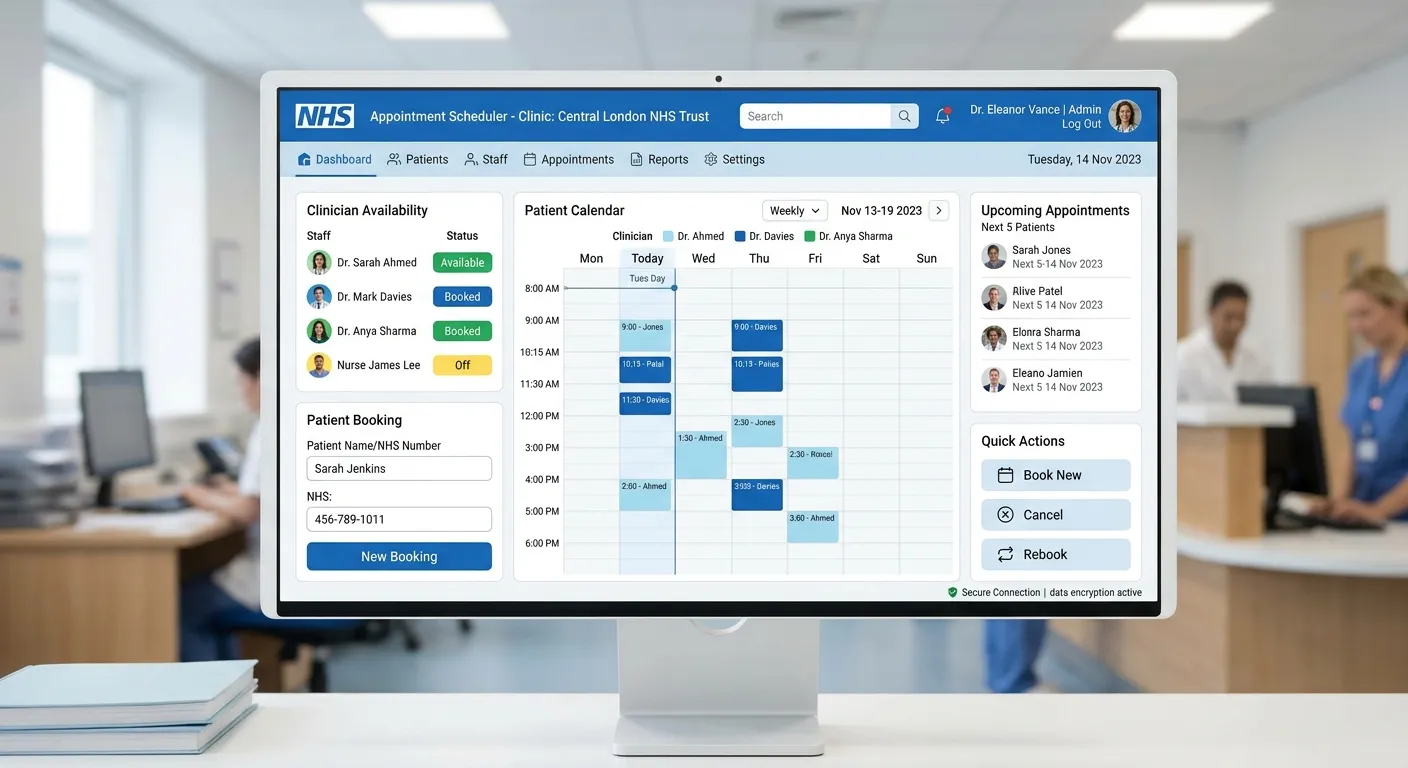
SEO Title: Appointment Scheduler NHS: Build a Smarter Patient Booking System and Hire Staff Today
SEO Description: Discover how an Appointment Scheduler Nhs system can improve patient access, reduce no-shows, and support healthcare teams. Hire Staff Today for reliable booking, clinical admin, and It Service Desk Bham support.
Patients expect fast, transparent, and accessible ways to book appointments. An Appointment Scheduler Nhs solution gives healthcare teams a structured way to manage referrals, triage requests, and fill available slots without overwhelming front-line staff. It also helps practices reduce no-shows, improve clinical flow, and create a better experience for people who need care. The goal is not just digital booking. It is operational resilience. When scheduling works well, clinicians spend less time chasing updates, reception teams spend less time repeating information, and patients receive clearer instructions. For healthcare providers, this is a practical path to better capacity, safer communication, and more consistent service delivery.
Multi-Category Overview
Explore the core areas where an Appointment Scheduler Nhs system creates value. Each tab highlights a different operational lens: patient experience, clinical administration, technical support, and automated communication.
Patient Access and Booking Experience
Patient access is the first impression of any healthcare service. A strong scheduler should offer clear appointment categories, visible availability, and simple booking paths for routine reviews, diagnostics, and follow-up visits. Patients need confidence that their request has been understood, not just recorded. A good Appointment Scheduler Nhs platform should also respect accessibility: large text, plain language, mobile-friendly forms, and options for people who cannot book online. When patients can see the next available slot and receive an immediate confirmation, trust rises and unnecessary phone calls fall. This is especially important when demand is high and staff capacity is limited.
Clinical Administration and Staff Coordination
Clinical administration is where scheduling becomes operational. Reception teams, booking clerks, and practice managers need tools that align patient requests with clinician availability, room capacity, and treatment protocols. An Appointment Scheduler Nhs system should support rules such as minimum notice periods, referral validation, urgent slot reservations, and cancellation waitlists. It should also make handovers easier by showing who booked what, why a slot was allocated, and whether a follow-up reminder is needed. When administrators have one accurate calendar, they spend less time reconciling emails, messages, and phone notes. That improves morale, reduces errors, and helps the whole team maintain a steady patient flow.
IT Service Desk and Technical Reliability
Technical reliability is not optional. If a scheduler goes offline, patient access can stall quickly. Teams often search for It Service Desk Bham support when booking systems, login access, or calendar synchronization need urgent attention. A resilient Appointment Scheduler Nhs setup should include role-based permissions, backup access, clear escalation paths, and monitoring for failed integrations. It should also be easy to troubleshoot: users need to know whether the issue is patient-side, clinician-side, or system-wide. When IT support is embedded into healthcare operations, teams can restore service faster and avoid long queues of unresolved booking problems.
AI Call Handling and Automated Follow-Ups
Automated communication can extend the value of scheduling. Reminders, confirmation texts, and follow-up calls reduce uncertainty and help patients arrive prepared. If you want to learn how to book appointments directly into a calendar, see this guide on automated phone systems that book appointments directly into your calendar. For healthcare teams, this can be paired with AI-powered appointment reminder and follow-up calls to reduce no-shows and recover last-minute cancellations. The key is to keep the tone professional, compliant, and patient-centred. Automation should support staff, not replace human judgement in complex clinical conversations.
Key Features and Benefits
A modern Appointment Scheduler Nhs platform should improve access, protect staff time, and support measurable service outcomes.
Dynamic Slot Management
Create protected urgent slots, routine review slots, and diagnostic slots. The scheduler can enforce rules so staff do not accidentally overbook clinicians or rooms. This is essential for any Appointment Scheduler Nhs environment where demand fluctuates throughout the week.
No-Show Reduction
Send timely reminders, confirmations, and easy rescheduling links. Patients are more likely to attend when they receive clear, concise messages. Fewer no-shows means more available capacity and less wasted clinical time. This makes it easier to plan staffing and maintain a predictable clinic rhythm.
Clinician Time Savings
Automate low-value admin such as booking confirmations, waitlist updates, and appointment summaries. Clinicians and reception teams can focus on patient care instead of repetitive coordination. A well-configured Appointment Scheduler Nhs system should reduce manual errors and improve morale.
Integrated Communication
Connect reminders and follow-ups with call workflows. If you want to understand why teams are adopting AI, read why busy healthcare practices are switching to call taking AI. This helps keep patient communication consistent.
Accessible Booking
Support plain language, mobile access, and alternative booking routes. Not every patient is comfortable using digital services, so a scheduler should still allow phone or assisted booking while keeping records accurate. This reduces inequality in access.
Audit-Ready Reporting
Track booking volumes, cancellation reasons, wait times, and slot utilisation. Reports help managers identify bottlenecks and justify staffing decisions. Good reporting turns a scheduler into a strategic operations tool, not just a calendar. It also supports service improvement plans.
How Appointment Scheduler NHS Improves Patient Flow
Patient flow depends on more than a calendar. It depends on how requests enter the system, how they are triaged, and how cancellations are filled. A practical Appointment Scheduler Nhs strategy should begin with a clear service map: who can book, what can be booked, what requires triage, and what must be escalated. For example, routine follow-ups can often be self-scheduled, while new referrals may need administrative validation before a slot is confirmed. This prevents patients from choosing appointments they are not ready for and reduces unnecessary rebooking. It also helps teams manage demand more fairly. If phone queues are the main bottleneck, consider how healthcare call volume management with call taking AI can capture urgent messages, route calls, and create structured booking tasks. The aim is not to make everything automated. It is to make every request easier to track and resolve. A strong scheduler also needs cancellation logic. When a slot opens, the system should automatically notify eligible patients from a waitlist. This simple step can recover capacity that would otherwise be lost. It also improves patient satisfaction because people see a clear path from request to appointment. In high-demand services, that visible path reduces anxiety and improves trust in the system. Managers can then measure whether waitlist notifications are effective. If not, the rules need adjustment.
Implementation Checklist for Healthcare Teams
Implementation should be staged, not rushed. Start with one department or one appointment type. Test booking rules, reminders, and escalation paths before expanding across the organisation. This approach reduces risk and gives staff time to learn the system without feeling overwhelmed. During rollout, define clear ownership: who maintains clinician availability, who reviews failed bookings, and who handles technical incidents. If your trust needs a dedicated It Service Desk Bham response, make sure the support model includes healthcare-specific escalation, not just generic ticket routing. Training matters as much as technology. Reception teams should know how to explain cancellation policies, how to move patients between slots, and how to flag clinical urgency without guessing. Managers should monitor wait times, slot fill rates, and staff workload. If capacity problems persist, the answer may be hiring. Teams looking for support staff can review hiring help desk support specialists to understand salary expectations and skills needed. A practical scheduler should also include a fallback process for outages. Patients need to know what to do if online booking fails. A simple message, such as “call the practice between 9am and 3pm,” prevents confusion. Finally, treat scheduling as a continuous improvement process. Collect feedback from clinicians, administrators, and patients every month. Small adjustments to appointment lengths, reminder timing, or triage rules can create major improvements over time.
About Appointment Scheduler NHS Solutions
About this guide: The purpose of an Appointment Scheduler Nhs overview is to help healthcare leaders choose systems that improve access without creating new administrative burdens. This page explains how scheduling, communication, and support work together in a practical healthcare environment. It is designed for practice managers, NHS administrators, clinic owners, and teams planning a booking system upgrade. If you want to understand how call handling fits into patient operations, the same principles apply across dental, medical, and administrative healthcare settings: clear rules, reliable access, measurable outcomes, and staff support. A successful scheduler is not judged only by its interface. It is judged by whether patients get appointments, staff understand the process, and managers can improve service quality. For many teams, the biggest improvement comes from reducing duplicate work. When one system records a booking, a reminder, and a follow-up, staff stop copying information between emails, calendars, and notes. That creates space for better patient conversations. It also improves accuracy and compliance. This is why scheduling should be reviewed with IT, clinical, and administrative stakeholders together.
Pro Tip
Do not launch a scheduler without a waitlist policy. A waitlist is only useful if it is active, transparent, and linked to reminder messages. Tell patients how they will be contacted if a slot opens, how long they have to respond, and how often they will be checked. This prevents false expectations and reduces repeated calls. It also gives managers a measurable way to recover capacity. That is a simple but high-impact scheduling win.
Practical Tips for Scheduling Success
Healthcare scheduling works best when rules are simple enough for staff to remember and flexible enough for patient needs. First, define appointment types before building the calendar. Routine reviews, diagnostics, urgent slots, and follow-ups should not be mixed without clear logic. Second, set realistic durations. If clinicians consistently run late, shortening slots will create chaos; lengthening them may reduce access. Third, use reminders wisely. A message too early can be forgotten, while a message too late can feel intrusive. Fourth, train staff on exception handling. There will always be patients who need urgent care, patients who cannot attend, and patients who ask clinical questions that should not be booked into a routine slot. Fifth, review metrics monthly. Track fill rates, cancellation reasons, average wait time, and staff workload. These numbers tell you whether the scheduler is improving access or simply moving the pressure elsewhere. A good scheduler should make decisions easier, not harder. If staff still spend most of their day explaining the system, the rules need simplifying. That is a sign that training or interface design needs attention.
FAQ: Appointment Scheduler NHS
Ready to Improve Patient Access?
An effective Appointment Scheduler Nhs strategy combines smart booking rules, clear communication, reliable technical support, and the right people. If your team is struggling with appointment volume, no-shows, or administrative overload, take the next step. Review your current workflow, identify the biggest bottleneck, and decide whether the solution is process change, technology support, or additional staff. If you need to expand your team, you can Hire Staff Today to build a more resilient healthcare service. This approach keeps patients moving through the system and prevents front-line teams from burning out. A scheduler is only as strong as the support behind it. Start with one measurable improvement today.