The Hidden Pitfalls: A Comprehensive Guide to Help Desk Disadvantages
While essential for customer support, traditional help desks carry significant operational burdens. Discover the critical drawbacks, from spiraling costs to inconsistent service, and learn how modern AI alternatives are reshaping business communication.
Key Disadvantage Categories: A Multi-Faceted Challenge
Financial Burden & Scalability Limits
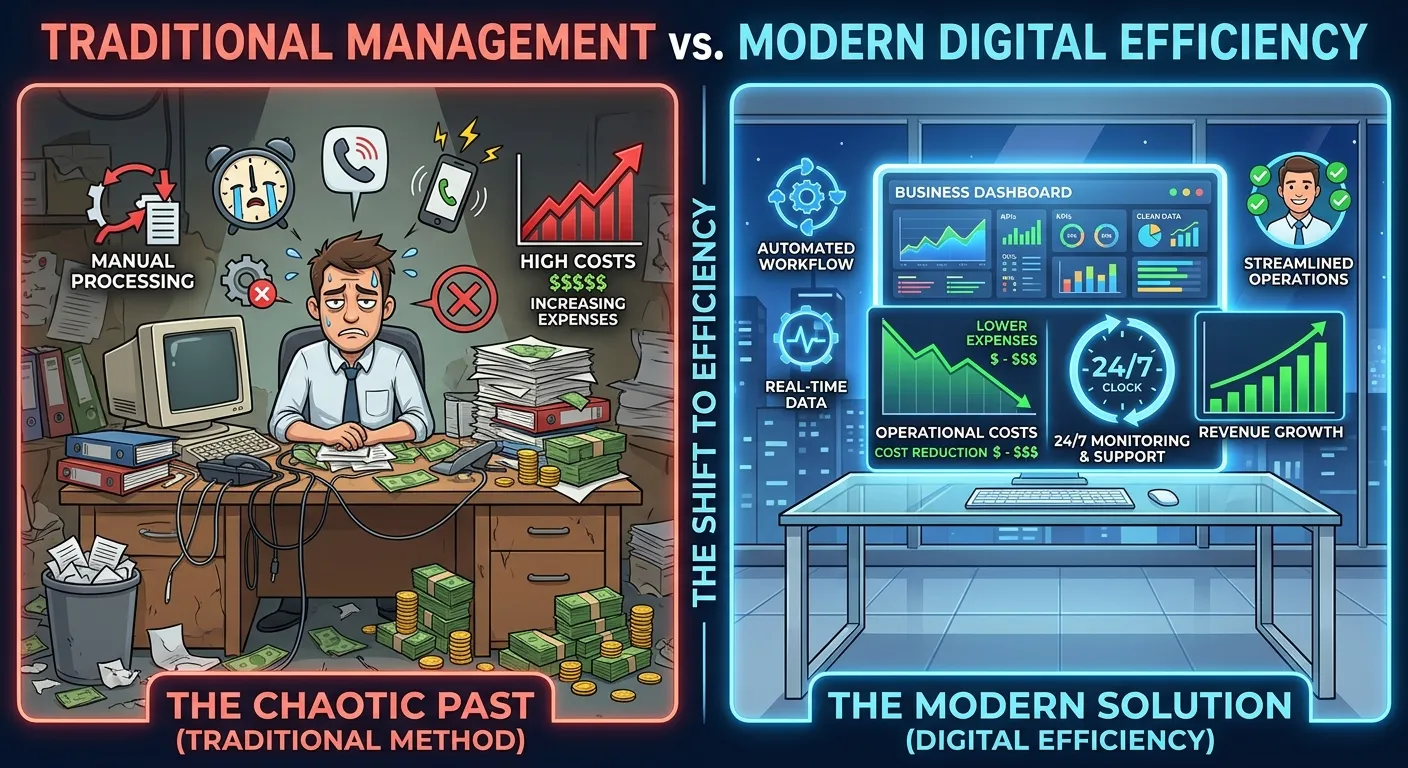
The most immediate Help Desk Disadvantages are financial. Maintaining a full-time, human-staffed help desk involves substantial fixed costs: salaries, benefits, training, physical infrastructure, and software licenses. These costs scale linearly with headcount, making rapid growth or seasonal fluctuation financially painful. Unlike an AI-powered call taking solution, you cannot instantly spin up or down capacity without hiring or firing, a process fraught with cost and morale issues.
- High Fixed Overheads: Salaries constitute 60-70% of total help desk cost.
- Inefficient Scaling: Can't handle 3x call volume without 3x the staff budget.
- Hidden Training Costs: Constant product updates require ongoing, expensive training cycles.
- Infrastructure Lock-in: Expensive ticketing systems and phone hardware depreciate quickly.
Inconsistent Service & Human Limitations
Human help desks are inherently variable. Service quality fluctuates with agent mood, fatigue, experience, and time of day. This leads to inconsistent customer experiences, where resolution time and satisfaction depend largely on which agent picks up the call. After-hours coverage is particularly problematic, often requiring expensive shift premiums or unreliable on-call rotations, a critical issue for sectors with defined Medical Answering Services Hours. For a deeper look at modern alternatives, see our analysis on the difference between a call centre and a virtual answering service.
Management Overhead & Agent Turnover
Managing a help desk team is a full-time job in itself. Recruitment, scheduling, performance monitoring, and conflict resolution consume immense managerial resources. High turnover in help desk roles—often exceeding 30% annually—exacerbates this, creating a perpetual cycle of hiring and training that distracts from core business goals. This operational strain is a profound disadvantage, siphoning energy from strategic initiatives.
Missed Opportunities & Data Silos
A reactive help desk often fails to capture proactive business intelligence. Calls are logged as isolated tickets, not integrated into broader customer or operational analytics. Missed calls outside standard hours represent direct revenue loss, a problem highlighted in our resource on the true cost of missing business calls. Furthermore, human agents can struggle to consistently upsell or capture lead details during high-volume periods, leaving money on the table.
The 7 Core Disadvantages of Traditional Help Desks
Prohibitive & Unpredictable Costs
Beyond base salaries, costs include employer taxes (NI), benefits, training, management overhead, and infrastructure. Budgeting is difficult as costs spike with staff turnover or unexpected volume. Compare this to predictable AI subscription models with clear, scalable pricing.
Limited Hours & Missed Calls
Standard 9-5 coverage misses crucial after-hours inquiries, especially critical for Medical Answering Services Hours. Hiring for 24/7 coverage is financially untenable for most SMEs. Missed calls equal lost customers, a risk modern businesses can't afford. Solutions exist, like the easiest way to handle after-hours business calls.
Inconsistent Customer Experience
Human agents have good days and bad days. Knowledge, patience, and communication skills vary wildly, leading to a lottery-style customer experience. This inconsistency damages brand reputation and customer loyalty over time.
Poor Scalability & Flexibility
Scaling a human team up or down is slow and costly. You can't instantly deploy 10 agents for a sudden product launch or marketing campaign. This lack of agility is a major competitive disadvantage in fast-paced markets.
High Turnover & Constant Retraining
Help desk roles are high-stress with often repetitive tasks, leading to burnout and high churn. This constant cycle of hiring help desk support specialists, onboarding, and training drains resources and disrupts service continuity.
Lack of Advanced Integration & AI
Traditional help desks often operate in silos, poorly integrated with CRM, scheduling, or analytics tools. They lack the ability to leverage AI for intelligent routing, sentiment analysis, or predictive support, capabilities central to smart call management.
Pro-Tip: Quantify the True Cost
Before deciding to build or maintain a traditional help desk, calculate the Total Cost of Ownership (TCO). Include:
- Fully loaded salary cost (base + benefits + employer NI contributions).
- Recruitment fees and time-to-productivity (often 3-6 months).
- Management & supervision time as a percentage of manager salary.
- Cost of missed calls and lost business (use industry conversion rates).
- Software, hardware, and office space allocation.
Compare this TCO to the fixed, predictable monthly cost of an advanced AI answering service or virtual receptionist. For many businesses, the AI alternative is 40-60% more cost-effective from year one.
Industry-Specific Amplification of Help Desk Disadvantages
Healthcare & Medical Practices
The disadvantages are magnified here. Strict Medical Answering Services Hours requirements and HIPAA/compliance needs make staffing a nightmare. Patients call at all hours with urgent but non-emergency needs. A missed call isn't just lost revenue; it can impact patient care. Human agents struggle with complex medical terminology and scheduling intricacies. This is precisely why busy healthcare practices are switching to Call Taking AI for a solution that's both compliant and always available.
Critical Pain Points in Healthcare:
- Exorbitant cost of 24/7 clinical or administrative staff.
- Risk of human error in recording sensitive patient information.
- Inability to handle sudden call volume spikes (e.g., flu season).
- Poor integration with practice management software (PMS).
Legal, Trades & Professional Services
For law firms, every missed call could be a major case. For tradespeople, it's a lost job. The high-value, time-sensitive nature of these inquiries exacerbates traditional help desk flaws. A human receptionist might not capture all lead details accurately under pressure, or may be unavailable during evenings and weekends—peak calling times for many consumers. Services like legal call answering or virtual answering for tradespeople built on AI platforms solve this by providing consistent, detailed intake 24/7.
Overcoming Help Desk Disadvantages with AI & Automation
The AI-Powered Virtual Receptionist
This technology directly addresses each core disadvantage. It provides 24/7 coverage at a fixed cost, eliminating shift premiums and overnight staff headaches. It delivers perfectly consistent service, following your custom scripts every time. It scales instantly, handling 1 call or 100 simultaneous calls without added cost or stress. For a practical demonstration, watch our CallTaking.ai demo to see it in action.
- ✓Cost Transformation: Converts variable, high fixed costs into a predictable operational expense.
- ✓Service Excellence: Never tires, never has a bad day, and follows protocols perfectly.
- ✓Seamless Integration: Books appointments directly into calendars, logs leads into CRMs, and provides real-time analytics.
Implementing the Shift: A Strategic Guide
Transitioning from a human help desk to an AI-augmented system requires planning. Start by identifying your highest-volume, most repetitive query types—these are ideal for AI handling. Use a hybrid approach initially, where AI handles first-tier inquiries and complex issues are escalated to human staff. This frees your team for high-value work. Learn how to build a powerful AI call answering workflow for a smooth transition.
Key Implementation Steps:
- Audit current call patterns and pain points.
- Select an AI platform with robust integration capabilities (like powerful and seamless integrations).
- Design conversational scripts and decision trees.
- Run a pilot program and gather feedback.
- Full deployment with continuous optimization.
Frequently Asked Questions: Help Desk Disadvantages & Solutions
The single biggest financial disadvantage is the lack of cost scalability. Costs are primarily variable with headcount but behave like fixed costs because you can't easily reduce staff day-to-day. When call volume drops, you still pay full salaries. When it spikes, you need expensive overtime or temporary staff, or you suffer service degradation and lost business. This contrasts sharply with AI solutions, where cost is directly proportional to usage and can scale instantly. For a detailed cost analysis, see our guide on answering service pricing in the UK.
Modern AI is exceptionally capable of handling structured, information-based interactions—which constitute the majority of help desk calls (e.g.,"What are your hours?","Can I reschedule my appointment?","What's my account balance?"). For complex, emotional, or highly unusual scenarios, the best practice is to use AI for intelligent triage. The AI gathers initial information, calms the caller, and then seamlessly escalates the call (with full context) to a live human agent. This hybrid model, as explored in our comparison of AI vs. live receptionists, combines the efficiency of AI with the empathy of humans, overcoming a key human help desk disadvantage: wasting expert time on simple queries.
This is a prime example of a disadvantage turned into an advantage with technology. Dedicated on-call after-hours answering services for medical offices and other sectors use AI to provide 24/7 coverage at a fraction of the cost of human staff. The AI can be programmed with specific protocols for emergencies, standard information delivery, and appointment booking. It ensures compliance with service level agreements (SLAs) for response times. Crucially, it never misses a call due to breaks, sickness, or shift changes. This reliable coverage outside standard hours directly addresses one of the most critical gaps in traditional help desk setups.
Leading platforms are designed for easy integration. They offer APIs, webhooks, and pre-built connectors for popular CRM systems (like Salesforce, HubSpot), calendar apps (Google Calendar, Microsoft Outlook), and practice management software. The integration capability is a core feature to evaluate, as it turns the AI from a simple answering machine into a central nervous system for your customer communications. Review what to look for in AI call center software to ensure you choose a solution that connects seamlessly with your tech stack.
Ready to Turn Help Desk Disadvantages into Competitive Advantages?
Don't let the high costs, management burden, and service inconsistencies of a traditional help desk hold your business back. The future of customer communication is automated, intelligent, and always available.
Explore how AI is transforming specific industries: Dental | Legal | Property Management | Automotive
Case Study: The Real-World Cost of a Human Help Desk
The SME Scenario
A UK-based SME with 20 employees maintains a two-person help desk. On paper, the base salary is £25,000 per agent.
Real Annual Cost Breakdown:
This excludes management overhead, software, and infrastructure. The true cost often exceeds £85,000 annually.
The Hidden Opportunity Cost
Beyond direct costs, the business impact is severe. Analysis shows:
- Missed Calls: 15% of calls outside 9-5 go unanswered. At a 5% conversion rate, this represents significant lost revenue.
- Inefficient Use of Skill: Highly-trained agents spend 40% of their time on simple queries (password resets, hours, directions).
- Data Silos: Call notes are fragmented. No unified view of customer issues emerges to inform product development.
- Reputational Risk: Inconsistent service leads to negative online reviews, directly impacting new customer acquisition cost.
The AI Alternative Outcome
Implementing an AI virtual receptionist for first-tier contact changed the equation.
- Cost: Fixed subscription of £1,200/month (£14,400 annually).
- Coverage: 24/7 intake, capturing 100% of calls.
- Efficiency: Freed one agent for complex, high-value support work.
- Data: All interactions logged, tagged, and fed into the CRM automatically.
Net Result: Annual savings >£55,000, improved customer satisfaction scores, and actionable business intelligence.
This case study illustrates that the Help Desk Disadvantages are not just theoretical; they represent a massive, quantifiable drain on resources and growth potential that modern AI solutions are uniquely positioned to solve.
The Human Cost: Burnout, Turnover, and the Service Quality Spiral
A critical but often overlooked disadvantage is the psychological impact on help desk staff. The role is inherently taxing: dealing with frustrated customers, repeating the same solutions, and facing pressure to resolve issues quickly. This leads to high rates of burnout and turnover, often exceeding 30-40% annually in the industry.
The Vicious Cycle:
- High Turnover: Experienced agents leave, taking institutional knowledge.
- Increased Workload: Remaining staff face higher call volumes and training burdens.
- Declining Morale & Service: Stress increases, patience decreases, and customer satisfaction drops.
- Recruitment Crisis: The negative reputation makes hiring quality replacements harder and more expensive.
- Repeat: The cycle continues, degrading service and inflating costs perpetually.
AI solutions break this cycle by handling the repetitive, transactional calls. This allows human agents to focus on the complex, empathetic, and rewarding problem-solving they were hired for, dramatically improving job satisfaction and retention.
Beyond Cost: The Strategic Advantage of AI Analytics
Traditional help desks are notoriously poor at generating strategic insights. Data is trapped in ticket notes. An AI-powered system, however, is a data generation engine. Every interaction is analyzed for:
- 📈Peak Call Patterns: Identify exactly when demand spikes to optimize marketing campaigns or staff scheduling.
- 😠Sentiment & Issue Trends: Spot emerging product issues or customer frustrations before they become widespread.
- 🎯Lead Quality Scoring: Automatically rate and prioritize inbound inquiries based on intent and information captured.
- 🔗Integration Insights: See how support interactions correlate with sales data in your CRM, revealing the true customer journey.
This transforms the help desk from a cost center into a strategic intelligence hub, directly addressing the disadvantage of operating in an insight vacuum.
The Overlooked Disadvantage: Security, Compliance, and Human Error
In regulated industries like finance, healthcare, or legal services, the human help desk is a significant compliance risk. Agents may inadvertently mishandle sensitive data—writing down credit card details, mis-emailing patient information, or failing to follow strict disclosure protocols. Training mitigates but never eliminates this risk, as fatigue and human error are inevitable.
AI as a Compliance Enforcer
A properly configured AI system acts as a tireless compliance officer. It can be programmed to:
- Never record or store prohibited information (e.g., full card numbers).
- Deliver mandatory legal disclosures verbatim before proceeding.
- Route calls involving specific keywords (e.g.,"complaint,""legal action") to designated, trained personnel.
- Maintain a perfect, tamper-proof audit log of every interaction for regulatory purposes.
For healthcare, this means consistent adherence to Medical Answering Services Hours and HIPAA protocols. For finance, it ensures GDPR and FCA compliance in every customer touchpoint.
Mitigating Social Engineering Risks
Human agents are vulnerable to social engineering attacks—callers pretending to be someone else to gain access to accounts or information. AI systems can implement multi-layer verification processes (knowledge-based questions, callback authentication) consistently without being manipulated by emotional appeals.
By removing the human element from initial data intake and verification, businesses significantly reduce their attack surface and liability. This turns a major disadvantage of traditional help desks—reliance on fallible human judgment for security—into a robust, automated advantage.