
Secure High-Stakes Call Centre Emergency Services Jobs: Your Guide to Hiring Resilient Talent
Navigating the critical world of emergency dispatch and crisis response staffing requires precision. Discover how to hire, train, and retain top-tier professionals for call centre emergency services jobs, and explore the evolving landscape where AI complements human expertise.
Hire Emergency Call Centre Staff Today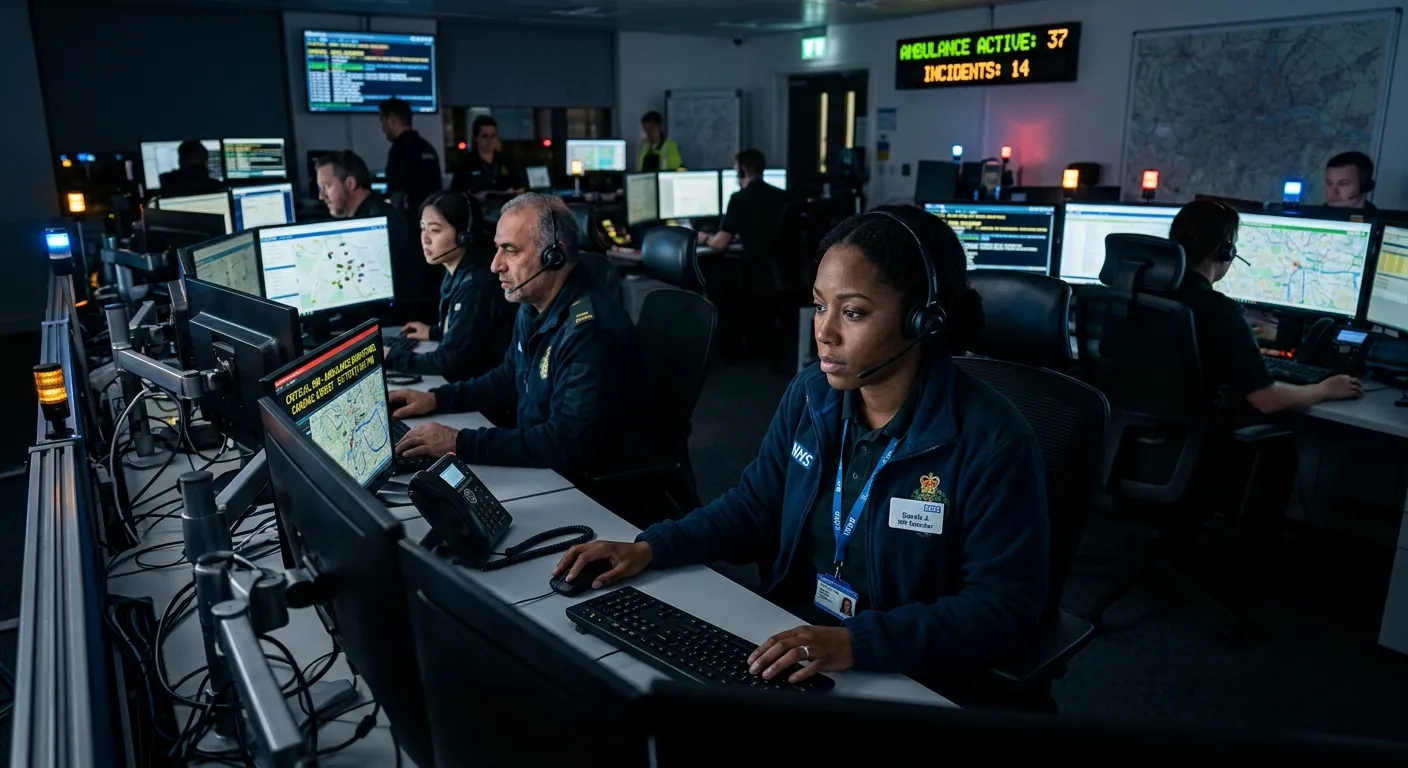
Navigating Emergency Call Centre Careers & Hiring
The Critical Role of Emergency Call Handlers
Professionals in call centre emergency services jobs are the first point of contact in a crisis. Their role transcends standard customer service; it involves rapid information processing, calm under extreme pressure, life-saving decision-making, and precise coordination with police, fire, and medical units. The psychological resilience required is immense, as operators routinely handle traumatic situations.
Key responsibilities include triaging calls based on severity, providing pre-arrival medical instructions (like CPR guidance), logging critical details with flawless accuracy, and managing the emotional state of distressed callers. This makes the hiring process for these positions uniquely demanding, requiring robust vetting for empathy, clarity of speech, multitasking ability, and stress tolerance.
Strategic Hiring for Emergency Dispatch Centres
Filling call centre emergency services jobs requires a multi-stage strategy. It begins with attracting candidates who possess innate compassion and stability, followed by rigorous assessment. Simulation-based interviews are crucial, where candidates must handle simulated high-pressure calls. Background checks and psychological evaluations are often mandatory.
To streamline your hiring process and ensure you never miss a potential top candidate, consider leveraging modern tools. For instance, integrating an AI-powered call overflow handling system for your recruitment line can ensure every enquiry from a potential hire is captured, even during peak times or after hours, preventing you from losing ideal applicants to a busy signal.
How AI is Augmenting Emergency Response
Technology is not replacing these critical human roles but augmenting them. AI can handle initial call screening, gather basic location and incident type data through voice recognition, and transcribe calls in real-time, allowing the human operator to focus entirely on the caller's emotional needs and complex instructions. This symbiosis increases centre capacity and reduces operator cognitive load.
For non-emergency but time-sensitive related fields, AI solutions are transforming operations. Many healthcare practices, for example, are adopting healthcare call volume management with call taking AI to triage routine appointment requests and medication queries, freeing up human staff for more complex patient interactions—a model that emergency services can adapt for non-critical intake.
Compensation, Burnout, and Career Pathways
Salaries for emergency call handlers vary by region, experience, and the specific service (e.g., police vs. ambulance). In the UK, entry-level positions often start in the £20k-£25k range, with senior dispatchers and team leaders earning £30k-£40k. Specialized roles, such as help desk support specialist salary benchmarks in corporate IT environments, can provide a useful comparison, though emergency roles carry unique stress premiums.
Career progression can lead to training, quality assurance, management, or moving into related fields like crisis counselling or emergency planning. Addressing burnout is a top priority for employers, requiring comprehensive support programs, regular debriefing, and sustainable shift patterns to retain this vital talent.
Essential Attributes for Success in Emergency Call Centre Roles
Empathy & Emotional Intelligence
The ability to project calm, convey understanding, and de-escalate panic is non-negotiable. Operators must listen beyond the words to assess fear levels and provide reassurance while gathering facts.
Rapid Decision-Making Under Pressure
Seconds count. Successful candidates can analyse fragmented information quickly, prioritise actions, and follow strict protocols without hesitation, even when faced with ambiguous or chaotic situations.
Crystal-Clear Communication
Articulate, concise, and authoritative speech is vital. Operators must extract precise details (location, condition) from distressed callers and relay clear instructions to both the caller and responding units.
Meticulous Data Entry & Multitasking
Operating complex CAD (Computer-Aided Dispatch) systems while actively listening and speaking requires exceptional coordination. Accuracy in logging details can directly impact response efficacy and legal outcomes.
Teamwork & Post-Call Support
Dispatchers work as a cohesive unit, sharing information and supporting each other during major incidents. A culture of peer support and access to professional counselling is essential for long-term resilience.
Integrity & Confidentiality
Handling sensitive personal data and being privy to traumatic events demands the highest ethical standards. Trustworthiness and adherence to data protection laws (like GDPR) are paramount.
Building a Future-Proof Emergency Call Centre Team
The landscape for call centre emergency services jobs is evolving. While the human element remains irreplaceable for empathy and complex judgement, strategic hiring now must consider technological fluency. The next generation of dispatchers will work alongside AI tools that handle data intake, transcription, and even preliminary analysis of call sentiment to flag high-stress situations faster.
For hiring managers, this means expanding candidate criteria to include adaptability to new software and comfort with voice-driven AI interfaces. Training programs must evolve beyond traditional protocols to include"human-AI collaboration," teaching operators how to supervise and correct AI-gathered information effectively.
Furthermore, the operational model is shifting. Many non-critical administrative calls to emergency services (e.g., routine enquiry lines, non-urgent police reporting) can be effectively managed by sophisticated AI, as seen in other sectors. Understanding the difference between a call centre and a virtual answering service is crucial here. Deploying a virtual AI service for these ancillary lines frees up your highly trained human staff to focus exclusively on genuine emergencies, improving overall response times and job satisfaction.
Pro-Tip: Mitigate Hiring Risk with Flexible Staffing
Emergency centres face fluctuating call volumes. Instead of over-stressing permanent teams or leaving roles underfilled, consider a core permanent team supplemented by a pool of trained, on-call temporary specialists. This model, common in healthcare and event staffing, provides surge capacity during major incidents or peak periods, protecting your permanent staff from burnout. You can post a job specifically for these flexible, on-call roles to build your resilience roster.
Salary Benchmarks: Emergency Dispatch vs. Technical Support
When evaluating compensation to attract talent, it's useful to look at adjacent fields. A common benchmark is the help desk support specialist salary. While the technical skills differ, both roles require problem-solving under pressure, customer service, and system navigation. In the UK, an IT help desk support specialist might earn between £22,000 and £35,000 depending on experience and sector. Emergency call handlers, given the heightened stress and specific training, often command salaries at the mid-to-upper end of this range, with additional allowances for unsocial hours.
For a detailed breakdown of compensation in customer-facing technical roles, our dedicated guide on hiring help desk support specialists provides valuable market insights that can inform your emergency services remuneration strategy.
See AI in Action for Critical Calls
While AI cannot handle a true emergency, understanding its capabilities in triage and support is key for modern centre managers. This video demonstrates how AI manages high-volume call scenarios.
This insight is directly applicable to managing non-urgent overflow lines in an emergency services context, ensuring human operators are reserved for the calls that truly need them.
Frequently Asked Questions: Hiring for Emergency Services
Beyond standard competency questions, you must simulate the pressure of the role. Use realistic call simulations with background noise and distressed"callers." Assess active listening by asking them to recall specific details post-call. Evaluate their ability to follow strict protocols while showing empathy. Also, test their data entry speed and accuracy under time constraints. Psychological resilience can be gauged through scenario-based questions about handling traumatic calls and their proposed coping mechanisms.
Implement AI-powered tools to handle the initial data-heavy lifting. Real-time call transcription allows operators to focus fully on the caller, not note-taking. Intelligent call routing can filter out non-emergency or administrative calls to other channels. For after-hours non-urgent enquiries, an AI solution for after-hours calls can capture details for follow-up, preventing your emergency line from being clogged and reducing frustration for both callers and staff. This creates a more sustainable workload for your human team.
Absolutely, and it's the most promising model for the future. AI can answer, perform initial"What is your emergency?" screening, confirm location via voice recognition, and even provide basic calming prompts. The moment a genuine emergency is confirmed or high distress is detected, the call is instantly transferred to a human operator along with the AI-gathered data. This model is already being explored for non-emergency police reporting and NHS 111 services. It ensures human expertise is applied where it's most needed, improving overall system efficiency.
Look beyond generic job boards. Target forums and associations related to public safety, nursing, psychology, and crisis counselling. Veterans and ex-military personnel often possess the required calm under pressure. Promote the meaningful, purpose-driven aspect of the role. To cast the widest net and manage applicant influx efficiently, ensure your recruitment process is robust. You can start by posting your emergency call centre job vacancy on specialized platforms. Furthermore, ensure your own recruitment phone line is never missed by using a professional AI phone answering service for customer support to handle initial candidate enquiries, schedule interviews, and project a modern, efficient employer brand.
Ready to Build Your Resilient Emergency Response Team?
The stakes have never been higher. Securing the right talent for your call centre emergency services jobs is a mission-critical task. By combining strategic hiring, supportive technology, and competitive compensation informed by benchmarks like the help desk support specialist salary, you can create a centre that saves lives and sustains its most valuable asset: its people.
Don't let a lengthy hiring process or missed candidate calls compromise your service. Take the first step today.
Post Your Emergency Services Job NowAttract, hire, and retain the heroes who answer the call when it matters most.
Case Study: Implementing a Hybrid AI-Human Model in a Regional Dispatch Centre
A regional fire and ambulance service in the Midlands faced a critical challenge: a 40% year-on-year increase in non-emergency calls to its 999/112 lines, ranging from requests for advice on minor burns to enquiries about community event permits. This was causing dangerous delays for genuine emergencies and contributing to high operator stress and turnover.
Their solution was a phased implementation of a hybrid AI-human intake system. In Phase 1, an AI virtual assistant was deployed to handle their separate, non-emergency public enquiry line. The AI, trained on thousands of past enquiries, could answer 65% of routine questions (e.g.,"Are you hiring?","How do I get a fire safety certificate?") without human intervention, booking callbacks for more complex issues.
The success of Phase 1 led to Phase 2: AI pre-screening for the emergency line itself. Now, when a 999 call is connected, an AI voice immediately asks, "What is your emergency?" and begins transcribing and geolocating. If keywords like"unconscious,""fire," or"chest pain" are detected, the call is routed to a human operator in under 2 seconds, with the initial data populating their CAD screen. For calls where the AI detects hesitation or non-emergency phrases, it gently guides the caller: "It sounds like this may not be a life-threatening emergency. I can connect you to our non-urgent services, or would you like to speak to a 999 operator now?"
Results After 12 Months:
- 18% reduction in non-emergency traffic on the primary 999 lines.
- Human operators gained an average of 12 extra seconds per genuine emergency call for assessment and instruction.
- Staff satisfaction scores related to"managing workload" increased by 22%.
- The centre is now exploring using AI sentiment analysis to flag calls where a caller's voice stress indicates a hidden emergency, even if their words don't.
The Psychological Contract: Supporting Mental Resilience Beyond the Debrief
While Critical Incident Stress Debriefing (CISD) is standard, leading organisations are building a more comprehensive"psychological contract" with their emergency call handlers. This acknowledges that trauma exposure is cumulative, not just event-based. Proactive mental resilience programs are now a key differentiator in attracting and retaining talent for call centre emergency services jobs.
1. Proactive Resilience Training
Before they take their first call, new hires undergo resilience training based on techniques from high-stress professions like aviation and special forces. This includes tactical breathing exercises, grounding techniques to use mid-call, and cognitive reframing strategies to separate their identity from the trauma they witness. Regular"booster" sessions are mandatory, treating mental fitness like physical fitness.
2."Trauma-Stewardship" and Peer Mentoring
Moving beyond passive support, centres are implementing formal"trauma-stewardship" programs. Senior operators trained in psychological first-aid act as designated peer mentors. They conduct regular, informal check-ins, not just after bad calls, looking for subtle signs of compassion fatigue or emotional withdrawal. This creates a culture where discussing mental load is normalized and seeking help is seen as a sign of professionalism.
Furthermore, the physical environment is being redesigned with mental well-being in mind."Quiet rooms" are no longer sparse, clinical spaces. They are designed as sensory sanctuaries with adjustable lighting, comfortable seating, and nature sounds available immediately after a difficult call. Some forward-thinking centres use real-time call transcription not just for efficiency, but to create a searchable record that allows a supervisor to quickly review the specifics of a challenging call with an operator, reducing the emotional burden of having to verbally relive the event during debrief.
Future Trends: The Next 5 Years in Emergency Communications
Integration with IoT and Smart Ecosystems
Emergency call centres will evolve into integrated"smart response hubs." Imagine a call about a cardiac arrest where the caller's smartwatch data (heart rate, blood oxygen) is automatically and securely shared with the dispatch AI, providing real-time vital signs to the operator and the responding paramedics' mobile data terminal. Similarly, smart home sensors for smoke, water, or unusual motion could trigger automatic, verified alerts to the centre, complete with location and sensor data, before a human even calls 999. Hiring will need to include candidates comfortable with interpreting multi-source data streams.
Advanced Natural Language Processing (NLP) for Emotional Triage
Future AI will move beyond keyword spotting to analyse vocal biomarkers—tone, pitch, speech rate, and micro-tremors—to assess a caller's physiological state with startling accuracy. This"emotional triage" could allow the system to prioritise a call where a whispery, slowed voice says"I'm okay" over a loud caller reporting a stolen bicycle, as the former may indicate shock or serious injury. This requires human operators to trust and act on AI-generated meta-data, a significant shift in operational doctrine.
The Rise of the"Emergency Communications Manager" Role
The traditional dispatcher role will bifurcate. Alongside frontline call-takers, a new specialist role will emerge: the Emergency Communications Manager. These will be senior personnel who oversee the AI-human workflow, manage complex multi-agency incidents via digital collaboration platforms, analyse performance data to optimise protocols, and act as the public information point during major crises. This creates a clear, desirable career pathway that retains institutional knowledge and technical expertise within the centre.
Actionable Step: Audit Your Technology Stack
Is your current infrastructure merely a digital version of a 20th-century call centre, or is it built for this future? Conduct an audit with these questions:
- Can our systems integrate data from external APIs (e.g., traffic cameras, wearable devices) in real-time?
- Is our call recording and transcription analysis capable of providing insights into caller stress levels and operator performance trends?
- Do we have a secure, dedicated channel to triage non-emergency traffic, whether to a human team or an advanced AI phone answering service?
Building a team for the future starts with building an ecosystem that empowers them. The goal is not to create a fully automated centre, but a centaur model—where human intuition and AI's data-processing power combine to create a response capability greater than the sum of its parts.