
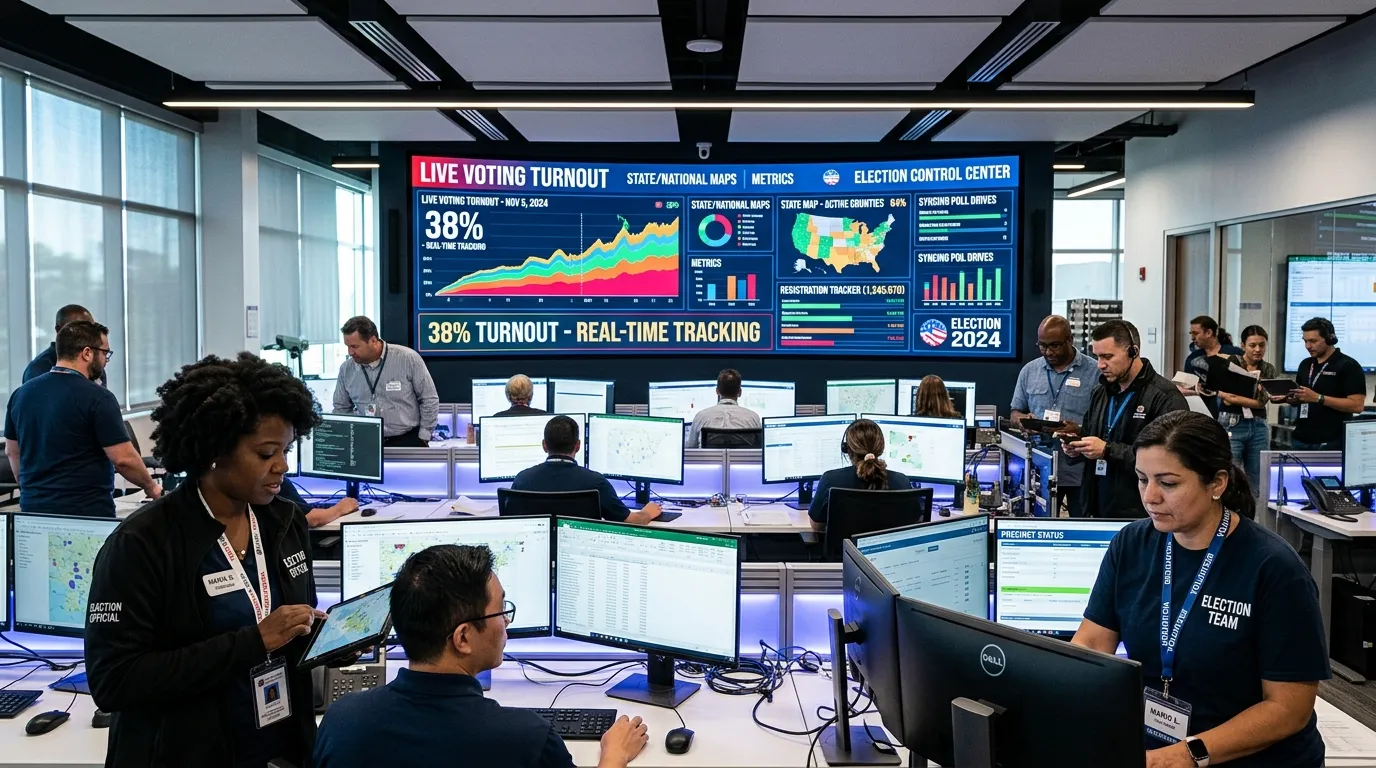
The General Election Playbook: A Comprehensive Guide to Staffing, Strategy & Success
From planning to polling day, discover the critical operational strategies, staffing solutions, and communication frameworks that define a modern, efficient, and secure democratic event.
Hire Election Staff NowA general election is the cornerstone of a functioning democracy, a complex logistical event that demands meticulous planning, a vast temporary workforce, and flawless communication channels. It's far more than just a day at the polls; it's a nationwide project with immense operational weight. For election commissions, political parties, and civic organizations, the challenge is twofold: managing unprecedented, time-sensitive general chat and inquiries from the public while executing a secure and transparent voting process. This guide delves into every facet, offering a modern blueprint for success in the digital age.
The Pillars of Election Management: A Multi-Phase Overview
The Foundation: Strategic Planning & Workforce Mobilization
Success on election day is determined months in advance. This phase involves legal compliance, risk assessment, budgeting, and most critically, staffing. A general election requires recruiting, vetting, and training hundreds of thousands of temporary workers—presiding officers, poll clerks, counting staff, and IT support. This is a monumental hiring challenge akin to a national-scale event staffing operation, but with higher stakes and stricter security protocols. The process must be efficient and scalable, avoiding the pitfalls of traditional recruitment that can lead to last-minute shortages.
👔 Pro-Tip: Staffing Strategy
Treat election staffing as a peak-volume project. Partner with specialized agencies or use dedicated platforms to manage applications, background checks, and training schedules. For internal communication and support lines, consider AI-powered call overflow handling to manage the surge in inquiries from applicants and existing staff without needing to hire a massive temporary call centre team.
Execution: Polling Station & Count Centre Logistics
This is the live phase. Operations management ensures every polling station has the correct equipment, ballots, and trained staff. It involves real-time problem-solving, from managing queues to handling technical issues with voter registers. The parallel operation is the count, where accuracy and speed are paramount. Staff here must be meticulously trained in procedures to avoid challenges. The pressure is immense, and clear, reliable communication lines between field staff, central command, and the public are non-negotiable. Any breakdown here can lead to delays and undermine confidence.
The Lifeline: Managing Voter & Media Communication
In the lead-up to and on election day, information hotlines are flooded. Voters need to know where to vote, what ID to bring, and how to report issues. This creates a massive, predictable spike in general chat and specific inquiries. Relying on overwhelmed civil servants or volunteers manning basic phone lines is a recipe for missed calls, frustration, and the spread of misinformation. Modernizing this function is critical for public trust and operational smoothness.
Safeguarding Democracy: Technology, Security & Transparency
This pillar covers everything from securing electronic voter rolls and result transmission systems to combating disinformation online. It also includes the technology used to facilitate the process itself. For instance, an automated phone receptionist software with advanced features can be configured to provide 24/7 automated answers to common voter FAQs (polling station locations, hours, ID requirements), freeing human staff for complex issues and ensuring consistent information dissemination.
Key Operational Challenges & Modern Solutions
Peak-Time Staffing & Training
Recruiting a large, reliable, and trained temporary workforce for a single day is a unique HR nightmare. The solution lies in agile recruitment platforms, streamlined digital training modules, and clear contingency plans. Understanding the true cost of missed operations—like an unmanned polling station—justifies investment in robust staffing pipelines.
Information Tidal Wave
Managing the surge in voter inquiries is a classic call volume crisis. This is where AI-driven communication tools shine. A system capable of healthcare call volume management principles can be adapted for election commissions, using intelligent call routing and automated answers to handle the bulk of general chat, ensuring every caller gets immediate, accurate information.
After-Hours & Emergency Support
Election-related questions don't stop at 5 PM. Voters may call about last-minute registration issues or polling station problems early in the morning. An after-hours call handling solution is essential to capture these inquiries, provide reassurance, and escalate urgent operational issues (e.g., a broken ballot box) to on-call managers immediately, preventing small problems from escalating.
Transforming Voter Communication with AI & Automation
The traditional model of a crowded phone bank staffed by volunteers is outdated and inefficient. Modern general election communication requires smart technology. An AI-powered system can act as the first line of contact, handling thousands of concurrent calls that would require an army of human operators.
Imagine a voter calling the electoral commission hotline. An AI receptionist answers instantly, in a professional and calm voice. Using natural language processing, it understands the query:"Where is my polling station?" It can then authenticate the caller via a simple security question (postcode), access the database in real-time, and provide the exact address and opening hours. It can also text or email this information to the voter. For more complex issues—like a complaint about campaign signage—it can seamlessly transfer the call to a live, specialist agent, along with a transcript of the conversation so far.
Case Study: Reducing Misinformation & Wait Times
A county electoral office implemented an AI answering service in the 6 weeks leading up to a major general election. They configured it with a comprehensive knowledge base from the official election handbook.
- Result: Handled 85% of all inbound calls without human intervention.
- Outcome: Average caller wait time dropped from 12 minutes to under 30 seconds.
- Impact: The volume of misinformation complaints reported on social media dropped significantly, as voters received consistent, official answers 24/7.
This mirrors the benefits seen in sectors like healthcare, where AI manages high-volume, repetitive inquiries to free experts for critical tasks.
Staffing for Success: Beyond the Polling Station
While poll workers are visible, a general election relies on a vast unseen workforce: IT support for digital systems, logistics coordinators for ballot distribution, security personnel, data entry clerks for postal vote verification, and communication centre operators. Sourcing these skills temporarily requires a strategic approach. It's not just about filling a seat; it's about finding individuals with specific competencies who can perform under intense scrutiny.
This is where the concept of a flexible, on-demand workforce comes into play. Similar to how a logistics staffing agency provides specialized temporary drivers and warehouse staff, election managers need access to pools of pre-vetted, trained temporary professionals. The hiring process must be as streamlined as the communication process. Using dedicated portals for application, mandatory online training, and digital scheduling eliminates administrative chaos and ensures everyone is on the same page before the big day.
Ensuring Integrity and Public Trust
< class="text-lg leading-relaxed text-slate-900 mb-6">The ultimate goal of any general election is not just to run smoothly, but to be—and be seen to be—fair, secure, and transparent. Every operational decision feeds into this perception. Technology plays a dual role: it must both enhance efficiency and fortify security. For example, call handling systems for reporting irregularities must be secure and create an auditable trail. An AI answering service can log every complaint call with a timestamp, caller number (where permitted), and a full real-time call transcription, providing an immutable record for investigation.Furthermore, providing clear, accessible, and immediate information is a direct antidote to uncertainty and distrust. When a voter can get an instant, accurate answer to their question at 8 PM on a Sunday, it reinforces the credibility and responsiveness of the entire electoral system. This level of professional communication was once only available to large corporations; now, it's a democratic imperative.
Frequently Asked Questions (General Election Operations)
The twin challenges are scale and specificity. You need to recruit an enormous number of people for very short-term, high-pressure roles that require specific training on complex electoral law and procedures. Attracting enough qualified individuals, ensuring they complete mandatory training, and managing their logistics (assignments, payments) is a massive operational task. Leveraging technology for recruitment drives and using automated systems for general chat and scheduling inquiries can drastically reduce the administrative burden on permanent staff.
Modern AI communication platforms are built with security in mind. They can be configured to provide publicly available information (polling hours, ID list) without accessing sensitive databases. For personalized information (e.g., polling station location), they can use simple, non-sensitive data like a postcode for lookup, similar to a public website. All call data can be encrypted and logged, creating a more secure and auditable trail than scribbled notes from a volunteer. For a deep dive on security, watch our video: . This approach is far more secure than the inconsistent practices of a large, temporary human team.
Yes, but with a smart design. The key is triage. Advanced call-taking AI with customizable features can handle the vast majority of factual, repetitive inquiries (80-90%), which are often emotional simply due to frustration from not getting through. By instantly resolving these, it defuses tension. For truly complex, sensitive, or emotional calls (e.g., alleging voter intimidation), the AI can be programmed to detect distress keywords and immediately, compassionately transfer the caller to a specially trained human agent. This ensures critical issues get human attention faster, while routine general chat is handled efficiently.
Absolutely, when viewed as risk mitigation and efficiency gain. The cost of a major communication breakdown or a staffing shortfall on election day—in terms of legal challenges, lost public trust, and administrative crisis management—is astronomically higher. Furthermore, many modern AI communication services operate on a flexible, subscription or per-use model. You can scale up for the intense 6-8 week election period and scale down afterward, making it highly cost-effective. Compare this to the fixed, high cost of hiring and training a large temporary call centre team. For a detailed analysis, see our guide on answering service pricing.
Ready to Modernize Your Election Operations?
Whether you're planning for the next general election or managing by-elections and voter registration drives, the right staffing and communication strategy is paramount. Don't let outdated processes create risk and erode public confidence.
Explore how our AI-powered call-taking solutions can be tailored to support the unique demands of democratic processes, just as they do for legal firms, healthcare providers, and businesses nationwide.