
Elevate Your Team: The Ultimate Guide to Help Desk Support Certification in 2026
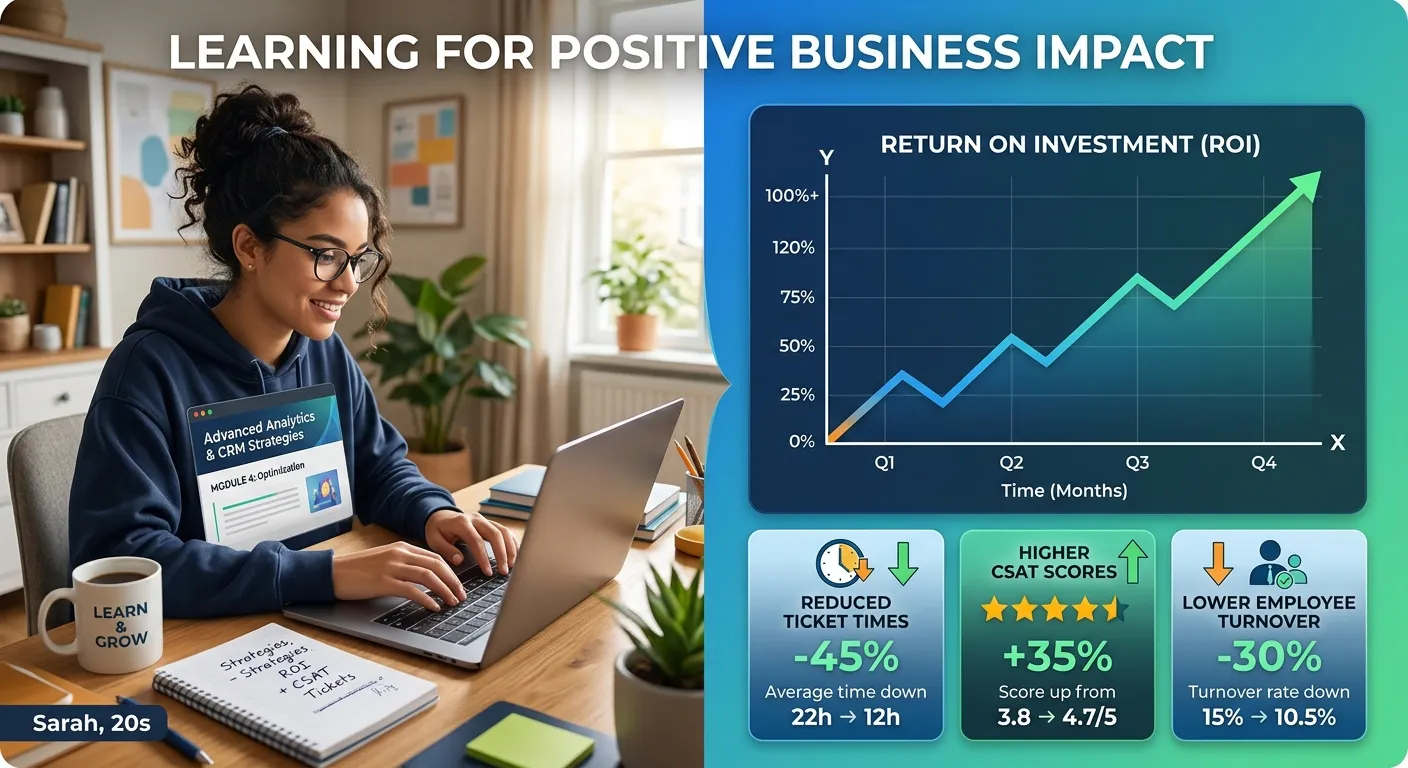
Validate expertise, boost operational efficiency, and build a world-class support team. This comprehensive guide covers every certification pathway, from foundational ITIL to advanced technical credentials, empowering you to hire staff today with verified skills.
Hire Certified Help Desk Staff NowHelp Desk Certification Pathways: A Multi-Category Overview
Navigating the landscape of help desk certifications can be complex. Use the tabs below to explore the different categories and find the perfect certification to validate skills for your team or your own career advancement.
Why Help Desk Support Certification is Non-Negotiable
In an era where customer experience is the ultimate competitive differentiator, a certified help desk team is your frontline advantage. Certification goes beyond basic troubleshooting; it instills a standardized, process-driven approach to IT service management. For businesses, this translates to faster resolution times, higher first-call resolution rates, and significantly improved customer satisfaction scores (CSAT). Investing in certification, whether for upskilling existing staff or as a prerequisite when you hire help desk support specialists, demonstrates a commitment to quality and operational excellence.
Pro Tip: Certification as a Recruitment Filter
When drafting job descriptions, specify certifications like CompTIA A+ or HDI-SCA. This immediately filters for candidates with proven foundational knowledge and a proactive approach to professional development, saving countless hours in the screening phase. It’s a strategy leveraged by the best outsourced call centers to guarantee baseline competency.
ITIL, HDI, & COBIT: Frameworks for Excellence
Foundational certifications focus on the *how* rather than the *what*. They provide the service management framework within which technical skills are applied.
- ITIL 4 Foundation: The global standard for IT service management. It teaches the service value chain, guiding principles (e.g., Start where you are, Progress iteratively), and practices essential for aligning IT services with business needs.
- HDI Support Center Analyst (HDI-SCA): Specifically tailored for front-line support roles. It covers critical soft skills, incident management processes, and service level agreement (SLA) management, making it ideal for new hires.
- COBIT 2019 Foundation: More strategic, focusing on governance and management of enterprise IT. While less common for tier-1 support, it's invaluable for help desk managers aiming to bridge the gap between operations and business objectives.
Validating Technical Proficiency
These certifications prove hands-on ability with specific technologies, which is crucial for resolving complex tickets efficiently.
- CompTIA A+: The industry-standard for establishing core IT skills in troubleshooting, operating systems, security, and hardware. A non-negotiable for many entry-level help desk positions.
- Microsoft 365 Certified: Fundamentals (MS-900): Essential for support teams in cloud-centric environments, proving knowledge of SaaS offerings like Microsoft 365.
- Apple Certified Support Professional (ACSP): Critical for businesses with a Mac-heavy user base, ensuring support staff can expertly manage macOS and related Apple services.
Optimizing Your Hiring Strategy with Certification
Leveraging certification in your staffing strategy does more than just verify skills; it builds a resilient, scalable support operation. Certified agents require less ramp-up time, adhere to best practices from day one, and contribute to a culture of continuous improvement. For businesses considering scaling their support capabilities, pairing a core team of certified specialists with an AI-powered solution like advanced call taking AI creates an unbeatable combination. The AI handles routine inquiries and call overflow handling, while your certified human agents focus on complex, high-value issues that require deep expertise and critical thinking.
Post a Job for Certified Support StaffThe Tangible Benefits of a Certified Help Desk
Investing in help desk support certification delivers measurable ROI across your organization.
Enhanced First-Contact Resolution (FCR)
Certified agents possess structured troubleshooting methodologies, dramatically increasing the percentage of issues resolved on the first call. This reduces handle time, customer frustration, and operational costs. This efficiency is amplified when integrated with automated call handling systems that pre-qualify and route calls intelligently.
Reduced Employee Turnover
Certification provides a clear career path, boosting job satisfaction and engagement. Agents feel valued and invested in, which is crucial in a high-turnover industry. Building a team with certified professionals, whether hired directly or through a strategic partnership with one of the best outsourced call center providers, creates a more stable and knowledgeable support unit.
Standardized Processes & Compliance
Certifications like ITIL enforce consistent, repeatable processes for incident, problem, and change management. This is vital for audit trails, compliance (especially in regulated sectors like healthcare or legal), and scaling operations predictably. For example, a legal call answering service requires meticulous adherence to confidentiality and process, which certification helps ensure.
Building a Certification Strategy: From Individual to Enterprise
For the Individual: Charting Your Career Path
Starting a career in help desk support? Begin with a vendor-neutral, foundational certification like CompTIA A+ to prove your technical chops. Follow this with the ITIL 4 Foundation to understand the service lifecycle. This combination makes you a highly attractive candidate.
For experienced agents aiming for team lead or management roles, advanced certifications like HDI Support Center Team Lead (HDI-SCTL) or ITIL 4 Specialist: Create, Deliver & Support are the next logical step. They focus on coaching, performance management, and designing efficient services.
Actionable Advice:
Don't just collect certificates. After completing a certification, immediately apply one key framework or concept to your daily work. Document the results. This creates tangible proof of value for your next performance review or job interview.
Sample Certification Pathway
Year 1-2: Entry-Level
CompTIA A+, HDI-Support Center Analyst (HDI-SCA)
Year 3-4: Advanced Technician
Microsoft 365 Certified: Modern Desktop Administrator Associate, ITIL 4 Foundation
Year 5+: Leadership
HDI Support Center Manager (HDI-SCM), ITIL 4 Strategist: Direct, Plan & Improve
For the Enterprise: Scaling Support Intelligently
Enterprise strategy involves more than funding exams. It's about creating a culture of continuous learning and strategically augmenting your human talent with technology.
- Develop Tiered Certification Tracks: Map specific certifications to job levels (e.g., Analyst I requires A+, Analyst II requires ITIL Foundation). This clarifies promotion criteria and incentivizes growth.
- Leverage AI to Free Up Expert Time: Implement an AI-powered virtual receptionist to handle password resets, appointment scheduling, and basic FAQs. This allows your certified, higher-cost support staff to concentrate on complex issues that fully utilize their training, maximizing your investment in their help desk support certification.
- Partner with Specialized Outsourcers: For non-core hours or overflow, partner with a provider that insists on certified staff. This is a hallmark of the best outsourced call centers. It ensures seamless service continuity and protects your brand's reputation for quality support.
This hybrid approach is particularly effective in industries with fluctuating call volumes. A healthcare practice, for instance, can use certified in-house staff for complex patient coordination during the day, while an AI agent manages after-hours appointment inquiries and emergencies, as detailed in our guide on handling after-hours calls.
See Modern Support in Action: AI & Human Synergy
Understanding how certified human agents can be strategically supported by technology is key to modern support design. The following video demonstrates how AI call handling manages high-volume, routine interactions, allowing human staff to focus on issues that require certification-backed expertise.
Watch how an AI receptionist manages concurrent call flows, a task impossible for a single human agent, ensuring no customer is ever left waiting.
Frequently Asked Questions
Your questions about help desk support certification, answered.
Which help desk support certification is the most valuable for getting hired?
For entry-level positions, the CompTIA A+ certification remains the gold standard and is explicitly requested in a massive percentage of job postings. It validates core technical competency. Coupled with the ITIL 4 Foundation certification, which demonstrates an understanding of service management processes, you become a standout candidate. Employers know you can both fix the problem and follow the correct procedure. When looking at salary guides for hiring, you'll consistently see a premium offered for candidates holding these credentials.
Is certification still relevant with the rise of AI in customer support?
More relevant than ever. AI excels at handling repetitive, rule-based inquiries. Certification equips human agents with the advanced problem-solving, critical thinking, and emotional intelligence needed to handle the complex, nuanced issues that AI escalates. They are complementary forces. A well-certified team defines the processes, handles the exceptions, and trains the AI systems. In fact, managing and working alongside AI receptionist technology is becoming a new skill in itself. Certification ensures your human support layer operates at a higher strategic level.
How can a small business justify the cost of certifying its support staff?
View it as an investment in customer retention and operational efficiency, not just a cost. Certified agents resolve issues faster and more accurately, leading to happier customers who stay longer. They also make fewer costly mistakes. For a small business, a strategic approach is to certify your lead support person and use technology to augment them. For example, use an automated answering service for small business to filter and triage calls. This allows your one certified expert to focus only on the high-value, complex problems that truly require their skills, maximizing their impact. The return comes from reduced customer churn and the ability to handle more volume without adding more (expensive) headcount.
Should I require certification when hiring for a remote help desk position?
Absolutely. Certification acts as a powerful proxy for self-discipline, initiative, and foundational knowledge—qualities that are even more critical to assess in a remote hiring context. It provides a standardized benchmark when you can't evaluate a candidate through in-person observation. Requiring a certification like HDI-SCA or ITIL Foundation ensures the candidate already understands key service desk concepts, reducing your onboarding and training burden. It’s a best practice used by leading outsourced call centers that manage fully remote teams. When you're ready to post a job, make certification a"required" or"strongly preferred" field to attract qualified applicants from the start.
Ready to Build a World-Class, Certified Support Team?
Whether you're looking to upskill your current staff or hire new, pre-vetted talent with verified help desk support certification, the time to act is now. A certified team is a more capable, efficient, and scalable team—directly boosting your customer satisfaction and your bottom line.
Need guidance on the right certifications for your industry? Our resources on specialized support for dentists, law firms, and tradespeople provide tailored insights.
Beyond the Syllabus: A Practical Guide to Certification Success
Choosing the right certification is only the first step. Understanding the logistics of exam preparation, cost, and renewal is critical for both individuals and organizations budgeting for professional development.
Exam Formats & What to Expect
Modern certification exams have evolved beyond simple multiple-choice. Many now include performance-based questions (PBQs) that simulate real-world troubleshooting scenarios.
- CompTIA A+ (Core 1 & 2): Typically 90 questions each, including PBQs like configuring a mobile device or troubleshooting a network connection within a simulated interface.
- ITIL 4 Foundation: 40 multiple-choice questions, closed-book, with a focus on understanding key concepts and the service value chain.
- Vendor-Specific (e.g., Microsoft): Often involve case studies where you must analyze a scenario and recommend solutions across multiple technologies.
Pro-Tip: Always check the official exam provider's website for the most current exam objectives and question format details.
Budgeting & Resource Allocation
Certification is an investment. For enterprises, a structured budget ensures scalability and fairness.
Typical Cost Breakdown (Per Candidate)
- Study Materials: $50 - $300 (Books, e-learning subscriptions)
- Exam Voucher: $200 - $500 (Varies by certification body)
- Retake Fee: Often 50-100% of exam cost (Highlights the value of proper preparation)
- Renewal/CEUs: $50 - $200 every 1-3 years to maintain active status.
Many organizations see a 150-200% ROI on certification costs through improved efficiency and reduced errors within the first year post-certification.
Effective Study Strategies
Cramming doesn't work for process-oriented certifications. Successful candidates employ layered study techniques.
- Official Curriculum First: Use the exam objectives as a checklist. Cover every topic, even if it seems minor.
- Hands-On Labs: For technical certs like A+, set up a virtual lab environment. Practice disk partitioning, command line utilities, and network configuration.
- Join a Community: Forums like Reddit's r/ITCareerQuestions or certification-specific Discord servers provide peer support, study tips, and morale boosts.
- Simulated Exams: Take timed practice tests only in the final 1-2 weeks of study. They identify weak areas and build exam-day stamina.
Warning: Avoid"brain dumps" (websites offering real exam questions). Using them violates exam policies, can result in certification revocation, and, most importantly, means you don't truly learn the material.
Case Study: Mid-Sized SaaS Company Implements Tiered Certification Program
Challenge: A SaaS company with 150 employees experienced inconsistent support quality and long new-hire ramp-up times (averaging 6-8 weeks to full productivity).
Solution: They implemented a mandatory, tiered certification program:
- Tier 1 (Months 0-6): All new hires must obtain HDI-SCA within first 90 days. Study time was built into work schedules.
- Tier 2 (Months infl7-18): Agents aiming for promotion to Senior Analyst required CompTIA A+ and ITIL 4 Foundation, with a 50% company subsidy.
- Tier 3 (Team Lead+): Leadership required HDI Support Center Team Lead certification, fully funded by the company.
Measurable Results (12 Months Later):
Reduction in average handle time (AHT)
Reduced new-hire ramp-up time to full productivity
Increase in Employee Satisfaction (eNPS) within the support department
Key Takeaway: The Director of Support noted,"The shared vocabulary and process framework from ITIL alone eliminated countless hours of procedural debate. We stopped reinventing the wheel with every new incident. The certifications provided an external benchmark that gave our internal standards instant credibility."
2026 and Beyond: The Evolving Landscape of Help Desk Validation
The static certificate of the past is giving way to dynamic, skill-based validation. To future-proof your team or career, watch these emerging trends.
1. Micro-Credentials & Skill-Based Badging
Platforms like Credly and Acclaim allow for the issuance of digital badges for specific, granular skills (e.g.,"Advanced Microsoft Teams Troubleshooting" or"ITIL 4: Incident Management Practice"). These are often earned through short, focused courses or performance assessments.
Impact: Allows agents to build a"portfolio" of proven skills that is more nuanced than a single certification. Hiring managers can see exact competencies. This is particularly useful for specialized support roles in fields like healthcare IT or legal software.
2. Continuous Assessment & Renewal
The traditional 3-year renewal cycle is compressing. Bodies like CompTIA now require Continuing Education Units (CEUs) annually to keep certifications active. This shift from periodic re-testing to continuous learning ensures skills remain current in a fast-moving tech landscape.
3. Integration with AI Training & Governance
A new certification frontier is emerging: AI Support Governance. As AI handles more tier-1 interactions, certified human agents will need skills in:
- AI Training & Tuning: Curating knowledge bases, analyzing AI conversation logs to improve intent recognition.
- Escalation Protocol Design: Creating seamless handoff processes from AI to human, ensuring context is transferred.
- Ethical Oversight: Ensuring AI interactions are unbiased, compliant, and align with brand voice.
Forward-thinking providers are already exploring certifications that validate these hybrid human-AI management skills, recognizing that the most valuable support professional of 2026 will be both process-certified and technology-fluent.
Your Next Step: Audit & Plan
Whether you're an individual or a leader, conduct a simple audit: