
Your Ultimate Guide to the IT Service Desk at Bradley University: Excellence in Support & Innovation
Navigating the critical support hub for students, faculty, and staff. Discover how Bradley University's IT Service Desk operates, its impact on campus life, and how modern AI solutions are transforming similar support models globally.
Hire IT Support Specialists Today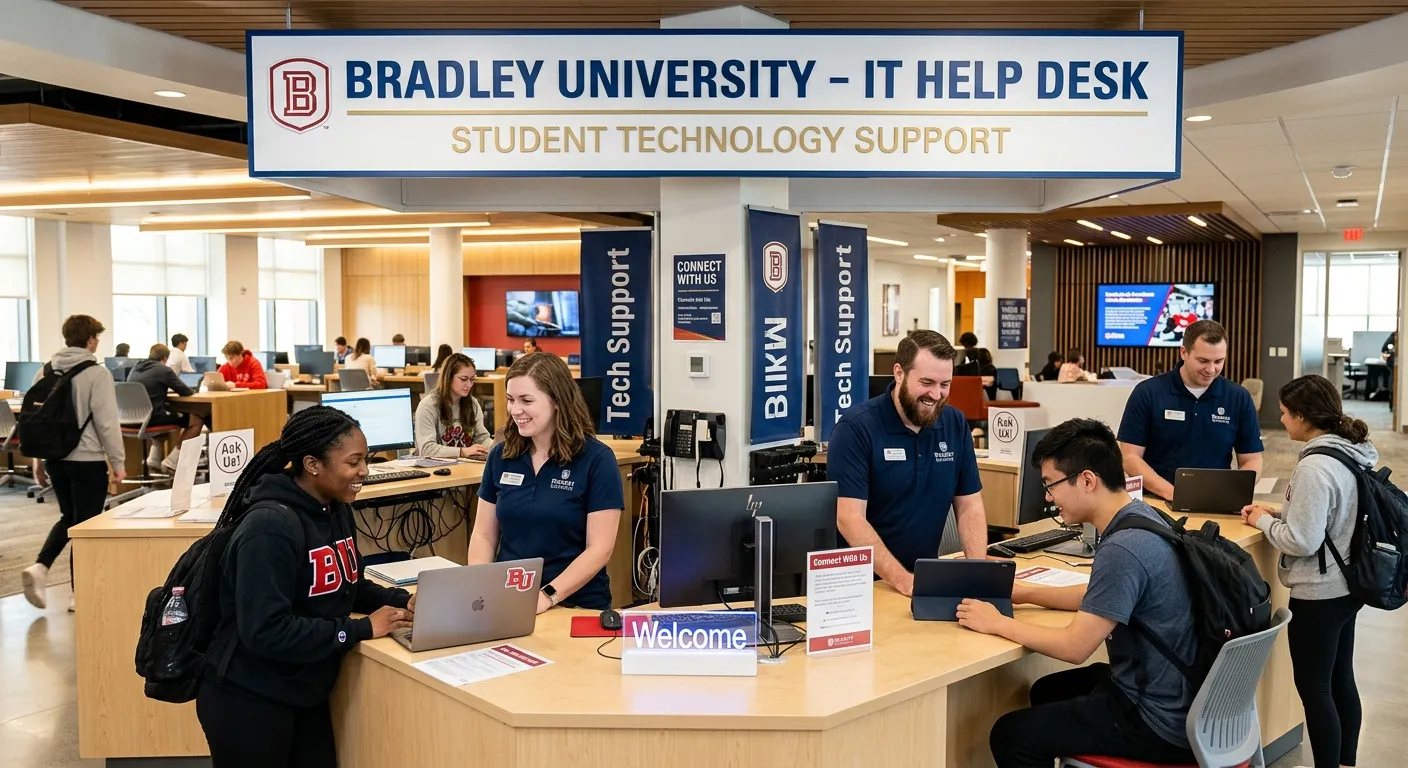
The IT Service Desk at Bradley University stands as the central nervous system for technological support across the Peoria campus. Far more than a simple troubleshooting center, it is a dynamic hub where technical challenges meet human-centric solutions, ensuring the seamless operation of academic, administrative, and research activities. This comprehensive guide delves deep into the structure, services, and strategic importance of Bradley's IT Service Desk, while also exploring how the principles of effective support are being revolutionized by AI-powered call and service management solutions in the broader market. Whether you're a student seeking help, a professional analyzing higher-ed support models, or a business looking to optimize your own service desk, understanding this ecosystem provides invaluable insights.
A Multi-Faceted Look at Bradley University's IT Support
Central Hub for Campus Technology
The IT Service Desk Bradley University operates under a clear mission: to provide timely, effective, and empathetic technical support to all members of the university community. This involves a multi-channel approach, handling inquiries via phone, email, walk-in visits, and increasingly, web tickets and live chat. The desk serves as the single point of contact (SPOC) for all IT-related issues, from password resets and software installation to network connectivity problems and classroom technology support. Its strategic placement within the university's IT infrastructure ensures that incidents are logged, tracked, and resolved efficiently, often employing a tiered support model where complex issues are escalated to specialized technical teams.
The philosophy extends beyond break-fix support. The desk is proactive in user education, creating knowledge base articles and running workshops to empower students and staff. This model mirrors the evolution seen in commercial sectors, where businesses are moving from reactive call centers to proactive, intelligent service hubs. For instance, modern smart call management platforms enable similar prioritization and routing, ensuring the right query reaches the right expert without delay.
Comprehensive Support Portfolio
The service catalog is extensive, tailored to the unique needs of an academic environment. Key services include:
- Account & Access Management: Handling Bradley usernames, password resets, and multi-factor authentication (MFA) for campus systems like Canvas and BUmail.
- Hardware Support: Diagnostic assistance for university-owned and personal devices, including laptops, desktops, and printers.
- Software Support: Installation and troubleshooting for licensed academic software (e.g., Microsoft Office 365, SPSS, specialized engineering packages).
- Network Connectivity: Resolving issues with campus Wi-Fi (BradleyAir) and wired network access in dorms and offices.
- Instructional Technology: Direct support for classroom AV systems, smart boards, and lecture capture technologies.
- Phishing & Security Incident Reporting: Acting as the first line of defense against cyber threats by educating users and triaging security concerns.
Managing the volume and variety of these requests requires robust processes. In the business world, this challenge is akin to healthcare call volume management, where efficient triage is critical. Bradley's desk leverages ticketing systems like TeamDynamix to automate workflow, a concept similar to how advanced call automation software solutions streamline customer interactions for businesses.
Measuring Success in a University Setting
The impact of a well-run IT Service Desk is profound but often understated. Key performance indicators (KPIs) include First Contact Resolution (FCR) rate, average ticket resolution time, user satisfaction scores (often via post-resolution surveys), and call abandonment rates. High performance in these areas directly correlates with reduced academic disruption, higher faculty productivity, and a better overall student experience. During peak times—such as the start of semesters, exam periods, or during critical online registration windows—the desk's ability to handle surge capacity is tested.
Pro-Tip: Surge Capacity Planning
Universities and businesses alike can learn from each other's surge management. Bradley likely employs student workers and cross-trained staff during peaks. Similarly, a commercial solution like AI-powered call overflow handling can automatically manage unexpected call surges for businesses, ensuring no student or customer is left waiting.
AI and the Next-Generation Service Desk
The future of the IT Service Desk at Bradley University, and in institutions worldwide, is inextricably linked with artificial intelligence and automation. We can anticipate the integration of AI chatbots to handle routine, tier-1 queries (e.g.,"How do I reset my password?"), freeing human agents for more complex, empathetic problem-solving. AI can also predict issues based on system telemetry and user behavior, enabling proactive support. This mirrors the transformation happening across industries, where AI-powered call taking solutions are handling initial customer screenings, scheduling, and FAQs with remarkable efficiency.
Furthermore, the concept of a 24/7 support model, challenging for a university desk with limited staffing, becomes feasible with AI. As explored in our resource on the easiest way to handle after-hours business calls, AI virtual agents can provide consistent, knowledgeable support outside standard hours, a boon for students pulling all-nighters or international students in different time zones.
Core Pillars of an Effective University IT Service Desk
Multi-Channel Accessibility
Support must be available where the users are. A successful desk like Bradley's offers phone, email, web portal, in-person, and potentially chat support. This omnichannel approach ensures accessibility for all users, regardless of their preference or immediate need. For businesses, achieving this without massive staffing is possible through a unified phone answering service platform that consolidates all channels into one dashboard.
Knowledge-Centered Support
Empowering users to solve common problems themselves via a searchable knowledge base reduces ticket volume and increases user satisfaction. This repository, built from resolved tickets, is a living resource. This principle is central to modern AI agents, which rely on vast, curated knowledge bases to provide instant answers, much like the systems detailed in our complete guide to AI receptionists.
Continuous Improvement & Metrics
Data-driven decision-making is key. Analyzing ticket data, resolution times, and satisfaction surveys helps identify systemic issues (e.g., recurring Wi-Fi problems in a specific building) and training gaps for staff. This focus on metrics is equally vital for commercial support operations, where understanding the true cost of missing business calls can justify investments in better technology and staffing.
Building the Team: Customer Service Call Center Interview Questions And Answers for IT Support Roles
The human element is the heart of any service desk. Hiring the right talent—individuals who are both technically proficient and exceptionally empathetic—is critical. The hiring process for roles at the IT Service Desk Bradley University, or any high-level support center, often involves behavioral and situational questions designed to assess problem-solving, communication, and stress management skills. Understanding these questions is invaluable for both hiring managers and candidates.
Common Interview Questions and Strategic Answers
1."Describe a time you had to explain a complex technical issue to a non-technical person. What was your approach?"
What Interviewers Seek: Communication skills, empathy, and the ability to translate jargon into understandable concepts.
Strong Answer Framework:"When a professor was unable to access a specialized research database, I avoided technical terms like 'proxy authentication.' I compared it to a library needing a specific key card, and walked them through each step visually via screen sharing, ensuring they understood the 'why' behind each action."
2."How do you prioritize your tasks when you have multiple users waiting for help simultaneously?"
What Interviewers Seek: Time management, triage ability, and understanding of SLA (Service Level Agreement) priorities.
Strong Answer Framework:"I assess based on impact and urgency. A complete network outage for a classroom takes precedence over a single software installation. I acknowledge each user quickly to manage expectations, provide immediate fixes where possible (like a password reset), and log detailed tickets for issues requiring longer resolution, ensuring follow-up."
3."Tell me about a time you didn't know the answer to a user's problem. What did you do?"
What Interviewers Seek: Resourcefulness, honesty, and commitment to finding a solution.
Strong Answer Framework:"A student reported an obscure error in a statistical software package. I was unfamiliar with it. I was transparent, saying, 'That's a great question, let me find the best answer for you.' I utilized internal knowledge bases, consulted with a senior analyst specializing in academic software, and documented the solution for the entire team, turning a gap in knowledge into a team learning opportunity."
For organizations looking to build or scale their support teams, crafting the right interview process is just the start. Finding qualified candidates efficiently is another challenge. Platforms exist to hire IT support specialists today, connecting you with a pool of talent skilled in the very customer service call center interview questions and answers dynamics that define great support.
The AI Revolution in Support & Call Handling
The principles of efficient, scalable, and empathetic support championed by Bradley University's IT Service Desk are being amplified by artificial intelligence in the commercial world. See how modern AI is transforming call handling, managing volume, and ensuring no query goes unanswered—concepts directly applicable to evolving university support models.
Video Insight: This demonstration highlights how AI can manage concurrent calls at a scale impossible for human-only desks, a crucial capability during registration or financial aid deadlines. It underscores the synergy between human expertise and AI efficiency.
Frequently Asked Questions: IT Service Desk Bradley University
While hours can vary by semester, the desk typically operates on extended weekday hours (e.g., 8:00 AM to 7:00 PM) and offers limited weekend support, especially during academic terms. For the most accurate and current hours, always check the official Bradley University IT website. For 24/7 automated support on common issues, many institutions are exploring AI solutions, similar to those discussed in our guide on the best AI receptionist for after hours calls.
The desk adheres strictly to FERPA regulations and university data security policies. Support staff are trained to verify caller identity before discussing account details and to never ask for passwords. Sensitive data within tickets is masked or encrypted. This rigorous approach mirrors the enterprise-grade security found in professional AI answering service solutions, where data privacy is paramount.
Absolutely. The core tenets—single point of contact, tiered support, knowledge management, and user-centric service—are universal. However, small businesses often lack the resources for a full in-house desk. This is where scalable, external solutions shine. A small business can achieve a similar level of professional call handling by utilizing an automated answering service for small business, which acts as its 24/7 virtual service desk for customer inquiries, appointment booking, and support.
A traditional call center is often purely reactive and transactional, focused on high-volume call processing. A modern IT Service Desk is proactive, integrated into the IT service management (ITSM) framework, and focused on the end-to-end service experience. It's about restoring service and improving the underlying systems. This evolution is similar to the shift in business communication, moving from basic answering services to intelligent call center alternative platforms that provide richer context and integration.
Ready to Build or Optimize Your Support Operation?
Whether you're aiming to enhance a university IT service desk, launch a customer support call center, or simply ensure your business never misses a critical call, the principles of excellence remain the same. It starts with the right strategy, the right technology, and the right team.
Leverage insights from the IT Service Desk Bradley University to power your own service excellence. Contact us to learn how modern solutions can transform your support model.