
The Definitive Guide to After Hours Answering Service Medical Solutions in 2026
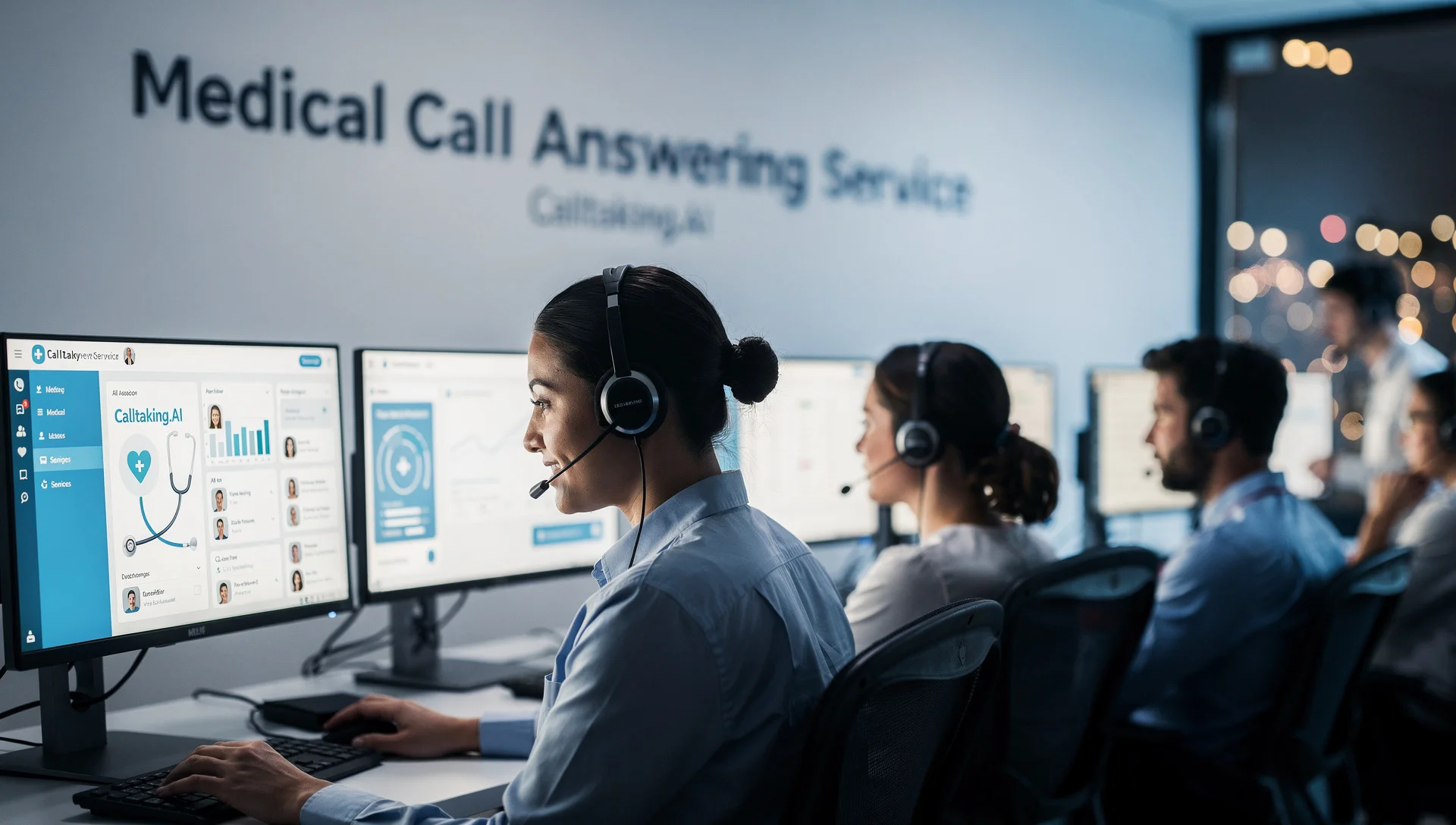
Stop losing patients, revenue, and peace of mind. Discover how modern, AI-powered medical answering services are transforming patient care and practice efficiency after dark.
Hire Your AI Medical Receptionist TodayAn after hours answering service medical practice is no longer a luxury—it's a critical component of modern patient care and practice sustainability. When your clinic closes, patient concerns don't. From urgent prescription refills to post-operative questions and emergency symptoms, missing these calls can have serious clinical and reputational consequences. Historically, practices faced a costly dilemma: pay staff exorbitant overtime, hire a third-party call center with variable quality, or simply let calls go to voicemail and hope for the best. Today, a revolutionary third option delivers 24/7 coverage, impeccable accuracy, and significant cost savings: the AI-powered virtual receptionist.
This guide will explore why the best AI for after hours calls is becoming the standard for clinics, GP surgeries, dental practices, and specialists across the UK. We'll dissect the tangible benefits, provide a clear roadmap for implementation, and show you how to choose a solution that protects your patients and your bottom line.
Why Your Practice Needs a Medical After Hours Answering Service
24/7 Patient Access & Triage
Never miss an urgent call. An intelligent AI service answers instantly, assesses the patient's need, and follows your precise triage protocol. It can differentiate between a routine appointment request and a potential emergency, routing calls appropriately to prevent clinical risk and patient anxiety.
Dramatic Cost Reduction
Eliminate the exorbitant cost of overnight staff or premium call center contracts. An AI after hours answering service medical solution operates at a fraction of the cost, providing consistent, high-quality service without overtime pay, benefits, or training overhead. This directly improves your practice's profitability.
Seamless PMS Integration
The best AI for after hours calls integrates directly with your Practice Management System (PMS). This allows it to book, cancel, or reschedule appointments in real-time, check patient records (with consent), and log all interactions directly into the patient's notes. This eliminates double-entry and ensures your day team has full context.
Enhanced Patient Satisfaction
Patients feel cared for when their calls are answered promptly, even at night. An AI service provides immediate acknowledgment, clear information, and confident next steps. This builds trust and loyalty, directly impacting patient retention and positive reviews. It's the antidote to the frustrating"leave a message" voicemail.
Compliance & Data Security
A professional medical answering service is built with GDPR and NHS data security standards in mind. Look for providers offering encrypted call data, secure data processing agreements, and audit trails for all patient interactions. This ensures you remain compliant while leveraging advanced technology.
Actionable Insights & Analytics
Gain unprecedented visibility into after-hours demand. Advanced analytics dashboards show call volumes, peak times, common query types, and outcomes. This data is invaluable for resource planning, improving daytime services, and demonstrating value to PCNs or governing bodies.
Implementing AI: A Strategic Blueprint for Healthcare Practices
Transitioning to an AI-powered after hours answering service medical system is a strategic decision that requires careful planning. The goal is to create a seamless extension of your practice's care ethos.
First, conduct a thorough call audit. Analyze several months of after-hours voicemails and call logs. Categorize them: appointment-related (booking, cancelling, confirming), clinical queries (medication, symptoms, test results), administrative (hours, directions, paperwork), and emergencies. This data forms the blueprint for your AI's conversation design.
Next, define your escalation matrix. This is the most critical clinical safety component. The AI must be trained to identify keywords and tones indicating high urgency (e.g.,"chest pain,""can't breathe,""severe bleeding"). It should then have a failsafe protocol to immediately connect the caller to the designated on-call clinician or service, such as NHS 111 or a dedicated emergency line. This process is detailed in our resource on Healthcare Call Volume Management.
Integration with Clinical Workflows
True efficiency comes from deep integration. The best AI for after hours calls will offer APIs or pre-built connectors for major PMS platforms. When a patient calls to cancel a Monday morning appointment, the AI should be able to do so instantly, freeing up that slot. It can then optionally offer that slot to another patient on a waiting list, maximizing utilization. All this activity should be logged in the patient record with a timestamp and call summary. For a look at this in action, explore AI-Powered Appointment Reminder And Follow-Up Calls For Healthcare Businesses.
Pro-Tip: Start with a Hybrid Pilot
For complex practices, consider a pilot where the AI handles routine appointment queries and information requests, while a live service (or on-call staff) handles initial clinical triage. This builds confidence and allows you to refine the AI's clinical protocols before full deployment
Related: The Cost of Doing Nothing
Missed calls are missed revenue and clinical risks. Calculate your practice's potential loss.
Read"The True Cost of Missing Business Calls" →FAQs: After Hours Answering Service Medical
Stop Missing Calls. Start Capturing Care.
Your patients deserve access, and your team deserves rest. Implement the UK's leading after hours answering service medical solution and transform your practice's night-time operations. The best AI for after hours calls is ready to work for you, 365 days a year.
Ready to explore specific use cases? See how we help dental practices and healthcare providers thrive.
Case Study: A GP Surgery’s Journey to 24/7 Patient Access
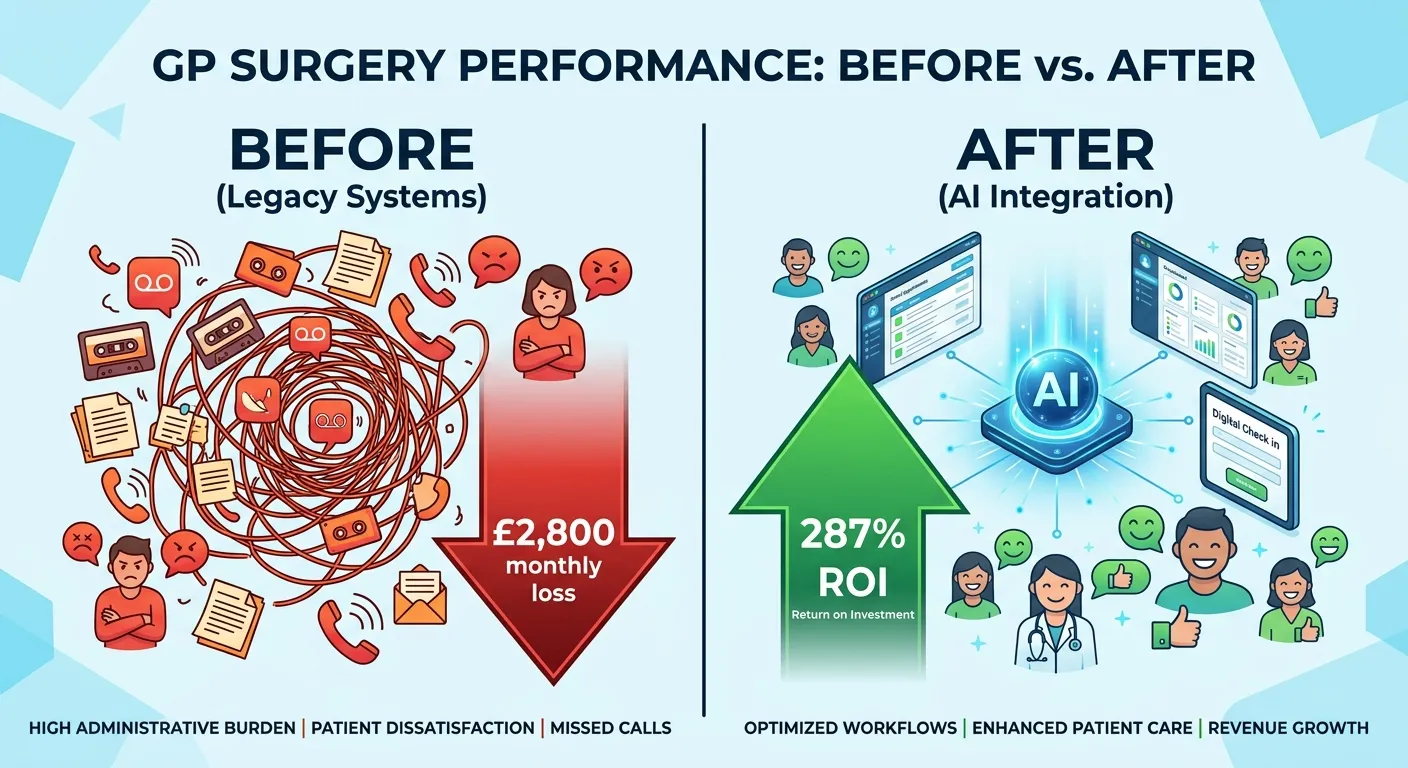
See how The Riverside Medical Centre transformed its after-hours operations and realized a 287% ROI within six months.
The Challenge
Riverside, a busy 5-partner GP surgery serving 12,000 patients, faced a perfect storm every evening and weekend. Their outdated voicemail system was leading to critical delays. Clinical staff were spending up to 90 minutes each morning returning non-urgent calls, and practice managers estimated 15-20% of after-hours calls were potential emergencies that went unreported for hours.
“We were haemorrhaging patient trust,” said Dr. Anya Sharma, Senior Partner. “A patient with worsening UTI symptoms called at 10 PM, got our voicemail, and assumed we didn’t care. They presented at A&E the next morning—a completely avoidable hospital visit. Financially, we were also losing £2,800 monthly in missed appointment fees from cancellations we never received.”
The Solution & Measured Outcomes
The practice implemented CallTaking.ai, focusing on three core workflows:
- Intelligent Triage: The AI was trained to ask specific symptom-screening questions. Calls mentioning"chest pain,""shortness of breath," or"child with high fever" triggered an immediate transfer to the on-call GP's mobile.
- Direct PMS Integration: The AI integrated with EMIS Web, allowing patients to cancel appointments instantly. Freed slots were automatically offered to the top 5 patients on the relevant waiting list via SMS.
- Automated Information Hub: The AI reliably provided directions, opening hours, and links to online prescription services, cutting admin call volume by 70%.
Results after 6 months: 92% patient satisfaction rate for after-hours contact, a 40% reduction in missed appointment slots, and the recovery of £16,800 in previously lost revenue. The total cost of implementation was recovered in under 11 weeks.
Under the Hood: The Technology Powering Safe Medical Call Handling
1. Natural Language Understanding (NLU)
This isn't simple keyword matching. Advanced NLU models understand context and intent. For example, they differentiate between"I need to cancel my appointment" and"I'm calling about my appointment." This allows for nuanced, human-like conversation that accurately captures patient needs.
2. Sentiment & Urgency Analysis
The AI analyses tone, pace, and word choice in real-time. A calm, measured request for a prescription refill follows a standard path. A voice marked by stress, hesitation, or the use of urgent clinical terminology immediately elevates the call priority and can trigger the emergency protocol.
3. Secure, Bi-Directional APIs
The backbone of integration. These encrypted connections allow the AI to both retrieve data (e.g.,"Is Dr. Jones free next Tuesday?") and write data back (e.g.,"Log that patient X cancelled their 10 AM appointment and slot offered to patient Y") into your PMS with full audit trails.
This multi-layered approach ensures the system is not just a passive message-taker but an active, intelligent participant in your patient care pathway, capable of making safe, rule-based decisions in real-time.
Beyond GPs: Specialised Applications Across Healthcare
The flexibility of AI allows for customisation to meet the unique needs of different specialties.
Mental Health & Therapy Practices
Confidentiality is paramount. AI services can be configured to never ask for full names or specific details over the phone. A patient in distress can simply say “I need to speak to my therapist urgently,” and the system, recognising the caller’s number, can confidentially connect them or follow a pre-set crisis protocol. It manages sensitive appointment bookings without revealing other clients’ names or times.
Dental & Specialist Surgical Clinics
Post-operative care is a critical window. The AI can be programmed with specialty-specific post-op instructions. A patient calling after a wisdom tooth extraction can be asked, “Are you experiencing bleeding that soaks through a gauze pad every 20 minutes?” A “yes” triggers an immediate call to the on-call surgeon. A “no” leads to tailored after-care advice, reducing unnecessary call-backs to clinical staff and improving patient reassurance.
Addressing Common Concerns Head-On
"Our patients, especially the elderly, won't want to talk to a machine."
This is a frequent and valid concern. The reality is that a well-designed AI conversation is often preferable to a maze of voicemail options or a distant call centre agent. The AI’s voice is calm, clear, and infinitely patient. It asks direct questions and provides immediate, accurate answers. Crucially, it always offers a clear escape hatch: “To speak to a human right now, please say ‘emergency’ or stay on the line.” Many practices report that after a brief transition period, patient feedback highlights appreciation for the instant answer and resolution, regardless of the source.
"We have a complex multi-site practice with different on-call rotas."
Modern AI systems excel at managing complexity. You can configure dynamic routing rules based on the caller’s registered site, the day of the week, and the time of day. For example, a call to your central number after 6 PM on a Wednesday can be routed by the AI based on the caller’s postcode: Patient from Area A gets the on-call protocol for Site Alpha, while Patient from Area B is connected to the clinician covering Site Beta. The system manages the rota logic seamlessly, updating daily from a shared calendar.
"What if the system goes down or loses internet connectivity?"
Professional-grade services are built on redundant, enterprise-level cloud infrastructure with uptime guarantees exceeding 99.95%. However, fail-safes are critical. The standard configuration includes automatic failover routing. If the AI service is unreachable for any reason, calls are instantly and automatically redirected to a pre-set backup number (e.g., a monitored central line or a senior practice manager’s mobile). This ensures there is never a situation where a patient calls and gets a dead line.