
The Definitive Guide to a Reliable After Hours Answering Service Medical Practices Can Trust
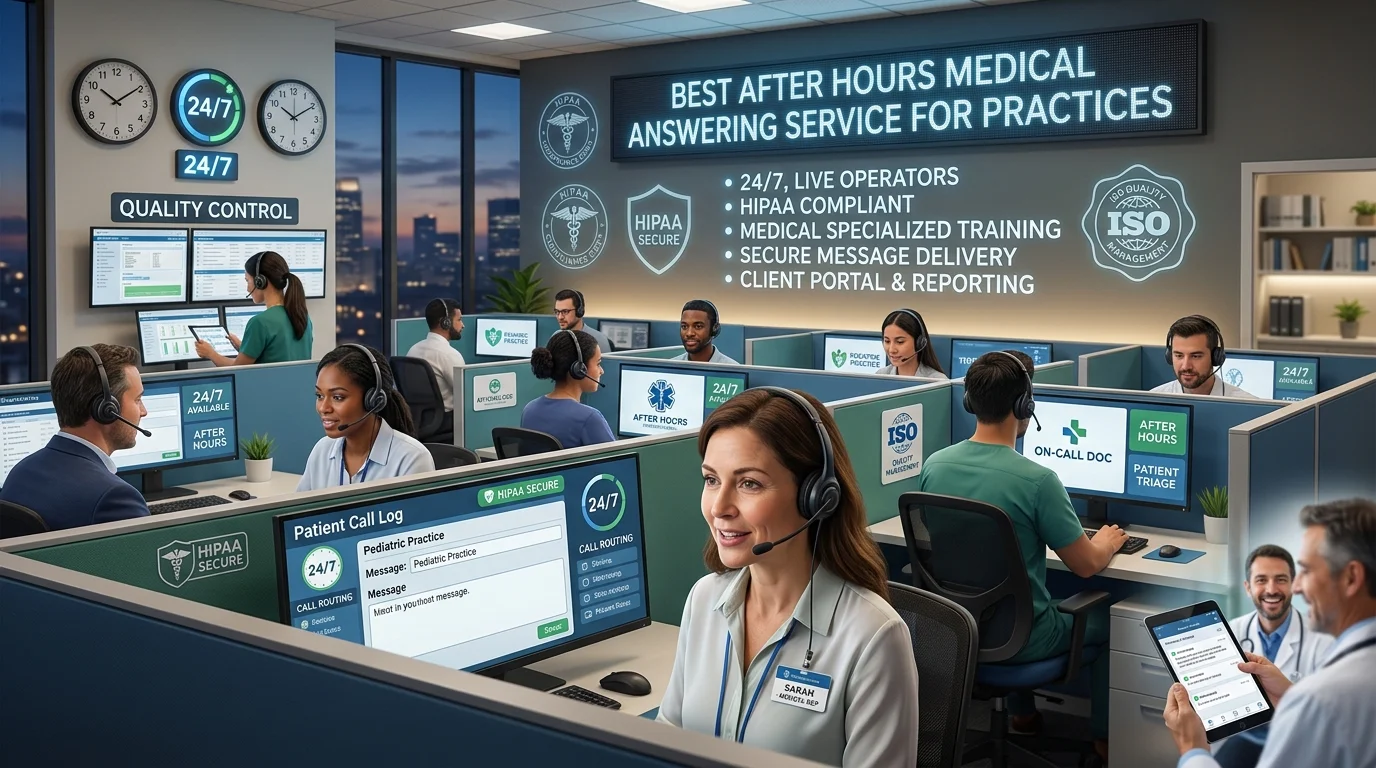
Stop losing patients to voicemail. Discover how a professional after hours answering service medical solution can transform your patient care, capture critical revenue, and provide peace of mind 24 hours a day.
Hire Your AI Medical Answering Specialist TodayWhy Your Medical Practice Cannot Afford to Miss an After-Hours Call
In the high-stakes world of healthcare, communication is care. When your practice closes for the day, patient needs do not simply vanish. Emergencies arise, symptoms worsen, and questions need immediate answers. A traditional answering machine or an overloaded on-call doctor’s mobile is no longer sufficient. A dedicated after hours answering service medical providers rely on acts as a critical extension of your clinical team, ensuring no call—and no patient—is ever left behind.
This isn't just about message-taking. Modern solutions, like those explored in our resource on Healthcare Call Volume Management with Call Taking AI, leverage artificial intelligence to triage calls, schedule urgent appointments, and provide basic information, all while maintaining the empathy and accuracy required in medical settings. The gap between a missed call and a captured patient can represent thousands in lost revenue and, more importantly, a breakdown in patient trust.
Pro-Tip:
The most effective medical after hours answering service blends intelligent automation with human oversight. AI handles initial intake, qualification, and simple queries, escalating only complex or highly sensitive cases to a live, medically-trained agent. This hybrid model, detailed in our Automated vs Live Answering guide, maximizes efficiency while preserving the human touch for when it matters most.
Medical After-Hours Solutions: A Multi-Category Overview
Choosing the right service depends on your practice's size, specialty, and budget. Explore the options below.
The Essential Role of After-Hours Coverage
An after hours answering service medical practices implement serves as their nighttime and weekend front desk. Its primary functions are to:
- Triage Urgent Calls: Determine the severity of a patient's issue using medically-vetted protocols.
- Capture Complete Information: Log detailed symptoms, patient history, and contact data for the on-call professional.
- Schedule Appointments: Directly book follow-ups or urgent visits into your practice management system.
- Provide Reassurance & Instructions: Offer approved guidance for minor issues or while waiting for a callback.
- Filter Non-Urgent Inquiries: Handle prescription refills, billing questions, and administrative requests during the next business day.
Failing to provide this service has a measurable cost, which we break down in The True Cost of Missing Business Calls.
The Rise of AI in Medical Answering
AI-driven services, like the Best AI Receptionist for After Hours Calls, use conversational AI to answer calls instantly, 24/7. They are trained on medical terminology and can integrate directly with your calendars (e.g., EMIS, SystmOne) and EHRs.
Key Advantages: Lower cost per call, zero wait times, flawless scalability during flu season, and consistent, protocol-driven interactions. They are ideal for managing high call volumes and providing a first layer of defense, as shown in this call volume management case study.
Consideration: While incredibly sophisticated, some patients may initially prefer a human voice for complex emotional situations. The best AI systems know when to escalate.
Traditional Live Agent Services
These services employ real people, often with some level of medical receptionist training, to answer calls on your practice's behalf. They offer a human touch and can handle highly nuanced or distressed patient conversations with empathy.
Key Advantages: High emotional intelligence, ability to handle unexpected complex queries, and patient preference for human interaction in sensitive moments.
Consideration: Typically higher cost per call, potential for wait times during peak periods, and variability in agent performance. Understanding the difference between a call centre and a virtual answering service is crucial when evaluating live agents.
The Best of Both Worlds: Hybrid Models
The most advanced and effective after hours answering service medical providers now offer hybrid solutions. AI handles the initial call answering, data collection, and triage. If the AI determines the call is urgent, emotionally charged, or requires a decision beyond its scope, it seamlessly transfers the call (with full context) to a live, specialized medical agent.
This model, central to Transforming Business Communication through Call Taking AI, optimizes cost, ensures instant answer rates, and guarantees human intervention when it's clinically or emotionally necessary. It’s the future of patient communication.
Outcome: Practices benefit from the efficiency of AI and the reassurance of human backup, leading to higher patient satisfaction and optimal clinical outcomes.
Key Benefits of a Professional Medical After-Hours Service
Enhanced Patient Care & Safety
Immediate triage ensures urgent medical issues are identified and escalated promptly, directly impacting patient outcomes. It provides a safe, reliable channel for patients when they are most vulnerable.
Protected Practice Revenue
Every missed call is a potential lost patient. A dedicated service captures new patient inquiries, schedules appointments, and prevents patients from seeking care elsewhere. Quantify this risk with our guide on The Hidden Price of"Leave A Message".
Reduced Clinician Burnout
By filtering out non-urgent calls and administrative queries, your on-call doctors and nurses only receive the calls that truly require their expertise. This protects their downtime and improves job satisfaction.
Compliance & Risk Management
Professional services maintain detailed, timestamped call logs and recordings, providing an audit trail for clinical governance and CQC compliance. They follow strict data security protocols (GDPR/HIPAA-ready).
Operational Efficiency & Insight
Gain valuable analytics on after-hours call patterns, peak times, and common patient concerns. This data, as highlighted in Smart Call Management, allows you to optimize staffing and resources proactively.
24/7 Professional Image
Present a seamless, professional front at all times. Patients perceive your practice as more accessible, caring, and technologically advanced, strengthening loyalty and your competitive edge in the market.
Implementing Your After Hours Answering Service: A Step-by-Step Guide
Selecting and setting up the right service is a strategic decision. Follow this actionable framework to ensure success.
Step 1: Assess Your Practice's Specific Needs
Before you hire staff or sign a contract, conduct an internal audit. How many after-hours calls do you currently get? What are the most common reasons (urgent appointments, medication queries, test results)? What is your current process, and where are the pain points? Understanding your baseline is critical, a principle we explore in How to Build a Powerful AI Call Answering Workflow.
Also, consider your specialty. A GP surgery's needs differ from a dental practice's, which differ from a counselling service. Look for providers with proven experience in your field, such as those offering Dental Call Answering Services or specialized support for therapists.
Step 2: Choose Your Service Model & Provider
Based on your audit, decide between AI, Live, or Hybrid. Key selection criteria must include:
- Compliance & Security: Are they GDPR compliant? Do they offer data processing agreements? Where are calls recorded and stored?
- Integration Capability: Can the service connect to your PMS, EHR, or calendar for real-time appointment scheduling? See Powerful and Seamless Integrations.
- Clinical Protocols & Training: What triage scripts do they use? Are their live agents trained in medical terminology and empathy?
- Cost Structure: Is it per-call, per-minute, or a monthly flat fee? Understand all potential costs with our Answering Service Pricing Explained guide.
This case study video demonstrates the tangible impact a well-chosen AI service can have on a medical practice's operations.
Step 3: Onboarding, Configuration & Training
This is the most critical phase. Work closely with your provider to:
- Define Call Flows: Map out every possible patient scenario. What should happen for an emergency? A prescription refill? A request for test results?
- Customize Scripts & AI Personality: Ensure the language is appropriate for your patient demographic and reflects your practice's tone of voice. Learn about creating a custom AI voice.
- Set Up Escalation Protocols: Clearly define which calls get patched through to which on-call staff member, and under what conditions.
- Train Your Team: Ensure all clinical staff understand how the service works, what information they will receive, and how callbacks are initiated.
Step 4: Launch, Monitor & Optimize
Go live with a soft launch if possible. Closely monitor the first few weeks.
- Review Call Logs & Recordings: Ensure calls are being handled correctly and to your clinical standards.
- Gather Feedback: Ask your on-call staff and, if possible, survey patients about their experience.
- Analyze Performance Data: Use the provider's dashboard to track answer rates, call reasons, and outcomes. Continuous optimization is key, as detailed in Optimize Your AI Receptionist for Peak Performance.
- Refine: Adjust call flows, scripts, and escalation rules based on real-world data. A good service partner will work with you on this iteratively.
Expert Insight:
The most successful implementations treat the after hours answering service medical as a true clinical partner, not just a utility. Schedule quarterly reviews with your provider to discuss performance metrics, new features, and evolving patient needs. This proactive approach turns a cost centre into a strategic asset for patient retention and practice growth.
Frequently Asked Questions: Medical After-Hours Answering
Is an AI answering service appropriate for sensitive medical calls?
Absolutely, when configured correctly. Modern medical AI is built with privacy-by-design, uses encrypted communications, and is trained to handle conversations with empathy and discretion. For highly sensitive or complex situations, a well-designed hybrid system will instantly escalate the call to a trained live agent. The key is in the workflow design, as explained in this guide for therapists & consultants.
How do you ensure clinical safety with a non-clinical service?
Safety is paramount. Reputable providers work with your practice to develop strict, medically-vetted call-handling protocols and triage scripts. The AI or live agents follow these scripts exactly, asking specific questions to determine urgency. They do not diagnose but collect information for clinical decision-making. All calls are logged and recorded for audit. The final clinical responsibility always remains with the healthcare professional, but the service acts as a safe, information-gathering funnel.
Can it book appointments directly into our practice management system?
Yes, this is a standard feature of advanced services. Through secure API integrations, AI systems can check real-time availability and book appointments directly into systems like EMIS, SystmOne, or other popular calendars. This eliminates back-and-forth and captures the appointment immediately. Explore this functionality in Is There An Automated Phone System That Can Actually Book Appointments?
What's the cost difference between AI and a live answering service?
AI services typically operate on a lower-cost subscription or per-call model because they scale efficiently without human labour. Live agent services have higher variable costs due to staffing. A detailed 2026 cost breakdown is available in our video analysis: AI Receptionist vs Live Answering Service 2026: Full Cost Analysis. For many practices, the hybrid model offers the best balance of cost-effectiveness and patient assurance.
How quickly can we implement an after hours answering service?
With modern cloud-based solutions, implementation can be remarkably fast. A basic AI receptionist can be set up in as little as 10 minutes, as shown in this quick guide. However, for a fully customized medical after hours answering service with complex triage rules and integrations, a more thorough onboarding period of 1-2 weeks is typical to ensure clinical safety and a perfect fit for your workflow.
Ready to Transform Your Patient Care After Hours?
Stop relying on luck and voicemail. Implement a professional, reliable, and clinically-safe after hours answering service medical teams and patients will love. Protect your revenue, enhance patient safety, and give your clinical staff the peace of mind they deserve.
Have questions about implementation? Explore our comprehensive guide on Why Busy Healthcare Practices Are Switching to Call Taking AI.