
The Ultimate Guide to 24/7 Patient Care: Mastering the After Hours Answering Service Medical
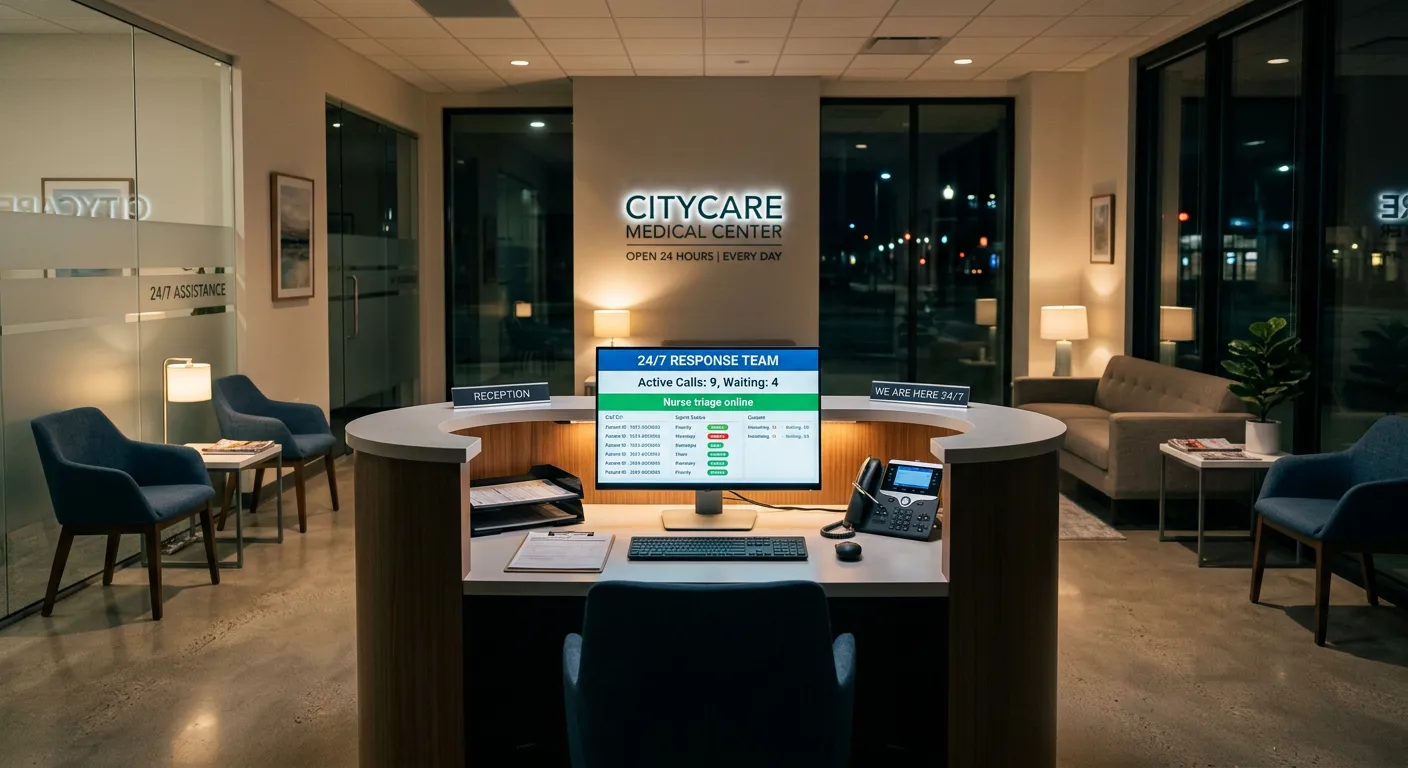
Discover how a dedicated after hours answering service medical solution transforms patient communication, safeguards your practice's reputation, and ensures critical care continuity when your office is closed. This comprehensive guide reveals the strategies, technologies, and benefits of never missing an urgent call again.
Navigating After-Hours Medical Communication: Your Options
Choosing the right after hours answering service medical support is crucial. Explore the different models below to understand which solution aligns with your practice's needs, budget, and patient care standards.
Modern AI-Powered Medical Answering
This is the forefront of after hours answering service medical technology. An AI system acts as a digital receptionist, understanding natural language, triaging calls based on urgency, booking appointments directly into your calendar, and providing immediate, accurate information 24/7. It learns from every interaction, improving its responses and handling complex scenarios like prescription refill requests or symptom screening with pre-approved protocols.
Pros:
- Operates 24/7/365 at a fraction of human cost.
- Instant answer, zero wait time, even during peak call surges.
- Seamlessly integrates with practice management software (EMR/EHR).
- Perfectly consistent, never tires, and handles infinite call volume.
- Provides detailed transcripts and analytics for every call.
Considerations:
- Requires initial setup and training on practice-specific workflows.
- May need a clear escalation path for highly complex emotional situations.
For a deep dive into how this technology is transforming healthcare communication, see our article on Healthcare Call Volume Management with Call Taking AI.
Dedicated Live Virtual Receptionist
This model employs trained human agents who specialize in medical communication. They answer calls on your practice's behalf, following your specific scripts and protocols. They can handle sensitive patient information, provide empathy in crisis situations, and make nuanced judgment calls. This service often works from a remote call center dedicated to healthcare clients.
Pros:
- Human empathy and complex problem-solving for distressed patients.
- Can handle highly variable and unpredictable requests.
- No technical setup required beyond call forwarding.
Considerations:
- Significantly higher cost per minute or per call.
- Potential for human error or inconsistency between agents.
- May have limited scalability during unexpected call spikes.
- Requires ongoing training and management of the external team.
Understanding the distinction between this and a traditional call center is key. Learn more in our guide on The Difference Between a Call Centre and a Virtual Answering Service.
Intelligent Hybrid Solution
The hybrid model combines the best of both worlds: an AI after hours answering service medical front-end with seamless human escalation. The AI handles the majority of calls—appointment scheduling, FAQ, non-urgent inquiries—instantly and efficiently. If the AI detects high urgency, complex medical questions, or an emotionally distressed caller, it immediately and silently transfers the call to a live, medically-trained agent. This ensures efficiency without sacrificing critical human touch.
Pros:
- Optimizes cost by using AI for routine tasks.
- Guarantees human intervention for true emergencies.
- Provides the most comprehensive patient safety net.
- Maximizes operational efficiency and staff resources.
Considerations:
- Integration between AI and live agent systems must be flawless.
- Slightly more complex initial configuration is required.
This approach is at the heart of modern Transforming Business Communication Through Call Taking AI.
Traditional Answering Service
The legacy model involves a third-party service where operators take basic messages (caller name, number, brief reason) and then page or email the on-call provider. Interaction is minimal, and the service acts primarily as a message relay. This is a basic, often low-cost option, but it lacks the intelligence, integration, and patient care capabilities of modern solutions.
Pros:
- Very low upfront cost.
- Simple to implement (call forwarding).
Considerations:
- High risk of miscommunication and lost information.
- No patient triage, appointment booking, or problem-solving.
- Can create more work for the on-call provider who must call back blindly.
- Poor patient experience; feels impersonal and inefficient.
For practices looking to move beyond this outdated model, we detail The Easiest Way to Handle After-Hours Business Calls with modern technology.
Why a Dedicated Medical After-Hours Service is Non-Negotiable
Implementing a professional after hours answering service medical system delivers tangible benefits that impact patient care, practice revenue, and clinician well-being.
Enhanced Patient Safety & Satisfaction
Patients need to feel heard and assisted, especially after hours. An immediate, professional response to an urgent call can be clinically significant. It reduces patient anxiety, provides clear instructions (e.g.,"proceed to A&E,""take XYZ medication"), and ensures emergencies are flagged instantly. This builds immense trust and loyalty, directly impacting patient retention and practice reputation.
Protect Clinician Burnout & Off-Duty Time
The constant interruption of personal time by non-urgent calls is a primary driver of physician and staff burnout. A triaging after hours answering service medical system filters out appointment queries, prescription refills, and administrative questions, only escalating truly urgent matters to the on-call professional. This creates essential boundaries, allowing for genuine rest and recovery, which is critical for clinician mental health and sustained practice quality.
Capture Revenue & Reduce Operational Loss
Missed calls are missed opportunities. A patient calling to book an appointment after hours will simply call another practice in the morning. An AI-powered service can schedule that appointment directly into your calendar instantly, capturing that revenue. Furthermore, by efficiently handling routine inquiries, it reduces the administrative burden on your daytime staff, allowing them to focus on in-person patient care, thereby increasing overall practice productivity and profitability.
Mitigate Legal & Compliance Risks
A documented, consistent call-handling process is a legal safeguard. Modern after hours answering service medical solutions provide complete, timestamped transcripts of every patient interaction. This creates an auditable trail, proving that appropriate advice was given or that emergencies were escalated promptly. It also ensures compliance with data protection regulations (like GDPR/HIPAA) through secure, encrypted handling of patient information, which is a critical weakness of informal on-call arrangements.
Streamlined Practice Operations
Integrate your after-hours service with your practice management software to create a seamless workflow. Appointment bookings appear directly in the schedule. Urgent messages are delivered via secure, prioritized channels (SMS, secure app) with full context. Call analytics provide insights into after-hours demand patterns, helping you optimize staffing and resources. This turns a potential operational headache into a source of strategic data and efficiency.
24/7 Competitive Advantage
In a competitive healthcare landscape, offering responsive, round-the-clock communication is a significant differentiator. It signals a patient-centric, modern, and reliable practice. When patients know they can get help or information at any time, they are more likely to choose and stay with your practice. This advantage is magnified for specialties like pediatrics, mental health, or eldercare, where after-hours concerns are common.
Implementing Your Medical After-Hours Service: A Step-by-Step Guide
Step 1: Assess Your Practice's Specific Needs
Before selecting a provider, conduct an internal audit. How many after-hours calls do you currently receive? What is the typical nature of these calls (appointments, clinical advice, emergencies, prescription refills)? What is your current process, and where are the pain points? Define your goals: Is it purely emergency triage, or do you want to capture appointments and reduce daytime call volume? Understanding your unique workflow is critical, a topic we explore in depth for specific sectors like dental practices and GP surgeries.
Pro-Tip: The Urgency Matrix
Create a clear"Urgency Matrix" for your answering service. Categorize calls into levels (e.g., Level 1: Emergency - Connect immediately to on-call; Level 2: Urgent Clinical - Call back within 30 mins; Level 3: Administrative - Handle request or schedule callback for next business day). This provides unambiguous guidance for both AI and live agents.
Step 2: Choosing the Right Technology Partner
Not all after hours answering service medical providers are equal. Look for these non-negotiable features:
- HIPAA/GDPR Compliance: The provider must sign a Business Associate Agreement (BAA) and offer enterprise-grade security, data encryption, and guaranteed data sovereignty.
- Seamless Integration: The service should connect with your existing tools—EMR/EHR systems (like EMIS, SystmOne), PMS, and calendar software (Google Calendar, Outlook).
- Customizable Medical Workflows: The ability to tailor call scripts, triage protocols, and escalation paths to your specialty's requirements.
- Reliability & Uptime: Look for a guaranteed 99.9%+ uptime with redundant systems. A dropped after-hours call is unacceptable.
- Transparent Analytics: Access to dashboards showing call volumes, outcomes, patient satisfaction, and response times.
For a technical breakdown of what to look for, review our guide on What To Look For In AI Call Center Software.
Step 3: Designing the Patient Interaction Flow
This is where you map the patient journey. Work with your provider to design the conversation. A well-designed flow for an after hours answering service medical might be:
- Warm, Professional Greeting:"Thank you for calling [Practice Name] after-hours service. My name is [AI Name/Agent Name]. How can I help you today?"
- Patient Identification & Verification: Securely confirm caller identity.
- Intelligent Triage: Use targeted questions to categorize the call."Is this regarding a life-threatening emergency?""Are you calling to schedule, cancel, or reschedule an appointment?""Are you experiencing severe chest pain or shortness of breath?"
- Routing & Action:
- Emergency: Immediate warm transfer to on-call clinician or instructions to call 999.
- Appointment: AI accesses real-time calendar and books the appointment, sending confirmation to patient.
- Prescription Refill: Takes details and submits request to pharmacy/GP system for next-day processing.
- General Question: Provides pre-approved answers from your FAQ database or takes a detailed message.
- Clear Conclusion: Summarizes next steps and provides an expected timeframe for follow-up if needed.
Watch: How to set up emergency call protocols in minutes.
Step 4: Training, Launch, and Continuous Optimization
Implementation doesn't end at go-live. Train your clinical and administrative staff on the new process. Inform patients through your website, phone hold message, and in-office signage. During the first few weeks, monitor call transcripts and outcomes closely. Refine scripts and escalation rules based on real data. The best AI systems, like those discussed in How Call Taking AI Transforms Call Volume Management, use machine learning to continuously improve from each interaction.
Expert Insight: The Human-in-the-Loop Principle
Even the most advanced AI benefits from human oversight. Schedule quarterly reviews of call logs and patient feedback with your service provider. Identify any edge cases where the system struggled and refine the protocols. This"human-in-the-loop" approach ensures your after hours answering service medical system evolves with your practice and maintains the highest standard of care.
Frequently Asked Questions: Medical After-Hours Answering
Get answers to the most common questions about implementing an after hours answering service medical solution.
Absolutely. Reputable AI medical answering services are built with healthcare-grade security. They comply with HIPAA (in the US) and GDPR (in the UK/EU) by design. This includes end-to-end encryption of call data, secure data storage with access controls, and signed Business Associate Agreements (BAAs) that legally bind the provider to protect patient health information. Always verify these compliance certifications before engaging any service.
This is the core of intelligent triage. The system uses a combination of keyword recognition, sentiment analysis, and structured questioning protocols that you define. For example, the initial prompt might ask,"Is this a medical emergency?" If the patient says yes or mentions symptoms like"chest pain" or"can't breathe," the call is instantly flagged and routed. For less clear cases, follow-up questions based on clinical protocols help categorize the call's urgency. This process is continually refined, a concept explored in our article on Optimizing Your AI Receptionist for Peak Performance.
Sophisticated systems have built-in fail-safes. If the AI encounters confusion, high emotion (detected through voice tone analysis), or a request outside its parameters, it can be programmed to immediately and seamlessly transfer the call to a live, medically-trained agent employed by the service. This hybrid model ensures no patient is ever left without a human option when needed. You can learn more about this balance in our comparison of AI vs. Live Virtual Receptionist cost-effectiveness.
With modern cloud-based solutions, setup can be remarkably fast. A basic call-forwarding setup to a live service can be done in under an hour. Configuring a custom AI after hours answering service medical workflow typically takes 1-2 weeks, depending on the complexity of your triage protocols and integration needs. This includes time for training the AI with your specific data, testing the call flows, and training your staff. For a glimpse at how simple setup can be, see How I Set Up a 24/7 AI Receptionist in 10 Minutes.
Yes, this is a key feature of advanced AI services. Through secure API integrations, the AI can access the real-time availability in your practice management system (e.g., EMIS, SystmOne, or standard calendars like Google or Outlook) and book, reschedule, or cancel appointments directly. It can follow all your business rules (provider availability, appointment type, duration) and send immediate confirmations to the patient. This turns after-hours calls into captured revenue. Explore this functionality further in AI-Powered Appointment Reminder And Follow-Up Calls For Healthcare.
Stop Missing Critical Calls. Start Protecting Your Patients & Your Practice.
A professional after hours answering service medical is no longer a luxury—it's a standard of care. Whether you're a solo practitioner or a large multi-specialty group, implementing a reliable, intelligent solution will enhance patient safety, improve satisfaction, and give you back your peace of mind.
Ready to transform your after-hours communication? Discover how our tailored medical answering solutions can integrate seamlessly with your workflow.
Have questions about compliance, integration, or pricing? Contact our specialist healthcare team for a confidential consultation.