
The Essential Guide to After Hours Answering Service Medical Solutions for Modern Practices
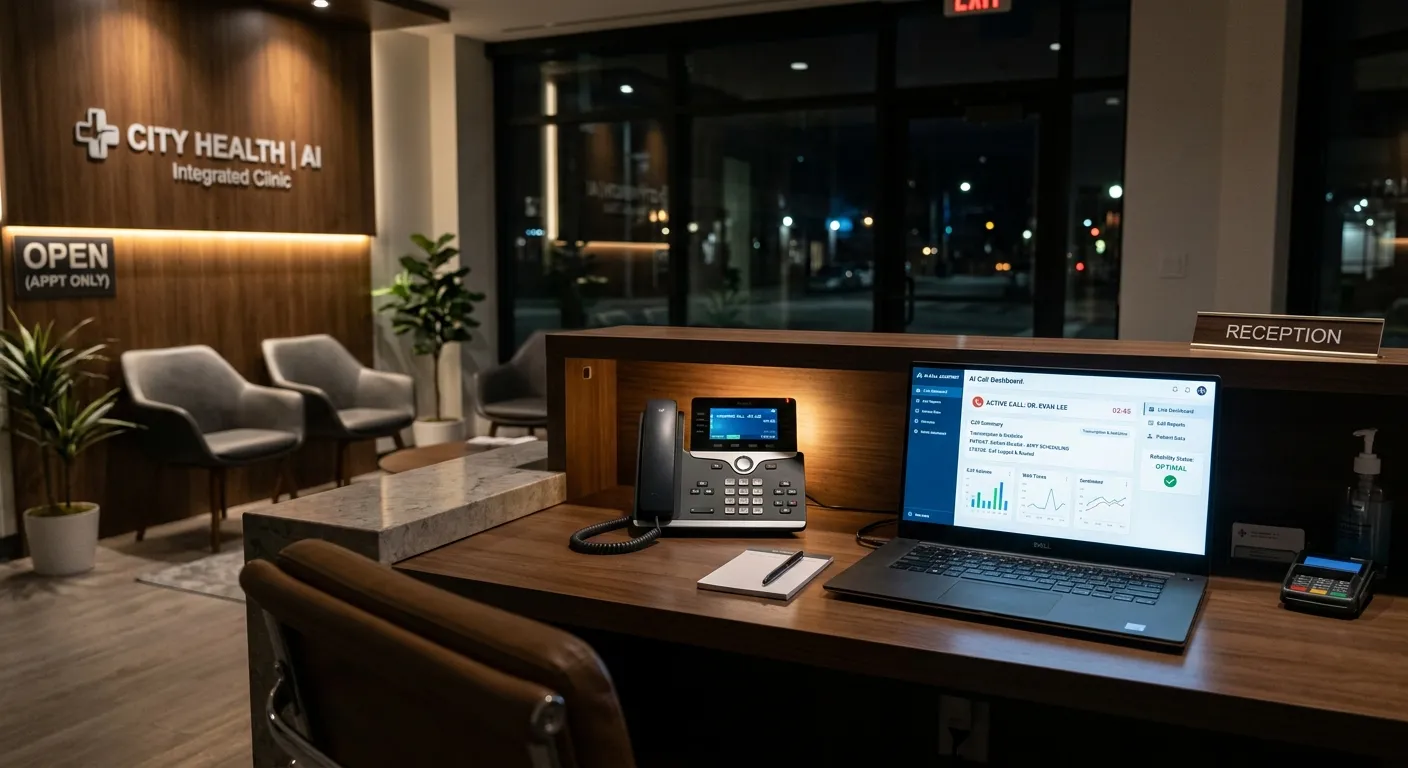
In today’s 24/7 world, patient expectations don’t end at 5 PM. Missed calls after hours represent more than just an inconvenience; they signify lost revenue, eroded patient trust, and potential clinical risks. A dedicated after hours answering service medical practice is no longer a luxury but a critical component of operational excellence and patient care continuity. This comprehensive guide delves into why these services are indispensable, explores the evolution from traditional live operators to cutting-edge AI, and provides a clear roadmap for selecting and implementing the solution that will transform your practice's after-hours communication.
Navigating Your After-Hours Options: A Multi-Category Overview
Traditional Live Answering Services
For decades, the standard after hours answering service medical providers relied on was a live, human-operated call center. A patient calls your practice number, it forwards to a third-party center, and a live agent answers, takes a message, and may attempt to contact an on-call provider based on protocol.
Pro-Tip:
While familiar, traditional services often struggle with high turnover, inconsistent training on medical terminology, and significant latency in message delivery. The per-minute or per-call costs can also scale unpredictably during high-volume periods.
Understanding the difference between a call centre and a virtual answering service is crucial here. Traditional services often function as generic call centers, lacking the specialized workflows a medical practice requires.
Modern AI-Powered Medical Answering
This represents a paradigm shift. An AI virtual receptionist uses natural language processing to conduct full, natural conversations with patients after hours. It can triage calls, schedule appointments directly into your PMS, answer FAQs, and forward urgent calls to the correct on-call professional instantly via SMS or phone call.
For a deep dive into this technology, explore our resource on what an AI answering service is and why your business needs one. The key advantage for medical practices is consistency, scalability, and seamless healthcare call volume management, ensuring no call is ever missed, regardless of time or call volume.
Hybrid AI + Live Escalation Models
The most robust solution for many practices combines the efficiency of AI with the reassurance of human backup. In this model, an AI handles the vast majority of after-hours interactions—booking appointments, refilling prescriptions, providing directions. However, if a call is flagged as complex, highly emotional, or a critical emergency, it is seamlessly escalated to a live, medically-trained human agent.
This approach, detailed in our comparison of AI vs. live virtual receptionist cost-effectiveness, offers optimal balance, ensuring clinical safety while maintaining cost efficiency.
In-House Staff & On-Call Rotations
Some larger hospital systems or specialized clinics maintain an in-house after-hours call center. While this allows for maximum control, the costs are substantial: salaries, benefits, management overhead, and technology infrastructure. It also places a significant burden on clinical staff rotating through on-call duties, leading to burnout.
Key Insight:
The trend is decisively moving away from pure in-house or traditional live services. The scalability, cost predictability, and advanced capabilities of AI-driven solutions are making them the preferred choice for forward-thinking practices aiming to transform business communication for peak performance.
Core Benefits of a Specialized Medical After-Hours Service
24/7 Patient Access & Reduced Anxiety
Knowing they can reach a responsive system at any hour significantly reduces patient anxiety. Whether it’s a question about medication, symptom clarification, or appointment scheduling, an immediate, professional response builds immense trust and loyalty, directly impacting patient satisfaction scores.
Clinical Triage & Urgent Call Handling
A sophisticated after hours answering service medical system can perform initial triage. By asking protocol-driven questions, it can distinguish between a routine request and a potential emergency, ensuring that urgent calls are escalated to the on-call doctor or nurse practitioner within seconds, potentially saving critical time.
Operational Efficiency & Staff Wellbeing
Free your clinical and administrative staff from the burden of after-hours calls. This eliminates burnout from on-call rotations for non-urgent matters and allows your team to start each day without a backlog of voicemails to process. It's a key strategy for transforming call volume management.
Revenue Capture & Reduced No-Shows
Missed calls are missed opportunities. A patient calling to book an appointment after hours will simply call a competitor if they get voicemail. An AI service can book that appointment instantly. Furthermore, an AI-powered appointment reminder function can automatically confirm upcoming appointments, drastically reducing no-show rates and optimizing your schedule.
Compliance & Data Security
Reputable services are built with HIPAA/GDPR compliance at their core. Encrypted call recordings, secure data transmission, and signed Business Associate Agreements (BAAs) are non-negotiable. This mitigates a huge risk compared to informal systems like using a mobile phone for after-hours calls where PHI can be easily exposed.
Actionable Insights & Analytics
Modern AI solutions provide detailed analytics dashboards. Understand call volumes by hour, common patient inquiries, appointment booking trends, and more. These insights allow you to optimize staffing, refine on-call protocols, and improve overall practice management, turning your after hours answering service medical function into a strategic intelligence asset.
Implementing Your After-Hours Solution: A Step-by-Step Framework
Critical Evaluation Criteria for Medical Practices
Choosing the right partner requires going beyond price. Focus on these essential capabilities that directly impact patient care and practice viability.
- HIPAA/GDPR Compliance & BAAs: The provider must willingly sign a Business Associate Agreement and demonstrate robust physical, technical, and administrative safeguards.
- Clinical Triage Workflow Customization: Can you define custom questions and escalation paths based on symptoms (e.g., chest pain, shortness of breath) to ensure appropriate urgency?
- Direct PMS Integration: The ability to book, reschedule, and cancel appointments directly in systems like EMIS, SystmOne, or other major Practice Management Software is a game-changer for efficiency.
- Reliable Escalation Protocols: How does the service alert your on-call staff? Look for multi-modal alerts (SMS, phone call, mobile app push) with confirmation of delivery.
- Transparent, Predictable Pricing: Avoid per-minute models that can lead to bill shock. Seek flat-rate or per-call pricing that scales predictably with your practice growth.
The Setup & Integration Process
Implementing a modern after hours answering service medical solution is surprisingly straightforward, especially with AI-driven platforms. The process typically involves:
- Workflow Mapping: Define your after-hours call flow. What should happen for appointment bookings, prescription refills, general inquiries, and urgent clinical concerns?
- Customization & Scripting: Work with the provider to build conversational scripts that reflect your practice's tone and clinical protocols. This is where you embed your triage logic.
- Technical Integration: This usually involves a simple call forwarding rule on your phone system (diverting calls after hours to a designated number) and, if applicable, setting up API connections to your PMS. Providers like CallTaking.ai make this remarkably simple, as shown in their setup guide.
- Staff Training & Communication: Train your clinical team on the new escalation process. Inform your patients about the new, improved after-hours access through signage, your website, and appointment reminders.
- Go-Live & Optimization: Launch the service, monitor the initial calls via provided transcripts and recordings, and fine-tune the scripts based on real interactions to ensure peak performance.
For a practical look at this in action, see the easiest way to handle after-hours business calls, which outlines the streamlined process for businesses, including medical practices.
Frequently Asked Questions: Medical After-Hours Answering
Absolutely, provided you choose a compliant provider. Leading services like CallTaking.ai are built with healthcare in mind. They offer end-to-end encryption for call data, secure storage, and will sign a formal Business Associate Agreement (BAA) outlining their responsibilities under HIPAA (or equivalent for GDPR). This often makes them more secure than informal methods like mobile phones or basic voicemail. You can learn more about their approach in the video .
Patient acceptance is exceptionally high when the AI is well-configured. The primary patient desire is resolution—getting their question answered, their appointment booked, or their urgent concern escalated. A fast, polite, and effective AI that solves their problem is vastly preferred to a voicemail that may not be returned for hours or a busy, distracted live agent. The AI's consistency and 24/7 availability are seen as major benefits. For evidence, review the case study in "We Tested an AI Answering Service for 30 Days".
Yes, but with a crucial design principle: identification and escalation. The AI is not making clinical decisions. It is programmed to ask specific, protocol-driven questions (e.g.,"Are you experiencing chest pain or pressure?"). Based on the patient's responses, which indicate a potential emergency, the call is immediately terminated from the AI conversation and routed via a live phone call to the on-call clinician. This process is often faster than a human agent fumbling through a script. This is a core component of building a powerful AI call answering workflow.
AI-powered services are typically 50-80% more cost-effective than traditional live medical answering services. Live services often charge per minute or per call, with higher rates for after-hours and weekends, leading to unpredictable bills. AI services usually operate on a flat monthly subscription or a low per-call fee, offering unlimited conversation length and predictable scaling. For a detailed breakdown, see our analysis on answering service pricing in the UK and the video comparison .
With modern cloud-based AI solutions, implementation can be remarkably fast—often within a few days to a week. The initial setup of call forwarding and a basic call flow can be done in under an hour, as demonstrated in this 10-minute setup guide. The more time-intensive part is the collaborative customization of clinical triage scripts and integration with your PMS, which ensures the system is perfectly tailored to your practice's needs from day one.
Stop Missing Critical Calls. Transform Your Patient Care Today.
A specialized after hours answering service medical practice isn't just about answering phones; it's about extending your care, safeguarding your revenue, and empowering your team. In an era where patient experience is paramount, providing seamless, 24/7 access is a decisive competitive advantage.
Explore how leading UK medical practices are leveraging AI to set a new standard in after-hours communication. The technology is proven, the compliance is assured, and the results are transformative.
Ready to discuss a custom solution for your practice? Learn how we work with healthcare providers to deliver peace of mind, 24 hours a day.