
Revolutionizing Patient Care: The Ultimate Guide to Medical Answering Service Email Solutions
Discover how integrating intelligent Medical Answering Service Email workflows is transforming communication, boosting operational efficiency, and ensuring no patient inquiry is ever missed.
Hiring the right support is crucial for modern medical practices. Learn how to implement a seamless system and hire expert staff today to manage your advanced communication channels.
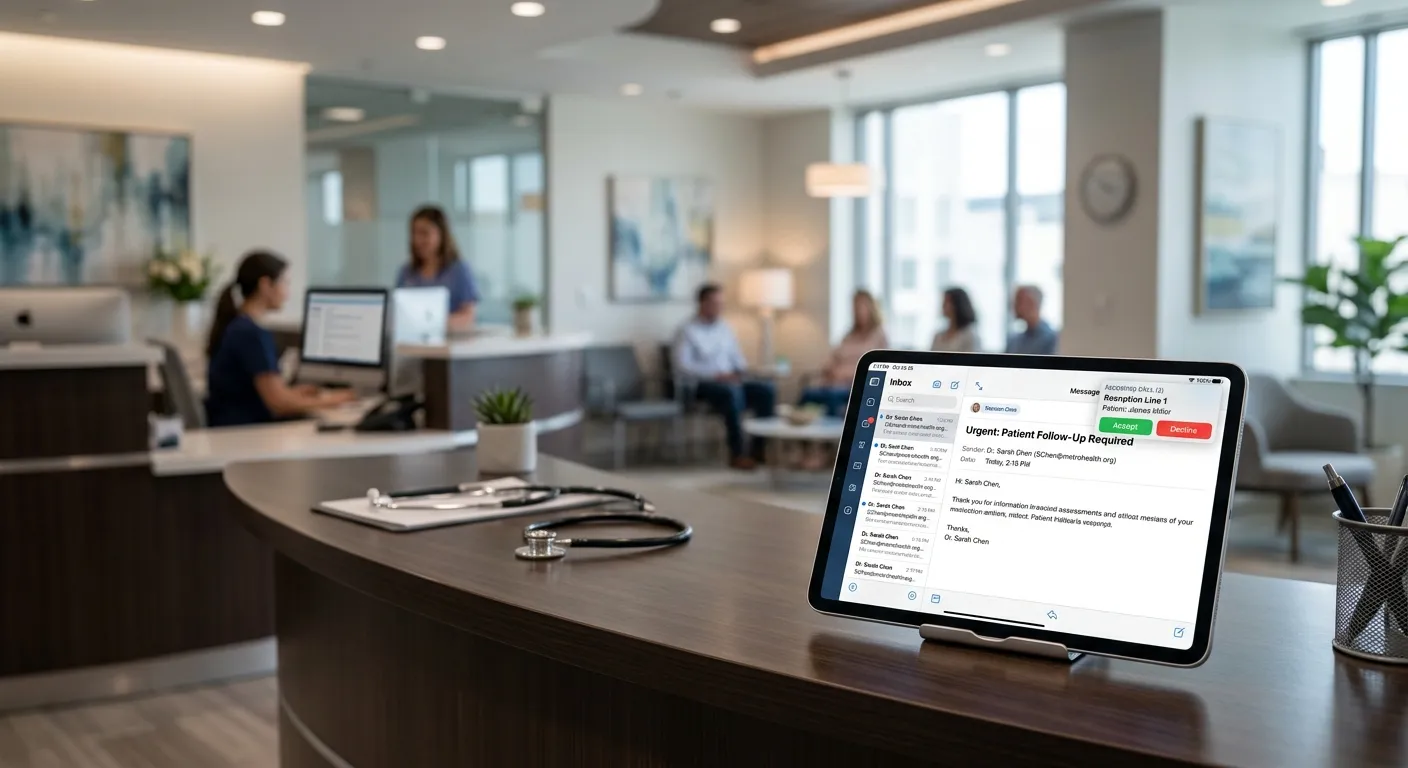
The Critical Role of Email in Modern Medical Answering
In today's fast-paced healthcare environment, the telephone is no longer the sole conduit for patient communication. A robust Medical Answering Service Email strategy acts as a vital extension of your practice's front desk, capturing detailed appointment requests, prescription refills, non-urgent clinical questions, and lab results with precision and auditability. Unlike fleeting voice messages, emails create a permanent, searchable record, reducing errors and enhancing continuity of care. For practices looking to optimize their entire communication stack, understanding the difference between a call centre and a virtual answering service is the first step toward choosing a solution that seamlessly blends voice and digital channels.
Pro-Tip: The Power of Integration
A truly effective system doesn't treat email as a silo. The most advanced Medical Answering Service Email platforms integrate directly with your Practice Management Software (PMS) or Electronic Health Record (EHR). This allows for automatic ticket creation, appointment scheduling from email content, and instant alerts to clinicians, bridging the gap between patient outreach and clinical action. For insights into building such a cohesive system, explore our guide on how to build a powerful AI call answering workflow.
Multi-Category Overview: Mastering Medical Communication Channels
Optimized Patient Email Workflow
An effective email answering service manages more than just inbox monitoring. It involves structured protocols:
- Triage & Prioritization: Automated scanning of subject lines and content (e.g.,"URGENT,""Pain,""Test Results") to flag high-priority messages for immediate clinical review.
- Automated Acknowledgements: Instant, customizable auto-replies that set patient expectations (e.g.,"Your message regarding prescription refill has been received and will be processed within 4 business hours").
- Intelligent Routing: Rules-based forwarding to the correct department—billing inquiries to accounts, clinical questions to specific GPs or nurses, appointment requests to the scheduling team.
- Escalation Paths: Defined timelines for response; if a routed email isn't actioned within a set period, it escalates to a supervisor or triggers a follow-up call.
GDPR & HIPAA-Compliant Email Handling
Handling sensitive patient data via email demands stringent security measures that go beyond standard business practices:
- End-to-End Encryption: All emails containing Protected Health Information (PHI) must be encrypted both in transit and at rest.
- Secure Mailbox Infrastructure: Dedicated, access-controlled email servers hosted in compliant data centres, with full audit logs of all access and actions.
- Data Loss Prevention (DLP): Automated systems that scan outbound emails to prevent accidental disclosure of PHI to unauthorized recipients.
- Staff Training & Audits: Regular, mandatory training for all staff handling Medical Answering Service Email on data protection laws, coupled with periodic security audits. For a deeper dive into data security in modern telephony, read our comprehensive guide on AI phone answering security.
Seamless Integration with Practice Ecosystems
The true value of an email service is realized when it connects fluidly with your existing tools:
- EHR/PMS Integration: Direct creation of patient tasks, notes, or appointment slots from email content, eliminating double data entry.
- Unified Communication Dashboard: A single pane of glass where staff can view and manage patient interactions from phone calls (often transcribed in real-time), SMS, and email.
- CRM Synchronization: Updating patient records with communication history, ensuring a holistic view of patient engagement.
- Automated Follow-Up: Triggering post-consultation surveys or appointment reminders via email based on call or visit outcomes managed by the same platform. This is a cornerstone of AI-powered appointment reminder systems.
Key Features & Benefits of a Professional Medical Answering Service Email System
24/7 Automated Triage & Prioritization
Never miss an urgent patient message. AI-driven systems analyze inbound email content to instantly flag critical issues (like severe symptom descriptions) for immediate attention, while routing routine matters to the appropriate queue, ensuring clinical priorities are always addressed first.
Guaranteed Regulatory Compliance
Built-in compliance frameworks designed specifically for healthcare. Features include mandatory encryption, secure audit trails, automatic redaction of sensitive data in certain contexts, and protocols aligned with HIPAA, GDPR, and other regional regulations, giving you peace of mind and avoiding costly penalties.
Seamless Practice Management Integration
Turn patient emails directly into actionable items within your clinical workflow. Deep integrations with major EHR systems allow for one-click creation of appointments, lab orders, or internal tasks from parsed email content, slashing administrative overhead and speeding up patient care cycles.
Enhanced Patient Satisfaction & Retention
Prompt, professional, and documented email responses significantly improve the patient experience. Automated acknowledgements manage expectations, while timely resolutions foster trust and loyalty. Satisfied patients are more likely to remain with your practice and recommend your services, directly impacting your bottom line.
Operational Cost Reduction
Reduce the burden on your in-house administrative staff. By automating triage, acknowledgements, and basic responses, a dedicated Medical Answering Service Email system allows your team to focus on complex, high-value tasks. This often translates to lower staffing costs or the ability to handle higher patient volumes without expanding the front desk team. Understand the financial implications with our answering service pricing guide.
Unified Inbound Communication Hub
Break down communication silos. The most advanced services combine email, phone, SMS, and web-form management into a single platform. This provides a 360-degree view of each patient's interactions, whether they called about a bill yesterday and emailed about symptoms today, enabling more personalized and efficient care coordination.
The Strategic Intersection: Medical Answering Service Email and Call Dynamics
To fully optimize patient communication, it's essential to understand how email functions within the broader spectrum of contact center operations. This is where grasping the inbound and outbound call center difference becomes crucial for designing an effective Medical Answering Service Email strategy.
Inbound Focus: The Email as a Call Alternative
Inbound services are reactive, handling patient-initiated contact. Email excels here for non-urgent, detailed, or documentation-heavy inquiries.
- Complement, Don't Replace: Email absorbs routine inbound volume (appointment requests, records queries), freeing phone lines for more urgent or complex inbound calls that require real-time conversation.
- Volume Management: By offering email as a preferred channel for certain request types, practices can dramatically reduce call queue times, a key tactic discussed in healthcare call volume management strategies.
- Asynchronous Advantage: Patients can send detailed messages at their convenience, and staff can respond during designated periods, reducing pressure for immediate phone answer.
Outbound Synergy: Proactive Engagement via Email
Outbound services are proactive, initiated by the practice. Email is a powerful, low-intrusion tool for outbound communication.
- Appointment Reminders & Follow-ups: Automated, personalized email reminders reduce no-shows. Post-appointment follow-up emails can request feedback or provide after-care instructions, complementing AI-powered reminder calls.
- Campaign Management: Broadcasting health campaign information, seasonal flu shot availability, or practice news to patient lists.
- Clinical Outreach: Sending secure messages for medication adherence check-ins or chronic disease management, creating a continuous care loop.
A holistic medical answering service strategically uses both inbound email capture and targeted outbound email communication to create a comprehensive, efficient, and patient-centric ecosystem.
Implementing Your Solution: From Strategy to Success
Choosing and implementing a Medical Answering Service Email requires careful planning. Start by auditing your current communication pain points: Are urgent emails missed? Is response time slow? Do staff waste time manually sorting messages? Next, select a provider that offers not just secure email management, but true integration capabilities with your existing phone system. For many practices, the ideal solution is a hybrid approach that combines AI-driven call handling with human-supervised email management. Learn more about this balance in our analysis of AI vs. live virtual receptionist cost-effectiveness.
Real-World Impact: A UK Dental Practice Case Study
A mid-sized dental practice in London was struggling with a 45-minute phone queue during peak hours and a cluttered, unmonitored general inquiry email inbox. They implemented a unified Medical Answering Service Email and AI call handling solution.
- Before: 100+ daily calls, ~30% abandoned; 50+ daily emails, average response time 2 business days.
- Action: Integrated email service with AI triage. Urgent emails (e.g.,"severe toothache,""broken crown") were flagged and sent via SMS to the on-call dentist. Routine appointment requests were parsed and created as draft bookings in the practice software.
- After (60 days): Call abandonment dropped to 8%. Email response time averaged 4 hours. The practice reported a 15% increase in new patient appointments booked via email, as the process was seamless. The administrative team saved an estimated 10 hours per week on email management. For more on how AI is transforming dental bookings, see this dedicated case study.
Medical Answering Service Email: Frequently Asked Questions
Is a Medical Answering Service Email secure enough for sensitive patient data?
Yes, when provided by a reputable vendor specializing in healthcare communication. Look for providers that offer:
- End-to-end TLS/SSL encryption for emails in transit.
- Data storage on HIPAA/GDPR-compliant servers with strict access controls.
- Signed Business Associate Agreements (BAAs) where required.
- Regular third-party security audits and penetration testing.
The security should be as robust as that for your EHR system. Never use standard consumer or generic business email services for protected health information.
Can email handling integrate with our existing phone answering service?
Absolutely, and this integration is key to a unified patient experience. Leading professional AI answering service solutions provide a single dashboard where all patient interactions—missed calls, voicemail transcriptions, live call summaries, and emails—are logged against the patient's profile. This allows your staff to see the full history of a patient's inquiry, whether they called last week and emailed today, enabling consistent and informed responses. The integration also allows for smart routing; for example, an email from a patient identified via caller ID can be prioritized.
How does automated email triage work, and is it reliable?
Modern AI and Natural Language Processing (NLP) make it highly reliable. The system scans subject lines and body text for keywords, phrases, and sentiment. It can be trained on your specific protocols:
- Priority Detection: Words like"emergency,""bleeding,""chest pain,""allergic reaction" trigger immediate alerts.
- Intent Classification: The AI determines if the email is about"appointment booking,""prescription refill,""billing question," or"medical advice."
- Routing: Based on intent and priority, the email is automatically sent to the correct department's queue or a specific staff member.
- Continuous Learning: The system learns from corrections made by your staff, improving its accuracy over time. For complex scenarios, it can still flag for human review.
What's the typical cost structure for adding email to a medical answering service?
Pricing models vary but often include:
- Monthly Subscription: A base fee covering secure mailbox hosting, basic triage, and a volume of emails (e.g., up to 500/month).
- Per-Email Fee: Beyond the included volume, a small fee per email processed.
- Integration Fee: A one-time or recurring fee for connecting the service to your EHR/PMS.
- Tiered Plans: Basic (automated triage & routing), Professional (adds template responses, basic integrations), and Enterprise (full customization, advanced AI, dedicated support).
It's critical to evaluate the Return on Investment (ROI). The cost is often offset by reduced administrative labor, increased appointment bookings, and improved patient retention. For a detailed breakdown, consult our resource on answering service costs.
Ready to Transform Your Patient Communication?
Implementing a robust, secure, and integrated Medical Answering Service Email system is no longer a luxury—it's a necessity for modern, efficient, and patient-focused healthcare delivery. Stop letting valuable inquiries slip through the cracks and start building a communication framework that works as hard as you do.
By leveraging cutting-edge Medical Answering Service Email technology and understanding the strategic inbound and outbound call center difference, your practice can achieve unprecedented levels of operational efficiency, patient satisfaction, and clinical responsiveness. The future of healthcare communication is integrated, intelligent, and immediate—ensure your practice is leading the way.