
Virtual Assistant Phone Answering: The 2026 Guide to Never Missing a Customer Call
Discover how modern Virtual Assistant Phone Answering solutions are transforming customer service, boosting revenue, and freeing business owners from the tyranny of the ringing phone. This comprehensive guide details everything from AI-powered receptionists to hybrid human-AI models.
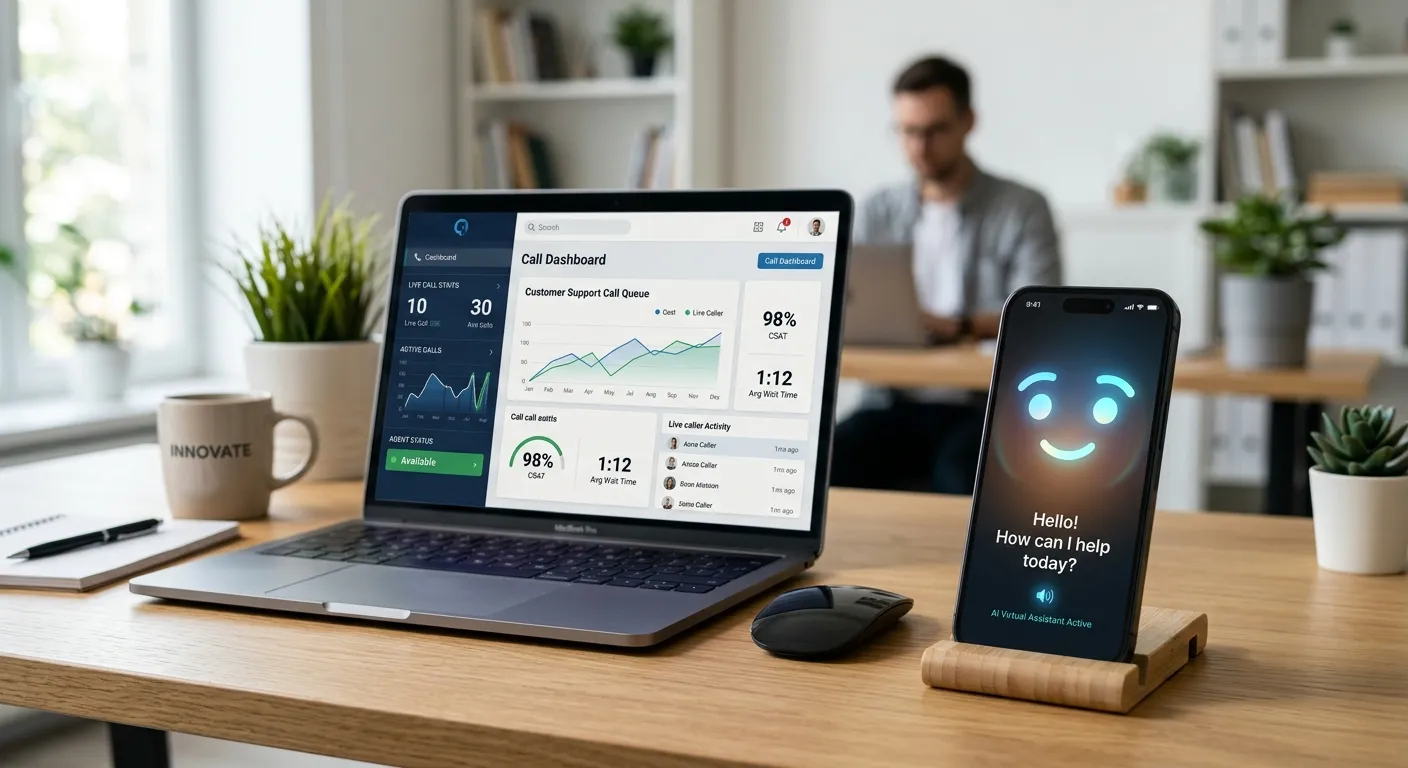
Your Complete Overview of Virtual Phone Answering
What is Virtual Assistant Phone Answering?
Virtual Assistant Phone Answering is a service that handles inbound business calls on your behalf, acting as an extension of your team. Unlike traditional receptionists, these assistants operate remotely, leveraging either trained human agents, advanced Artificial Intelligence (AI), or a sophisticated blend of both. The core purpose is to ensure every call is answered professionally, information is captured accurately, and urgent matters are escalated immediately, 24/7. This is a fundamental shift from the old model of a call centre and a virtual answering service, focusing on agility and intelligent call routing.
For small businesses, solopreneurs, and even larger firms experiencing call overflow, this service is a game-changer. It eliminates missed opportunities, projects a professional image, and allows business owners to focus on high-value work instead of being tied to the phone. Understanding the true cost of missed calls is the first step in justifying this essential investment.
Expert Insight
Don't make the mistake of viewing a virtual assistant as just a call filter. The most sophisticated systems are proactive business tools. They can qualify leads, schedule appointments directly into your calendar, and provide you with real-time call transcripts and analytics. This turns your phone line from a cost centre into a measurable revenue-generating asset. For a practical example, see how it solves the problem of capturing leads from after-hours missed calls.
Core Benefits of Virtual Assistant Phone Answering
24/7 Availability & Zero Missed Calls
A virtual assistant never sleeps, takes a lunch break, or gets sick. It ensures your business is always open for communication, capturing every lead and managing urgent issues outside standard hours. This is the essence of handling after-hours calls effectively. The result? You eliminate the hidden price of"leave a message" and convert calls that would otherwise be lost.
Enhanced Professionalism & Brand Image
First impressions are everything. A professional, consistent greeting and efficient call handling project competence and reliability. With features like personalized welcome greetings, you can tailor the experience to reinforce your brand voice from the very first second. This is crucial for startups and small businesses competing with larger entities.
Significant Cost Savings vs. Full-Time Hire
Hiring a full-time, in-house receptionist involves salary, benefits, training, and infrastructure costs. A Virtual Assistant Phone Answering service provides all the functionality at a fraction of the price, often on a scalable monthly plan. For a clear breakdown, review answering service pricing in the UK. It's the most cost-effective way to access professional call handling, especially for one-person businesses.
Industry-Specific Applications & Advanced Capabilities
Transforming Healthcare & Professional Services
The impact of Virtual Assistant Phone Answering is profoundly felt in sectors where communication is critical. In healthcare, it's not just about answering calls; it's about managing patient flow, ensuring compliance, and improving outcomes.
- Healthcare: AI assistants can manage call volume in healthcare, schedule appointments, send AI-powered appointment reminders, and even conduct pre-consultation intake. This is why busy healthcare practices are switching to these solutions. For specialized needs, explore dental call answering services.
- Legal: For law firms, a virtual assistant acts as a first-point-of-contact intake specialist, qualifying leads, scheduling consultations, and ensuring no potential client slips through. Services like our legal call answering for law firms are tailored to handle sensitive information and urgent matters with discretion.
- Property & Trades: Capturing emergency repair calls or tenant inquiries 24/7 is vital. A virtual assistant can dispatch urgent calls immediately while scheduling non-emergency work. Learn how UK tradespeople stop missing jobs and how it benefits landlords and letting agents.
The Technology Behind Advanced AI Answering
Modern AI-powered Virtual Assistant Phone Answering is built on several key technological pillars:
- Natural Language Processing (NLP): Allows the AI to understand the intent and context of a caller's speech, not just keywords.
- Voice Recognition & Synthesis: Creates natural, human-like voices for interaction. You can even create a custom AI voice for your brand.
- Integration APIs: Connects seamlessly with your CRM, calendar software, helpdesk, and other tools, turning calls into actionable data. Explore advanced call automation software for more.
- Machine Learning: The system improves over time, learning from interactions to handle calls more accurately and efficiently.
Making the Right Choice for Your Business
Selecting a provider goes beyond price. You need to evaluate their technology stack, compliance standards (especially for GDPR or HIPAA), and industry expertise. A great starting point is our article on what to look for in AI call center software. For UK businesses specifically, we provide an honest evaluation in Is CallTaking.ai the best answering service in the UK?.
View Transparent Pricing PlansFrequently Asked Questions About Virtual Assistant Phone Answering
It's a world of difference. A voicemail is passive; it requires the caller to leave a message and wait for a callback, which often leads to lost business. A Virtual Assistant Phone Answering service is active. It engages the caller in a two-way conversation in real-time. It can answer questions, book appointments, qualify leads, and escalate urgent issues immediately, providing instant value and a professional experience that voicemail simply cannot match.
Absolutely. This is one of the most powerful features. Modern systems like CallTaking.ai integrate directly with Google Calendar, Microsoft Outlook, and other popular scheduling tools. The AI can check your availability in real-time, propose slots to the caller, and confirm the appointment—adding it directly to your calendar without any manual intervention from you. For more details, see our article answering precisely this: Is there an automated phone system that can actually book appointments?
This depends on your call volume and complexity. AI services typically have a lower per-call or monthly fixed cost and can scale infinitely. Live services involve human labour costs, making them more expensive per minute, but they excel at complex, nuanced conversations. For a detailed breakdown, we highly recommend our analysis: AI Answering Service vs. Live Virtual Receptionist: Which is more cost-effective?. Many businesses start with AI and add live agent support for overflow or complex calls as needed.
Not at all. Leading providers have designed the setup process to be user-friendly and fast. You can often be up and running in under an hour. It involves forwarding your business number (via a simple setting in your VoIP provider), configuring your call flow using a visual editor, and recording or selecting your greetings. For a step-by-step walkthrough, check out Setting Up Your CallTaking.ai Digital Receptionist. Most providers also offer dedicated support to guide you through the process.
Stop Missing Calls. Start Growing Your Business.
Virtual Assistant Phone Answering is no longer a luxury for large corporations; it's an essential, affordable tool for any business that values its customers and its time. Whether you choose an AI-powered solution for efficiency or a live service for a personal touch, the result is the same: professional communication, captured revenue, and peace of mind.
Ready to explore the best solution for your industry? Visit our Industries page or learn more about us and our mission to transform business communication.
Beyond the Basics: Niche Applications & Real-World Impact
The versatility of virtual phone answering extends into specialized sectors and solves unique operational challenges. Here’s how businesses are leveraging this technology for competitive advantage.
E-commerce & Customer Support Scalability
For online retailers, the phone is often a last-resort channel for high-stakes issues: order problems, returns, and urgent delivery queries. A virtual assistant acts as a critical pressure valve.
- Order Status Automation: Integrated with the e-commerce platform (like Shopify or WooCommerce), the AI can authenticate a caller via order number and provide real-time status updates, tracking numbers, and return authorization codes without human intervention.
- Intelligent Ticket Creation: For complex issues beyond the AI’s scope, the system can gather all preliminary information (order details, customer account, issue description) and create a fully-formed ticket in Zendesk or Freshdesk, slashing average handle time for human agents.
- Post-Purchase Engagement: The system can be programmed to make proactive outbound calls for delivery confirmation, review solicitation, or subscription renewals, turning a cost centre into a revenue-retention tool.
This approach directly addresses the challenge of scaling customer service without scaling costs linearly, especially during peak seasons or flash sales.
Case Study: Boutique Home Decor Retailer
Challenge: A growing online store was losing 30% of inbound calls during business hours due to a single, overwhelmed customer service rep. After-hours calls went to voicemail, resulting in poor reviews and cancelled orders.
Solution: Implementation of a hybrid AI/Live virtual answering service. AI handled 65% of calls (order status, return policy FAQs, store hours). Complex calls and high-value customer complaints were routed to a dedicated live agent.
Result: Within 90 days, missed call rate dropped to under 2%. Customer satisfaction (CSAT) scores for phone support increased by 40%. The in-house rep was freed to handle strategic supplier relationships instead of routine queries.
Field Service & Emergency Dispatch Optimization
For plumbing, HVAC, electrical, and locksmith services, the phone is the primary revenue line. Virtual answering isn't just about answering; it's about intelligent triage and dispatch.
The Emergency Call Flow:
- AI Detection: The system uses keyword spotting ("flooding","no heat","locked out") and tone analysis to immediately classify a call as a potential emergency.
- Priority Routing: The call is instantly connected to a live virtual agent trained in emergency dispatch or, if configured, patched directly to the on-call technician's mobile.
- Information Pre-Flight: While connecting, the AI collects the caller's address and nature of the emergency, delivering it to the agent/technician via SMS or app notification before they even say"hello."
- Non-Emergency Scheduling: For routine jobs, the AI or agent can schedule appointments by accessing the team's shared calendar, considering travel time and part availability.
This system ensures life-safety and high-priority calls get instant attention while maximizing the booking efficiency of the entire field team. It’s a practical application of intelligent call routing that has a direct impact on both customer safety and business profitability.
Measuring Success: The Data-Driven Advantage
A key benefit of modern Virtual Assistant Phone Answering is the transformation of voice conversations into quantifiable, actionable business intelligence. This moves the function from an operational cost to a strategic asset.
Call Intelligence Dashboard
Every interaction is analyzed to provide metrics such as:
- Peak call volume days/times
- Average call duration & outcome (e.g., booked, qualified, referred)
- Caller sentiment analysis (positive, neutral, negative)
- Most frequent query types
Lead Qualification & Scoring
The AI can ask predefined qualification questions during the call. Data is scored and synced to your CRM.
- Hot Lead: Needs service next week, budget confirmed. Alert sent to sales team.
- Warm Lead: Researching options, timeline 3 months. Added to nurture sequence.
- Cold Lead: Wrong number or irrelevant inquiry. No follow-up required.
Calculating Concrete ROI
The return is measurable. Consider this simplified formula for a service-based business:
Monthly Revenue Gained = (Missed Calls Recovered) x (Conversion Rate) x (Average Job Value)
Monthly Cost = Service Subscription Fee
Net ROI = (Revenue Gained - Cost) / Cost
Example: Recovering 20 missed calls/month, converting 25% at £500/job = £2,500 gained vs. a £199 service fee.
This data-centric approach allows for continuous optimization of your call scripts, business hours, and even marketing campaigns based on real customer inquiries. For a deeper analysis, explore our guide on calculating ROI on a virtual receptionist.
The Horizon: What's Next for Virtual Phone Answering?
Emerging Technologies & Trends
- Emotionally Intelligent AI: Next-generation NLP will move beyond understanding words to detecting subtle cues in tone, pace, and volume, allowing the AI to respond with appropriate empathy and urgency, de-escalating frustrated callers before a human is needed.
- Predictive Call Routing: Systems will analyze caller data (phone number, past interactions) in milliseconds to predict the reason for the call and route them to the most qualified resource—human or AI—immediately, personalizing the experience from the first second.
- Seamless Omnichannel Handoff: A conversation that starts on the phone will be able to continue seamlessly via SMS or email without the caller repeating themselves. The virtual assistant maintains context across all channels.
- Voice Biometrics for Security: Enhanced security for sectors like finance and healthcare, where the AI can verify a caller's identity through their unique voiceprint before discussing sensitive information.
Ethical Implementation & Transparency
As this technology becomes ubiquitous, responsible use is paramount. Best practices are evolving:
- Clear Disclosure: Should a business inform callers they are speaking with an AI? Many experts argue for early, subtle disclosure (e.g.,"You're speaking with Sam, an automated assistant here to help...") to build trust and set expectations.
- Bias Mitigation: Ensuring AI models are trained on diverse datasets to understand varied accents, dialects, and speech patterns equally, preventing discrimination in service quality.
- Data Sovereignty & Privacy: Choosing providers that guarantee data storage and processing in compliance with regional regulations (GDPR, CCPA) and offer clear data retention and deletion policies.
- The Human Safety Net: Maintaining an always-available, clear path for a caller to reach a human operator, especially in sectors dealing with distress or crisis.
Adopting these principles isn't just ethical; it's good business, ensuring long-term customer acceptance and regulatory compliance.
Your Next Step is Simple
Understanding the potential is the first phase. The next is taking a low-commitment, high-clarity action to see what it means for your business.
Try an Interactive Demo
Simulate a call with our AI. Experience the conversation flow firsthand.
Use Our ROI Calculator
Input your call volume and value to see your potential savings and revenue gain.
Download Case Studies
Get detailed PDFs on how businesses in your industry achieved specific results.
The evolution of Virtual Assistant Phone Answering from a simple message-taking service to an intelligent, integrated business growth engine is complete. The question is no longer if your business needs it, but which configuration will deliver the maximum strategic advantage for your unique goals.