Mastering Remote Call Center Best Practices: A Definitive Guide for 2026
Implementing proven remote call center best practices is crucial for delivering exceptional customer service, boosting agent productivity, and ensuring operational resilience. Discover the actionable strategies industry leaders are using.
Robust Security & Compliance
Implement enterprise-grade VPNs, multi-factor authentication, and regular security training. For industries like healthcare, ensure tools like our HIPAA-compliant medical answering service are in place to protect sensitive data.
Strategic Hiring & Onboarding
Finding the right talent is the first step. Utilize clear communication tests and structured virtual onboarding. Need to scale your team? Hire Staff Today through our platform to connect with qualified remote agents.
Leverage AI & Automation
Integrate AI tools to handle routine inquiries, call routing, and after-hours support. This frees human agents for complex issues. Explore CallTaking AI's customizable features to see how automation can enhance your remote operations.
Essential Framework for Remote Call Center Success
Building a high-performing remote call center requires a deliberate framework. It's more than just providing a laptop; it's about creating a cohesive, supported, and efficient environment that mirrors the best aspects of an on-site center while leveraging the flexibility of remote work.
Pro-Tip: The Hybrid Solution
Don't view remote and AI as an either/or choice. The most effective modern remote call center best practices involve a blended approach. Use AI-powered AI receptionist services to filter and qualify calls 24/7, ensuring your human remote agents only receive the complex, high-value interactions that require empathy and critical thinking.
1. Technology Stack & Infrastructure
Your technology is your remote call center's backbone. Invest in a cloud-based Contact Center as a Service (CCaaS) platform that offers omnichannel routing, real-time analytics, and seamless integration with Customer Relationship Management (CRM) software. Equip agents with high-quality headsets and ensure they have a dedicated, quiet workspace. Reliability is non-negotiable.
2. Communication & Company Culture
Combat isolation by fostering a strong virtual culture. Schedule daily stand-up meetings via video, create informal chat channels for non-work topics, and recognize achievements publicly. Tools like Slack and Microsoft Teams are essential, but the intent behind their use—building connection—is what truly matters. This is a key differentiator in advanced remote call center best practices.
3. Performance Management & Quality Assurance
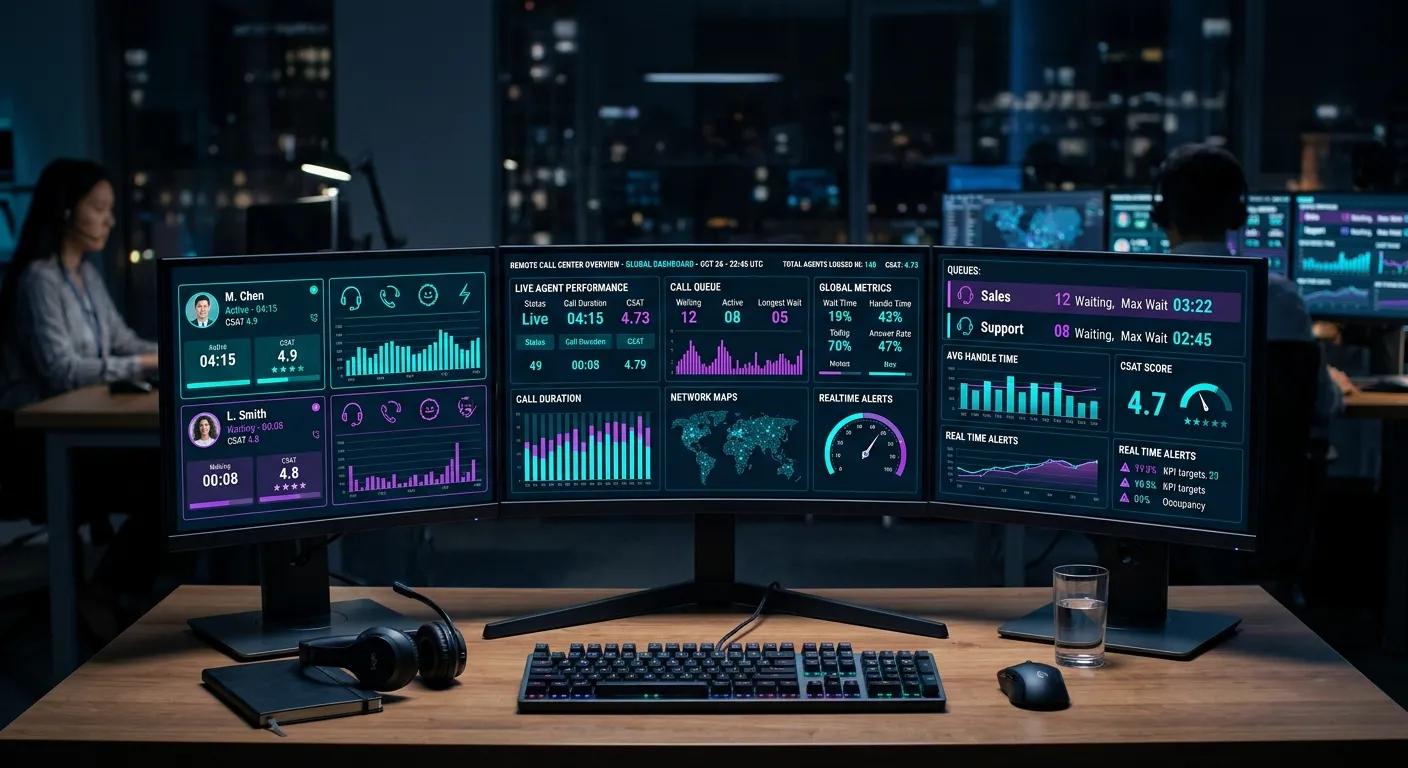
Clear, measurable Key Performance Indicators (KPIs) like First Call Resolution (FCR), Customer Satisfaction (CSAT), and Average Handle Time (AHT) are vital. Use call recording and screen monitoring software (with full transparency to agents) for quality assurance and coaching. Regular one-on-one feedback sessions are more important than ever in a remote setting.
Scalability and Contingency Planning
A major advantage of remote centers is scalability. During peak seasons or unexpected volume spikes, you can quickly onboard additional remote agents. Furthermore, a distributed team is inherently more resilient to local disruptions (e.g., power outages, internet issues). Pair this human scalability with AI to manage overflow. For instance, a property management answering service can use AI to handle after-hours maintenance requests, ensuring no call is missed regardless of agent availability.
Always have a documented business continuity plan. What happens if your primary CCaaS platform fails? Services like CallTaking.ai can act as an instant failover, ensuring your customer communication lines remain open. Explore Contingency Solutions
Industry-Specific Applications
While core remote call center best practices are universal, their application varies by industry. Tailoring your approach is key to success.
Select Your Industry:
Legal Answering Services
Confidentiality and urgency are paramount. Remote agents must be trained on legal ethics and intake procedures. Integrating with case management software is essential. AI can be used for initial intake and appointment scheduling, as detailed in our guide for legal answering services.
Healthcare & Medical
HIPAA compliance dictates every tool and process. Remote agents need secure, encrypted environments. AI can efficiently triage after-hours calls, distinguishing between prescription refills and potential emergencies, ensuring patients always reach the right help. Learn more about healthcare answering services.
Property Management
This industry is defined by 24/7 emergency maintenance requests. A remote call center, augmented by AI, ensures calls are never missed. AI can log issues and dispatch work orders automatically, while remote agents handle complex tenant communications. Discover the benefits of a dedicated property management answering service.
Conclusion: The Future is Flexible & Augmented
Adopting and continuously refining your remote call center best practices is not a one-time project but an ongoing strategic initiative. The future belongs to flexible, hybrid models that intelligently combine the empathy and problem-solving skills of remote human agents with the efficiency and always-on capability of advanced AI.
By focusing on robust technology, strong culture, clear performance metrics, and industry-specific tailoring, you can build a remote call center that exceeds customer expectations, empowers your employees, and drives business growth. Ready to transform your customer communication? Evaluate your current strategy and consider how integrating solutions like those from CallTaking.ai's suite of services can fill the gaps.
Ready to Build Your Elite Remote Team?
Implementing these best practices starts with the right people. Access our network of pre-vetted, skilled remote call center professionals.
Hire Remote Call Center Staff Today